Personalized Gifts Drive E-commerce Transformation as 2026 Market Tops $33B
Global personalized gifts sales are set to top $33 billion in 2026 as AI-driven customization and e-commerce integrations make personalization a mainstream expectation.
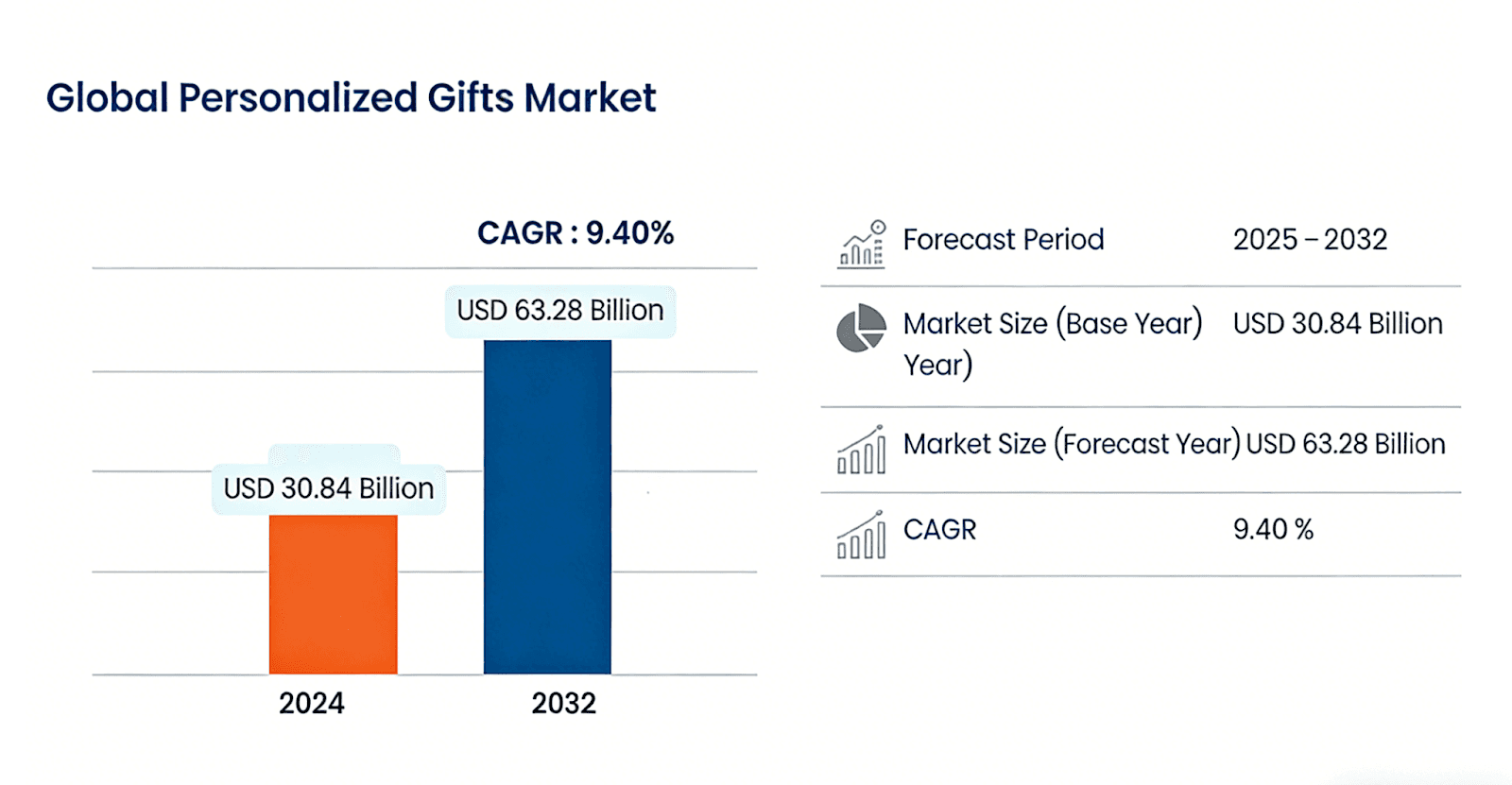
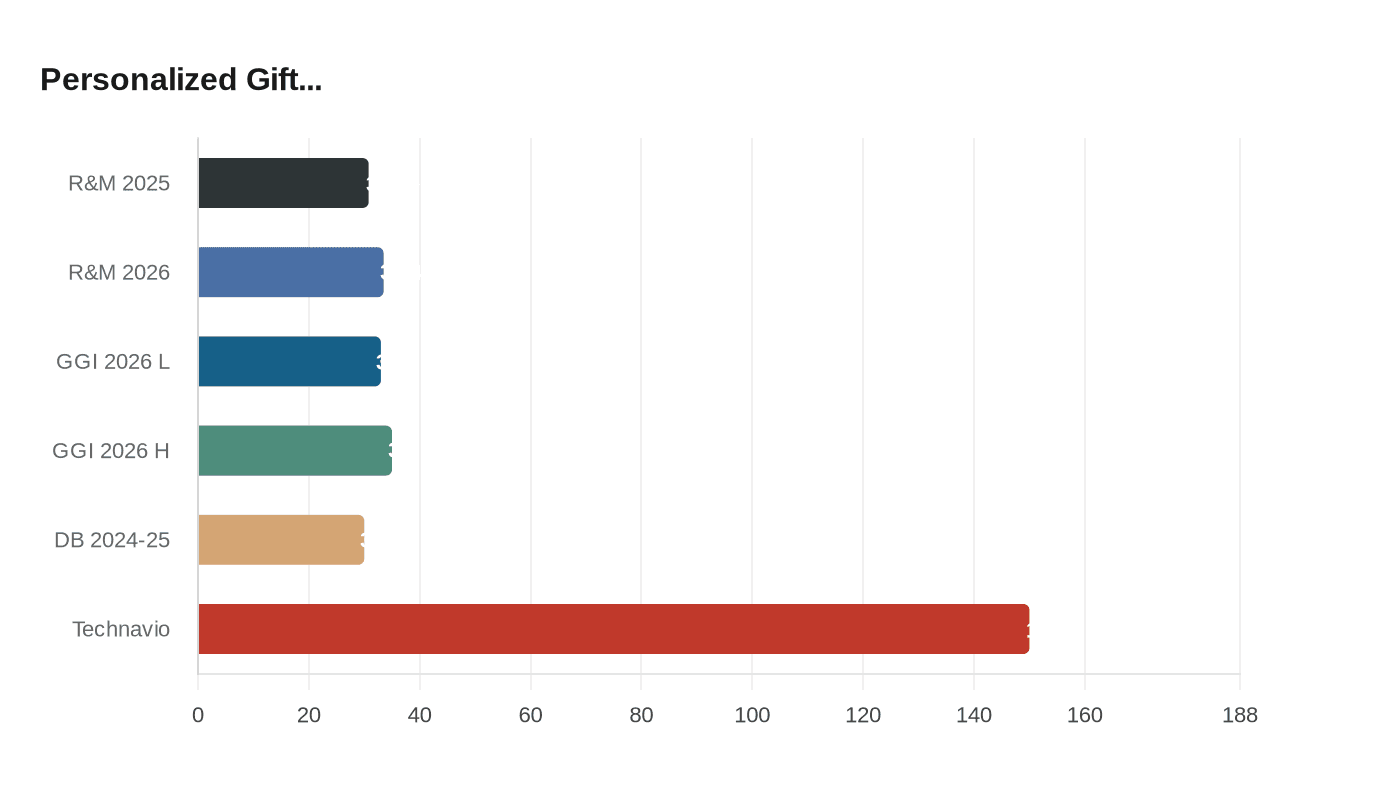
The market for personalized gifts has moved from boutique novelty to mainstream commerce, with Researchandmarkets projecting growth from $30.79 billion in 2025 to $33.49 billion in 2026 at a CAGR of 8.7%. That projection sits inside Global Growth Insights’ range, which places the market at approximately $31–32 billion in 2025 and projects $33–35 billion in 2026, and paints a longer-term picture that could exceed $60 billion by the early 2030s.
Not every forecast aligns. Data Bridge Market Research places the sector at USD 30 billion in 2024–2025 with a projected CAGR of 9.4% through 2032, while an outlier from Technavio claims the market will reach over USD 150 billion by 2026. The Technavio figure has no methodology in the supplied excerpt and therefore sits in sharp contrast with multiple other firms that cluster in the low-$30 billion range for 2025–2026.
The forces reshaping the category are concrete and repeat across sources. “In 2026, the global personalized gifts market is entering a new phase of growth as customization evolves from a niche offering into a mainstream expectation across global retail and e-commerce,” a market summary states. E-commerce platform integrations and flexible production are central operational drivers; as Global Growth Insights notes, “Flexible production volumes enable sellers to test multiple product concepts before scaling successful designs, while integrations with major e-commerce systems allow personalized offerings to be added with minimal technical complexity.”
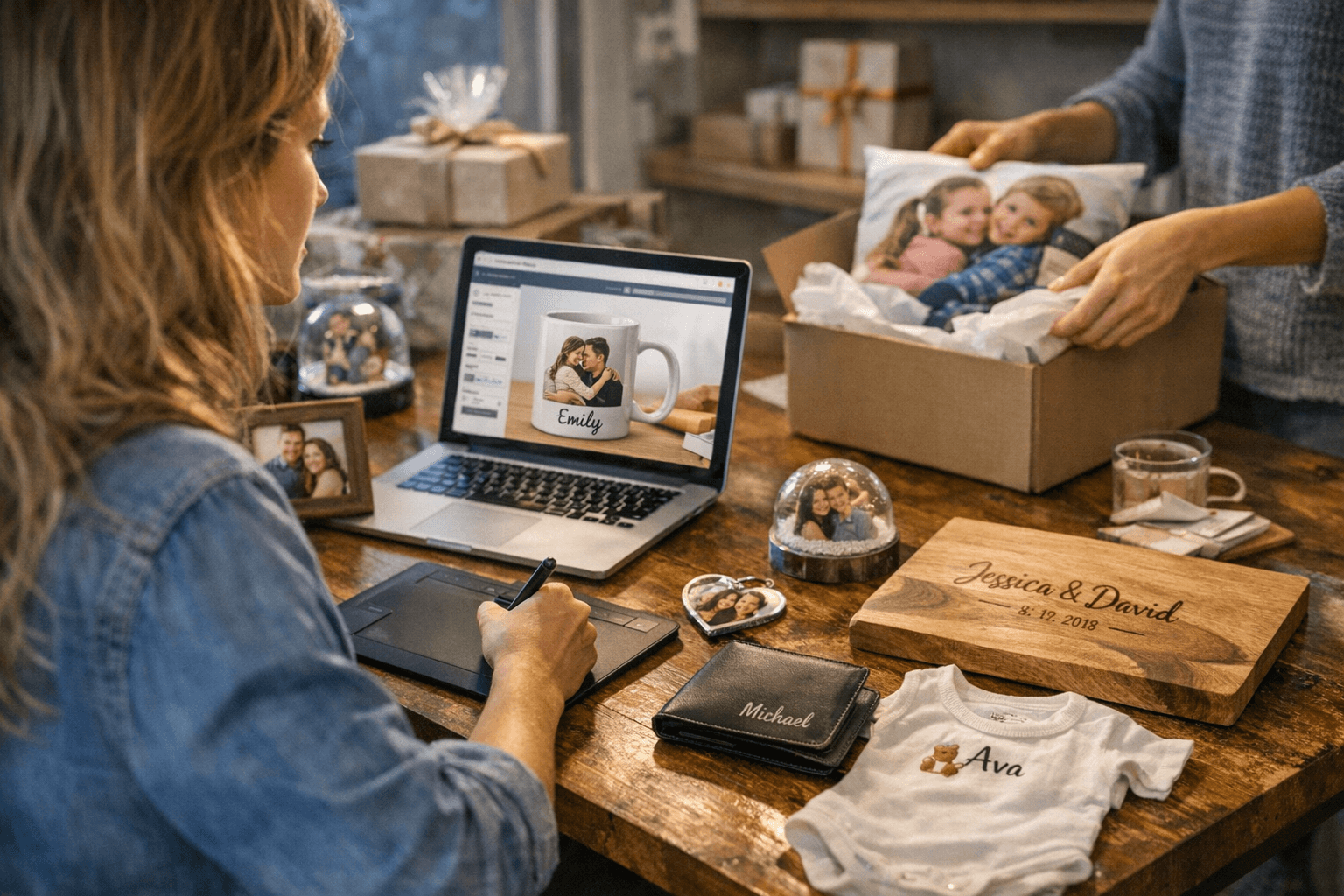
Technology choices are already defining what feels luxurious. GSJJ’s industry observations declare that “AI-Driven Rapid Customization Will Become the Industry Standard,” and cite production methods such as 3D embossing, cutouts, glitter elements, and laser engraving as means of turning everyday items into collectible-quality keepsakes. Researchandmarkets highlights adoption of AI-powered personalization tools and integration of AR/VR for gift previews, while Data Bridge reports that AI incorporation rates in gift-making companies are increasing dramatically.
For givers, the market’s evolution translates into clearer category choices. Photo-based gifts and custom keepsakes remain the sentimental staples identified by Researchandmarkets, while GSJJ points to metal collectible souvenirs as a growth niche — Military Challenge Coins, custom medals, and custom pins — suited to commemorations of sports, culture, military service, and history. Corporate gifting is expanding too; Researchandmarkets flags rising corporate budgets and occasion-based personalization as demand drivers, and Technavio points to customer gift programs and personalized gift cards as revenue accelerants, citing a retailer’s reported 25% sales lift from a customized gift-card program.
Operational efficiency, not novelty, will decide which sellers win. “Looking ahead, continued growth in the personalized gifts market will be shaped less by novelty and more by operational efficiency. As customization becomes a standard component of global e-commerce, platforms that simplify production and fulfillment processes will play a critical role in supporting sellers and brands entering the next stage of personalized commerce,” reads a Global Growth Insights summary distributed via EIN Presswire from Fuzhou, Fujian, China on February 25, 2026.
The bottom line for buyers and brands is pragmatic: expect more personalized options at faster turnaround and higher finish levels — laser engraving, 3D embossing, AI-curated layouts, and AR previews — even as analysts debate the precise scale of the market beyond 2026.
Know something we missed? Have a correction or additional information?
Submit a Tip