Peruvian police dress as World Cup mascots in Lima raid, arrest suspect
Peruvian police raided a Lima drug suspect in Clutch and Maple mascot costumes, using a sledgehammer to force entry. The stunt landed as the World Cup opened in Mexico.
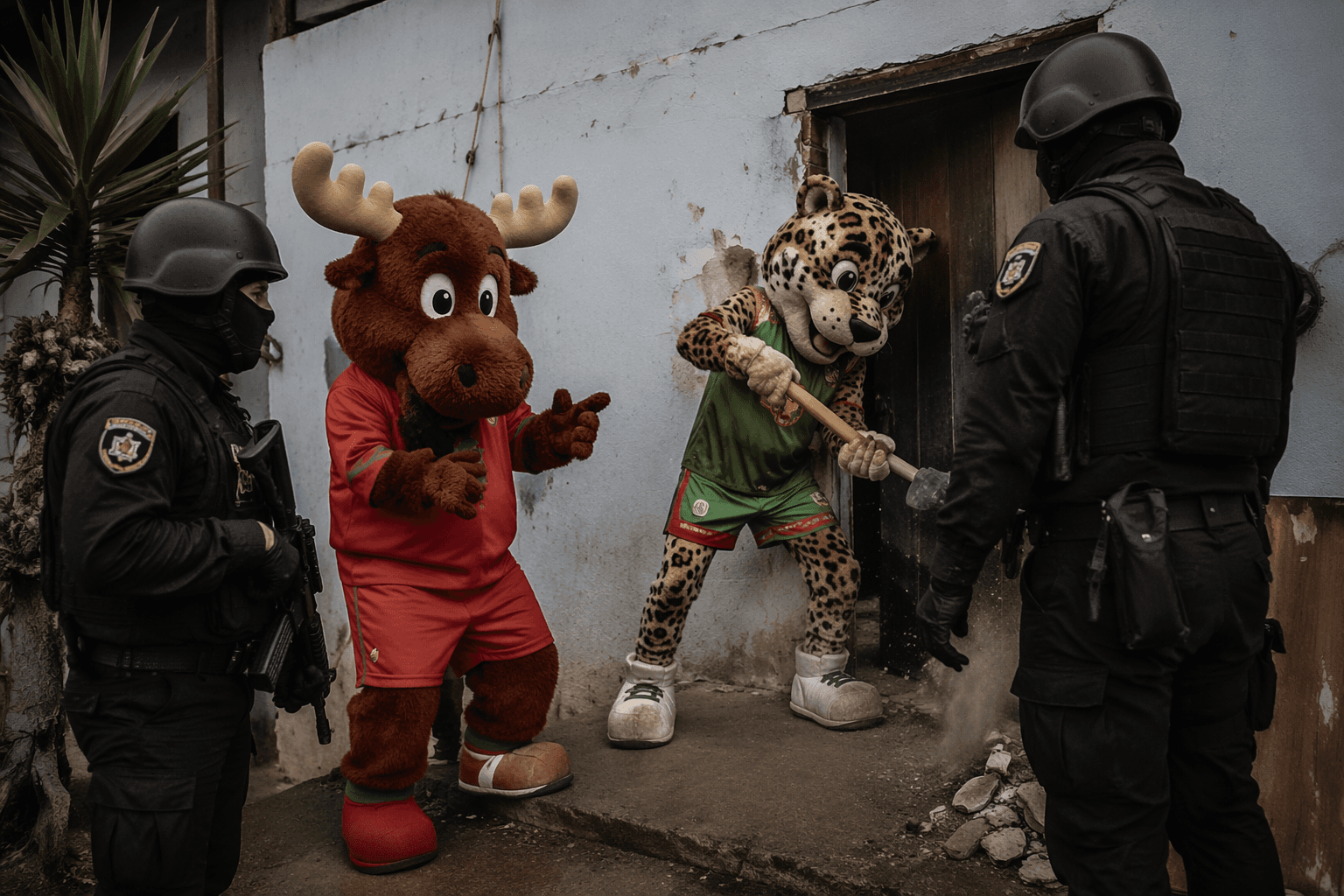
Two Peruvian police officers in full World Cup mascot costumes broke into a Lima drug raid wearing the faces of football spectacle itself. Disguised as Clutch, the United States bald eagle mascot, and Maple, Canada’s moose, the officers used a metal sledgehammer to smash down a door before entering with colleagues and arresting a suspect.
The operation turned an anti-drug arrest into a piece of public theater, and police made sure the images traveled fast by posting video of the raid on social media. A third official 2026 World Cup mascot, Zayu the jaguar of Mexico, was not part of the entry team. FIFA unveiled Clutch, Maple and Zayu on September 25, 2025, as the tournament’s three official mascots representing the three host nations.
Peruvian police said the disguise was chosen because the target was a devoted football fan. A police official said intelligence work showed he was “caught up in World Cup fever,” allowing officers to approach without immediately raising suspicion. The tactic fit a familiar pattern in Peru, where police have repeatedly leaned on costumes to give raids a theatrical edge. In previous operations, officers have dressed as Marvel characters, including a Halloween raid in which police wore Wolverine and Deadpool costumes and forced their way in with a sledgehammer.
The timing added another layer to the spectacle. The arrest took place on the opening day of the 2026 World Cup, when Mexico beat South Africa 2-0. Peru was not part of the tournament field, making the country’s police branding exercise even more conspicuous as the global event began elsewhere.
The episode now sits at the intersection of policing, entertainment and national image. Supporters of the tactic may see a clever way to catch a suspect off guard. But the decision to turn beloved tournament mascots into tools of forced entry also carries risk: it can invite public backlash, draw legal scrutiny over police conduct and blur the line between family-friendly World Cup branding and the hard edge of criminal enforcement. In a country where costume raids have become a recognizable police signature, the question is no longer whether the theatrics will be noticed. It is whether they are becoming the message.
This article was produced by Prism’s automated news system from verified source data, official records, and press releases, then run through automated quality and moderation checks before publishing. The system is built and supervised by the people who set the standards it runs under. Read our full AI policy.
Did this article answer your question?