Pfizer Projects 2026 Profit Below Street Expectations, COVID Sales Slide
Pfizer on December 16 issued guidance for 2026 that fell short of analyst forecasts, citing waning demand for COVID products and looming patent expirations. The warning underscores near term revenue pressure for the drugmaker and raises questions about how quickly recent acquisitions can replace declining legacy sales.
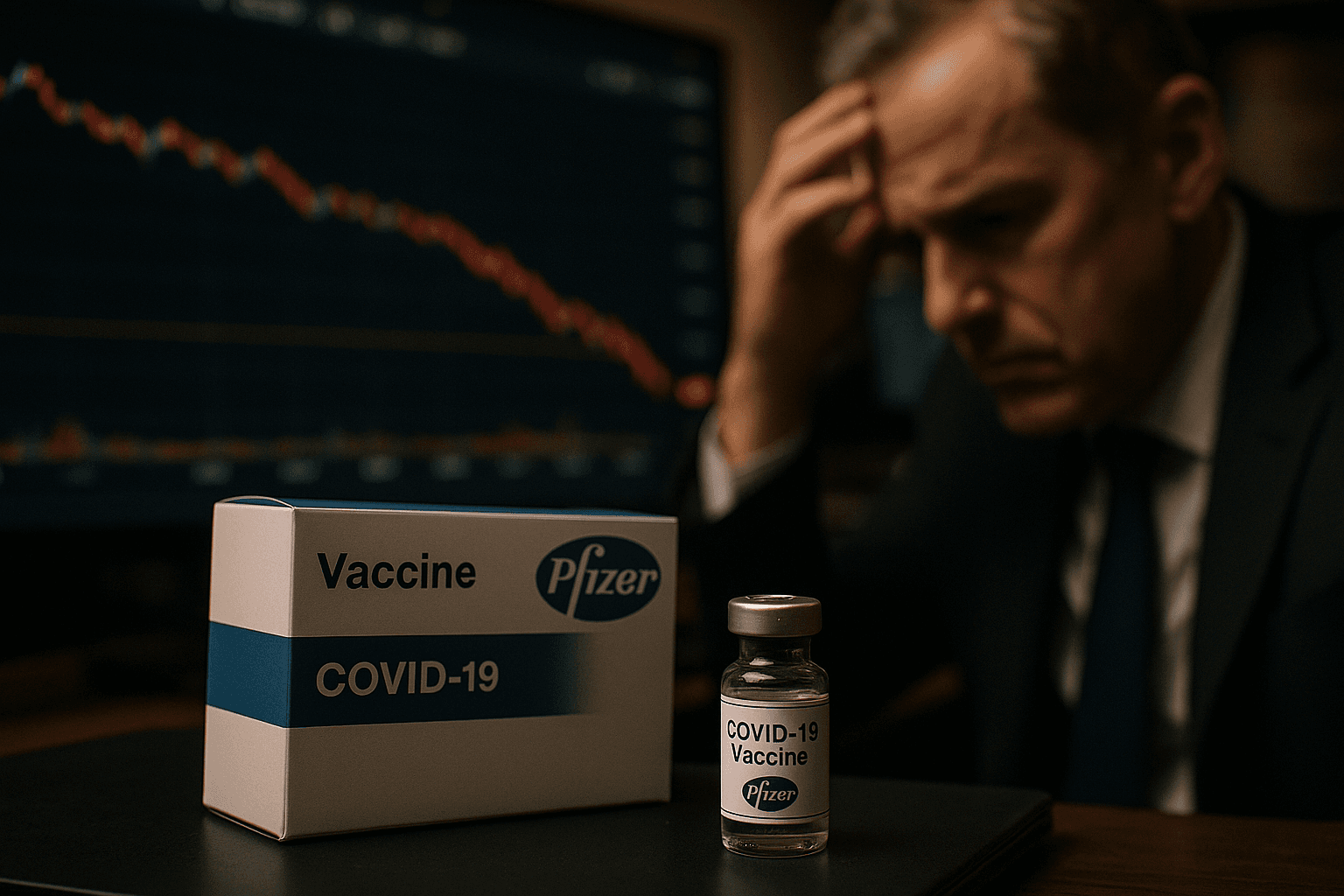
Pfizer issued 2026 financial guidance on December 16 that left investors and analysts recalibrating expectations for the pharmaceutical giant. The company projected adjusted earnings per share from $2.80 to $3.00 and revenue from $59.5 billion to $62.5 billion, figures that missed the consensus on Wall Street and reflected shrinking demand for COVID related products alongside revenue headwinds from patent expirations.
The midpoint of Pfizer’s EPS guidance is $2.90, about $0.15 lower than the roughly $3.05 per share analysts had been modeling, a shortfall near 5 percent. The revenue midpoint of $61.0 billion trails the LSEG market estimate of about $61.59 billion by roughly $590 million, underperforming analysts by about 1 percent. Those gaps, while not massive, were enough to unsettle markets given Pfizer’s role as a bellwether for the vaccine driven pandemic era profits.
Pfizer attributed the weaker outlook primarily to a decline in COVID related sales. The company expects COVID related profits to fall by $1.5 billion in 2026 compared with its 2025 forecast. Combined sales of its COVID vaccine and the antiviral Paxlovid are now expected to drop by roughly $1.5 billion year over year to about $5.0 billion in 2026. That normalization from pandemic era peaks has been anticipated, but the pace leaves a tangible hole in the company’s near term results.
The company revised its 2025 revenue outlook to $62.0 billion, narrowing a prior range of $61.0 billion to $64.0 billion, and reaffirmed adjusted EPS guidance for 2025 at $3.00 to $3.15 per share. Taken together, the revised 2025 figures and the lower 2026 guidance suggest management sees a sharper step down in COVID connected earnings next year than some investors expected.
Market reaction was mixed through the trading day, with shares largely flat at the open before moving lower intraday. At 10:22 a.m. Eastern on December 16 the stock was trading at $25.38, down $1.05 or 3.97 percent from the prior close of $26.43, reflecting investor concerns about near term growth and profitability.
Longer term the guidance highlights two core strategic challenges for Pfizer. First, the company must replace declining revenues from pandemic products as patents expire on legacy assets. Second, recently completed acquisitions and other deals intended to rebuild the pipeline have not yet produced material offsetting revenue for 2026. That timing mismatch leaves management reliant on cost discipline and pipeline progression to sustain margins while new products move through development and regulatory review.
The guidance also fits a broader industry trend of COVID related revenue normalizing across major vaccine makers, prompting a reweighting of valuations that had been bolstered by pandemic sales. For investors the immediate questions are how quickly Pfizer can translate R&D and dealmaking into durable non COVID growth, and whether near term earnings shortfalls will prompt changes to capital allocation including buybacks or dividends.
Statistically the company’s guidance implies a modest but meaningful earnings and revenue shortfall versus consensus, and it may shape investor expectations for 2026 as a transition year while the firm attempts to rebuild its growth engine.
This article was produced by Prism’s automated news system from verified source data, official records, and press releases, then run through automated quality and moderation checks before publishing. The system is built and supervised by the people who set the standards it runs under. Read our full AI policy.
Did this article answer your question?

