Philadelphia’s former bank becomes immersive art world of awe
A vacant 19th-century bank in Old City now sells wonder instead of deposits, turning Philadelphia’s arts economy into an immersive civic experiment.
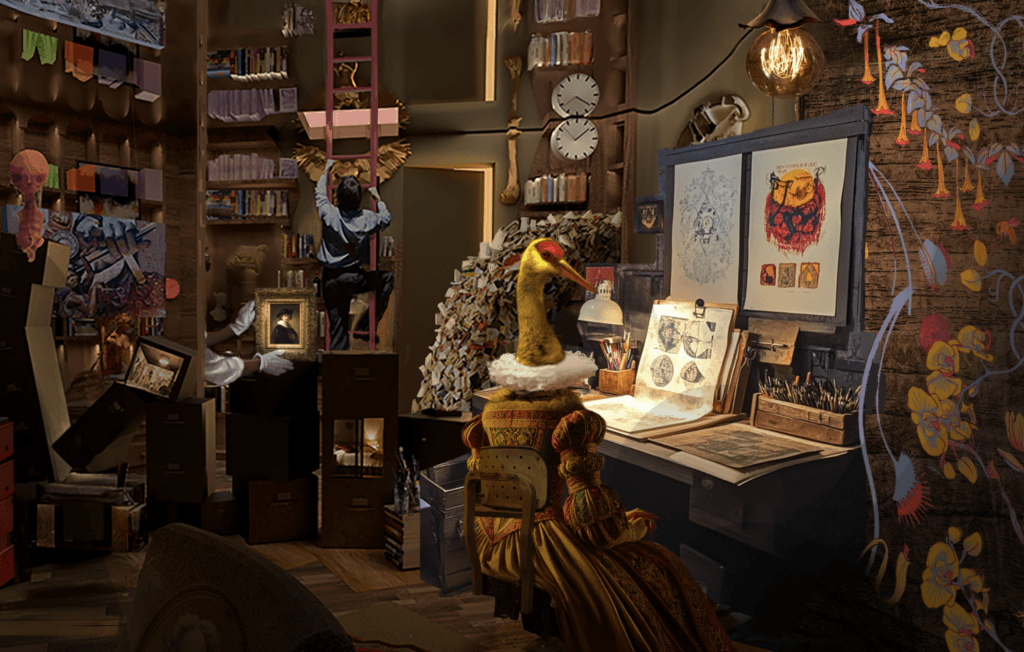
Inside Old City’s new house of wonder
The Ministry of Awe has turned a long-empty bank into one of Philadelphia’s most unusual cultural bets: a six-story, 8,500-square-foot immersion in murals, robotics, hidden corridors, and live performance. Housed at 27 N. 3rd St. in the former Manufacturers National Bank, the project asks a larger civic question too, whether immersive art can do more than dazzle and actually help reanimate a downtown landmark.
A landmark repurposed for spectacle
The building itself carries the weight of Philadelphia history. Designed in 1870 by Frank Furness, when he was a young partner at Frasier, Furness and Hewitt, the former bank sat vacant from 1985 until Meg Saligman and her team transformed it into a venue built around curiosity rather than commerce. That reuse matters as much as the installation work inside it: the project did not arrive in a neutral box, but in a 19th-century structure whose architectural identity is part of the experience.
Saligman has described the concept as “a bank with no money,” where the only currency is the human spirit. That framing is more than a branding flourish. It casts the building as a civic instrument, a place where a dormant asset in Old City is being recast as a public-facing cultural destination at a moment when Philadelphia is preparing for America’s 250th anniversary.
How the experience works
The Ministry of Awe spans six floors, and there is no fixed route. Visitors move at their own pace, which means the encounter is shaped less like a traditional exhibition and more like a sequence of discoveries. Part of the attraction is the uncertainty: hidden corridors, former bank vault installations, and changing rooms keep the space from settling into a single predictable script.
The project is designed to evolve over time, with new surprises meant to emerge as the venue matures. Some spaces invite direct participation through words, sounds, and gestures, while live performers move through the building as part of the scene rather than as separate entertainment. Pig Iron Theatre Company helped train some of those performers, a detail that signals how seriously the venue takes the performance side of the experience.
The result is an environment that resists easy categorization. Local writers have compared it to a museum, a theater, a haunted house, and a dream, while others have noted similarities to Otherworld in Northeast Philadelphia. Those comparisons are useful because they point to the same central fact: the Ministry of Awe is not simply a gallery, nor just a show, but a hybrid form that borrows from all of them.
What is inside the building
The creative range is broad enough to explain why the place feels so fluid. More than 100 local artists, performers, engineers, makers, and designers contributed to the project, and their work appears across murals, sculpture, robotics, AI, embroidery, mosaics, soundscapes, and performance. The emphasis on local labor is not incidental. It roots the project in Philadelphia’s arts ecosystem rather than importing a finished spectacle from elsewhere.
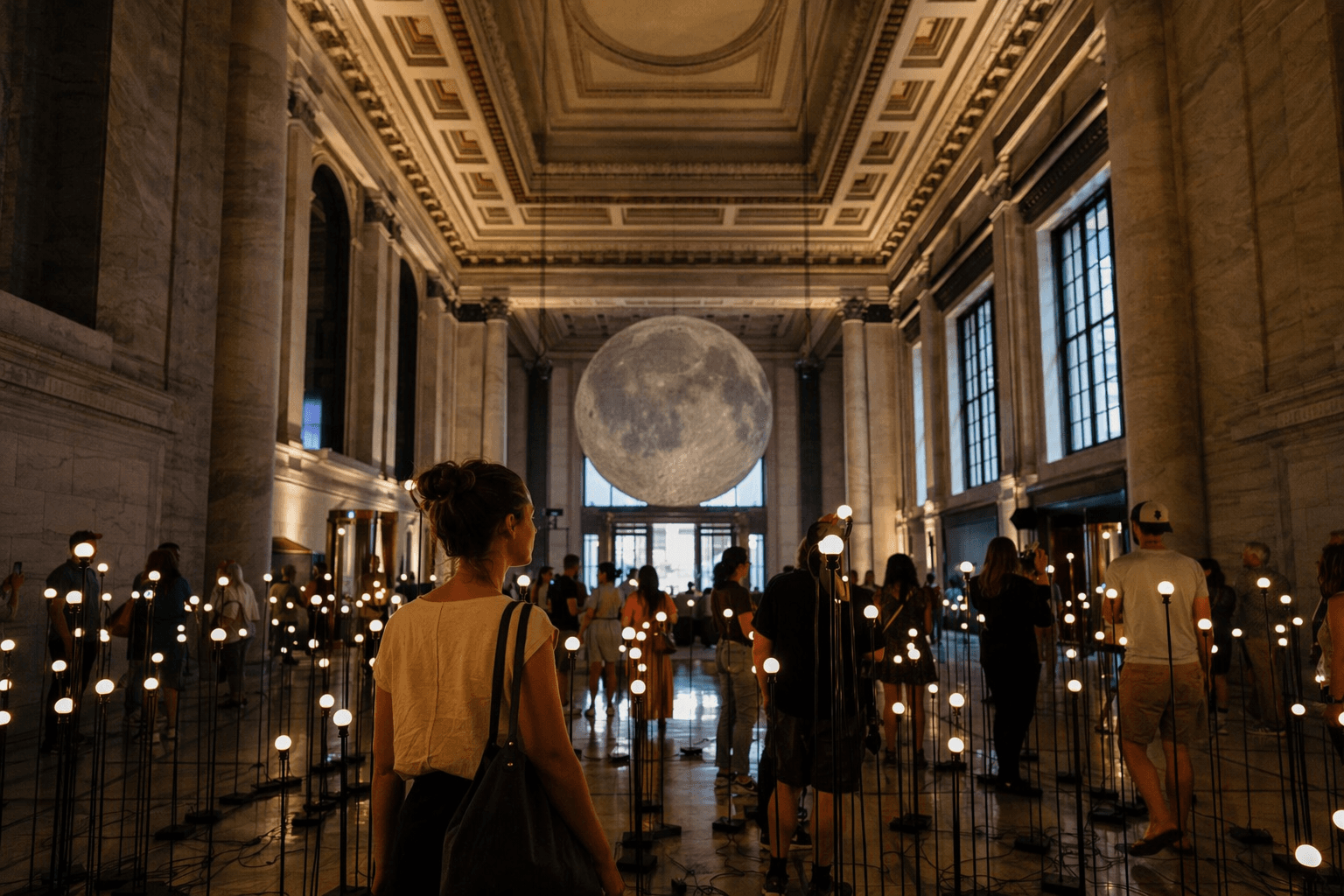
That collaborative model also shapes the tone of the experience. Because the venue uses many disciplines at once, the visitor is not just looking at finished objects. The building becomes a kind of living archive of techniques, from handwork to code, all placed inside a structure that once stored money and now stores attention.
Why Old City, and why now
Old City has long relied on a mix of heritage tourism, galleries, restaurants, and walkable street life. The Ministry of Awe adds a different kind of draw, one that asks whether an immersive arts venue can create repeat visitation and broaden the neighborhood’s cultural economy beyond the usual museum-and-dining loop. That makes it especially relevant in a post-pandemic downtown landscape, where cities are still testing what kinds of experiences actually pull people back into commercial corridors.
The timing also aligns with Philadelphia’s broader 2026 positioning. The city is gearing up for America’s 250th anniversary, and the Ministry of Awe fits neatly into that civic narrative by turning a historic building into a contemporary attraction. It offers a version of heritage that is not frozen behind glass but reactivated through sensory design, performance, and public curiosity.
Planning a visit
The attraction is open Tuesday through Sunday, and tickets are required. Adult admission starts at $29.99, with discounts for children, seniors, and military guests, and children under 3 are admitted free. A typical visit lasts about 90 minutes to two hours, which gives enough time to move slowly, but not so much time that the experience loses its momentum.
That pacing is important because the venue is built on discovery. The visitor is not expected to consume it in a straight line or treat it as a checklist of rooms. Instead, the Ministry of Awe rewards attention, wandering, and the willingness to let each floor reveal itself on its own terms.
A cultural experiment with economic stakes
What makes the Ministry of Awe worth watching is not just its scale, but its ambition. It is clearly designed as an attraction, but it is also a test of whether immersive art can serve as economic redevelopment, not merely upscale novelty dressed in the language of wonder. In a city that is always negotiating how to protect historic fabric while keeping downtowns lively, the former Manufacturers National Bank now stands as a case study in what happens when a vacant landmark is given back to the public as an experience rather than a container.
If the project endures, it will likely do so because it offers more than novelty. It joins architecture, performance, and local labor in a space that asks visitors to look again at a building, a neighborhood, and the idea of what civic culture can be after the pandemic-era reset.
This article was produced by Prism’s automated news system from verified source data, official records, and press releases, then run through automated quality and moderation checks before publishing. The system is built and supervised by the people who set the standards it runs under. Read our full AI policy.
Did this article answer your question?