Philippine Jeepney Drivers See Incomes Gutted as Middle East Conflict Drives Fuel Costs Higher
Toni Prado used to take home 1,000 pesos for three trips. Now he clears 200. The U.S.-Israel war on Iran has more than doubled Philippine diesel prices.
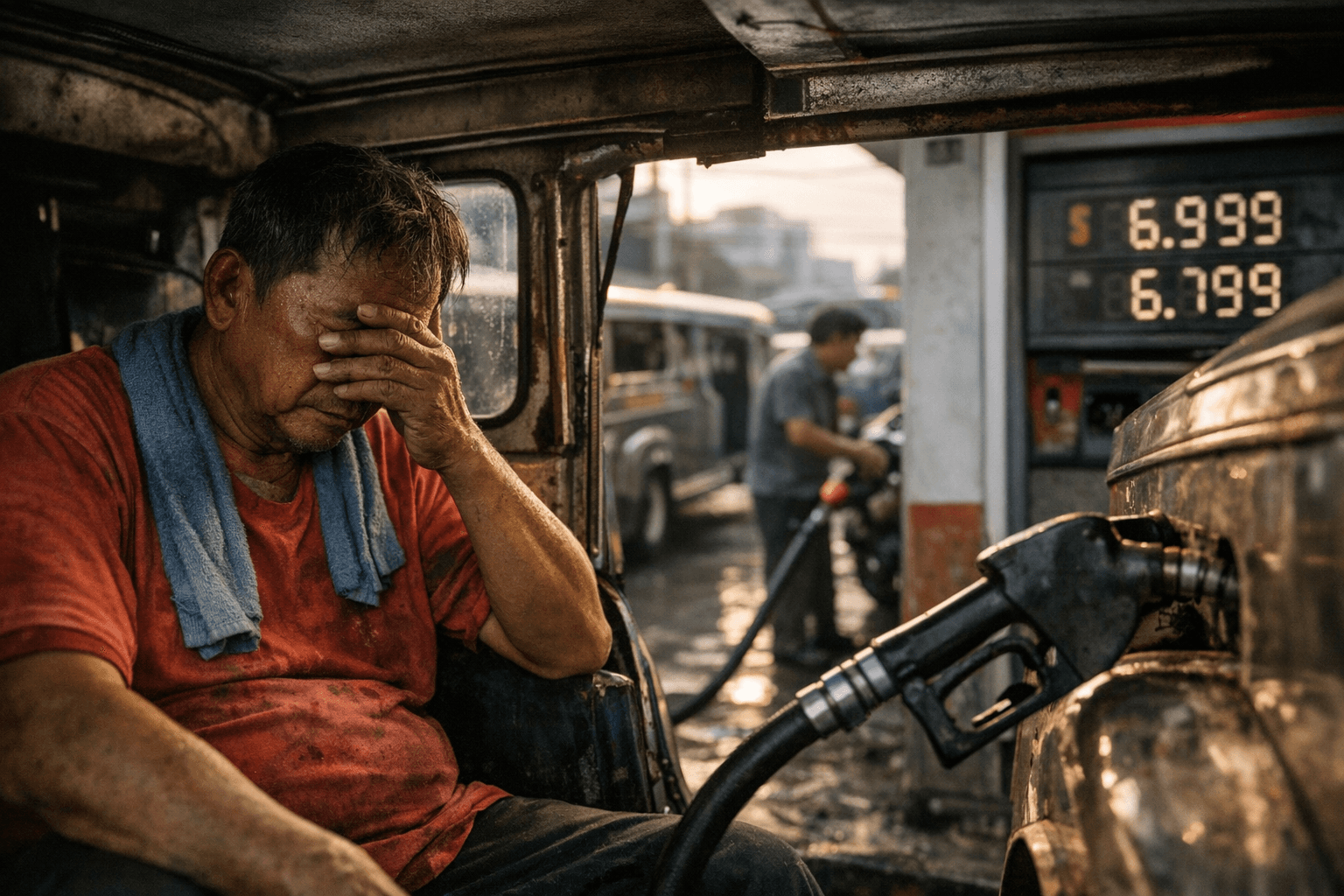
Toni Prado, a jeepney driver and father of four in Manila, described his financial reality in three sentences: "We are losing our income. What we earn just goes to paying for diesel." "Before I could earn at least 1,000 pesos ($16.65) for three trips, now I only take home 200 pesos," he said. The calculation leaves nothing for rent, food, or school fees.
Prado was one of thousands of jeepney drivers who took to the streets across the Philippines on March 19 to protest against a more-than-doubling of local diesel prices after global oil prices surged because of the U.S.-Israel war on Iran. Jeepneys, which were originally created from abandoned U.S. military jeeps after World War Two, are a vital mode of public transport across the Philippines.
The Philippines relies heavily on Middle Eastern oil, and the surge in fuel prices is threatening to stoke inflation in the consumption-driven economy. The country imports about 98 percent of its fuel requirements, leaving it highly vulnerable to global price swings. Fuel prices had already hit an all-time high of P100 per liter before the March 19 strike, and as of March 24, gasoline, kerosene and diesel were estimated to push beyond P100 per liter with another round of adjustments expected.
It was the eighth consecutive week that all fuel prices increased. Drivers said the pain of surging diesel prices was compounded by the suspension of a fare hike that could have provided some relief. The fare hike had been suspended a day before the strike by President Ferdinand Marcos Jr., leaving operators caught between climbing input costs and fares locked at the old rate.
Reggie Manlapit, who has been a jeepney driver for two decades, said he needs to work longer hours but still gets less pay. "Because of what's happening, we work longer hours and we're lucky if we can take home 200 pesos," he said.
Transport group PISTON, or the Pagkakaisa ng mga Samahan ng Tsuper at Operator Nationwide, led the national strike. PISTON president Mody Floranda said around 60 major routes were paralyzed in Metro Manila during the strike. Around 100,000 members of PISTON across the country were expected to join the protest and transport strike.
The government's response drew sharp criticism from the drivers' coalition. The government rolled out a P5,000 fuel subsidy for transport workers nationwide, first catering to tricycle drivers in Metro Manila before extending it to jeepney, taxi, bus, and other public utility vehicle drivers. Floranda pointed out that if oil prices reach P120 per liter, the daily cost of travel would hit P3,600, meaning the P5,000 cash aid would not even last two days.
Both the House of Representatives and the Senate passed a bill granting President Marcos emergency powers to respond to the fuel crisis, but Floranda was unmoved. He called for the repeal of a law that stripped the government of its authority to control fuel prices. That law is the Downstream Oil Industry Deregulation Act of 1998. House lawmakers acknowledged that the oil deregulation law, which stripped government control over fuel prices, is among the factors making it difficult for authorities to address the double-digit increase in fuel costs amid the Middle East conflict.
President Marcos declared a national state of energy emergency, giving the government expanded powers to secure fuel supplies and shield the economy from surging oil prices triggered by the war involving Iran, Israel and the U.S. In his executive order, Marcos said escalating hostilities in the Middle East and disruptions in critical shipping routes such as the Strait of Hormuz pose an "imminent danger" to the country's energy security, activating a coordinated response framework aimed at stabilizing fuel supply and protecting sectors most exposed to rising energy costs.
Citing estimates by Floranda, rights groups warned that public utility vehicle drivers' earnings may be cut to P300 per day should diesel prices hit P120 per liter, a threshold that the current trajectory makes plausible within weeks. For Prado and the thousands of Manila drivers who already take home a fifth of what they earned before the conflict erupted, that prospect signals not a price disruption but an income collapse.
Know something we missed? Have a correction or additional information?
Submit a Tip

