Philippine police arrest senator in flood-control graft scandal
Police took Jose “Jinggoy” Estrada into custody in a flood-control graft case that exposed how missing money left communities defenseless.
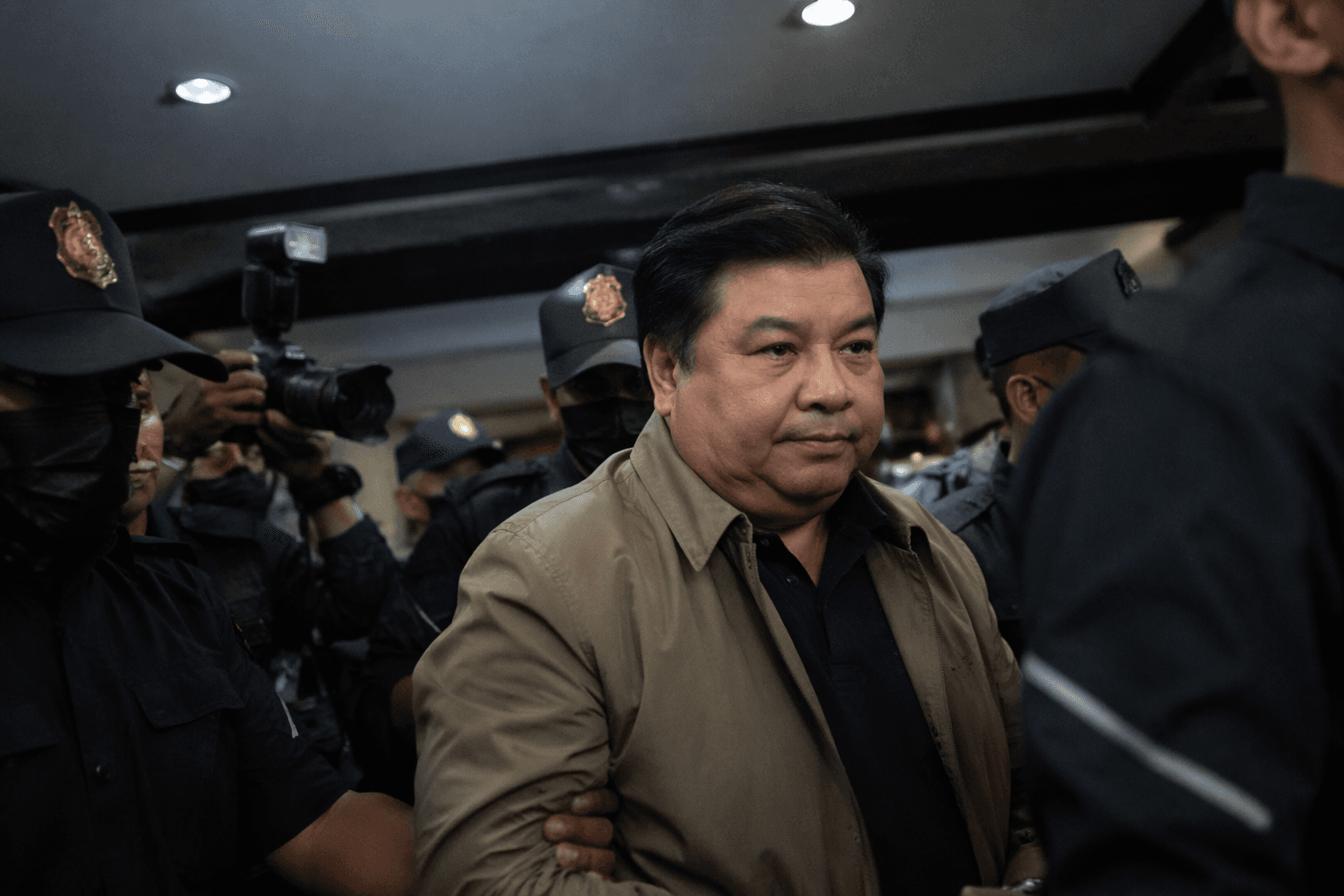
Philippine police arrested Senator Jose “Jinggoy” Estrada after a court ordered his detention in a flood-control graft case that has become one of the country’s most politically damaging corruption scandals. The move made Estrada the highest-ranking government official taken into custody in the case and pushed a sprawling inquiry deeper into Congress, public works contracting and the people who profited as flood defenses failed.
The Office of the Ombudsman charged Estrada with plunder and graft, alleging illicit payouts totaling 573 million pesos, or about $9.3 million. Prosecutors said he inserted flood-control allocations into the 2025 national budget, a claim that turned the case from a procurement dispute into a question of criminal responsibility at the heart of the state’s spending process. Under Philippine law, plunder is a non-bailable offense and can carry life imprisonment.
The scandal erupted after President Ferdinand Marcos Jr. ordered an audit of flood-control projects in his 2025 State of the Nation Address. He later said 15 contractors had cornered more than P100 billion in flood-control contracts from 2022 to 2025, intensifying anger over ghost projects, substandard work and a narrow circle of politically connected builders. Senate Blue Ribbon Committee hearings began in August 2025 and widened the fallout to contractors, public works officials and other politicians.
The case has resonated far beyond the Senate because flood control in the Philippines is not an abstract infrastructure line item. The country is among the world’s most disaster-prone, and failed drainage, dikes and river works can quickly mean submerged homes, cut-off roads, lost livelihoods and deadly exposure when storms hit. That is why the scandal has been treated less as a narrow budget abuse case than as a direct threat to public safety in a climate-exposed nation.
The financial damage has also been enormous. The Department of Finance estimated losses from flood-control corruption at as much as 118.5 billion pesos from 2023 to 2025, while later Senate investigations put the toll at roughly 180 billion pesos tied to 673 ghost projects from 2016 to 2025. Anti-corruption protests drew hundreds of thousands of people onto the streets of Manila in the fall of 2025, underscoring how the scandal has deepened distrust in public works promises and the institutions meant to enforce them.

Estrada, the son of former president Joseph Estrada, now stands at the center of a case that has already shaken the political class and raised the stakes for accountability. For a country that measures corruption not only in stolen money but in flooded neighborhoods and preventable losses, the arrest marks a rare test of whether power can still be reached by the law.
This article was produced by Prism’s automated news system from verified source data, official records, and press releases, then run through automated quality and moderation checks before publishing. The system is built and supervised by the people who set the standards it runs under. Read our full AI policy.
Did this article answer your question?

