Philippine, U.S. and allied forces rehearse coastal defense on Palawan
Philippine and U.S. forces fired on mock landing craft off Palawan as Australia and New Zealand widened Balikatan’s deterrent message in the South China Sea.
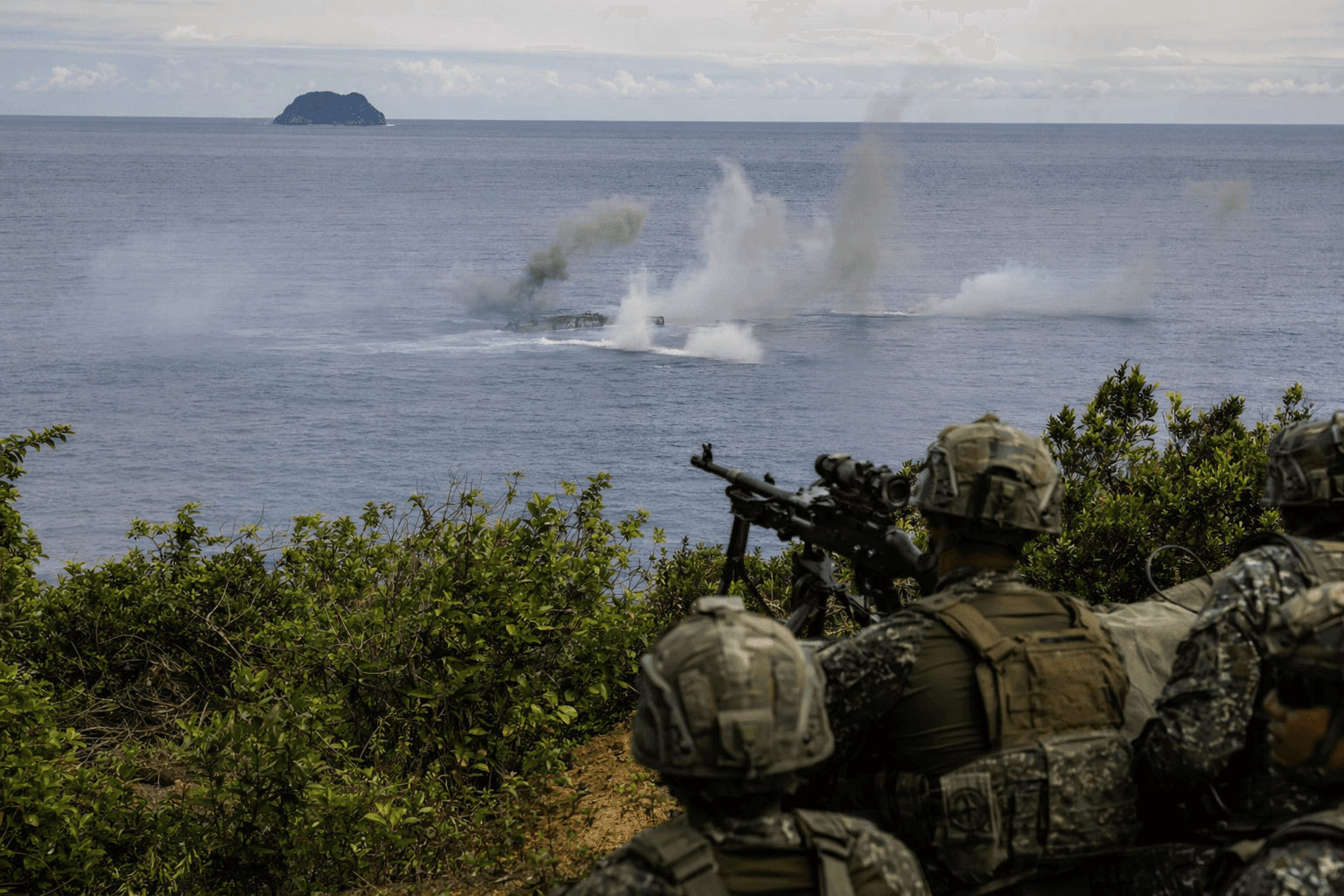
Philippine and U.S. troops, joined by Australia and New Zealand, rehearsed a counter-landing fight on Long Point Beach in Aporawan, Aborlan, where live fire was used against simulated enemy boats and unmanned craft closing on the shore. The drill was built to show how allied forces would intercept an amphibious threat before it could gain a foothold on Palawan’s western edge.
That coastline matters. Palawan faces the South China Sea, placing it on the front line of the Philippines’ maritime defenses and near routes that would be central in any crisis around the first island chain. By staging a coastal-defense drill there, the armed forces were not just practicing for a beach assault; they were signaling that the Philippines is trying to harden its western flank against pressure from the sea, including the kind of low-cost, hard-to-track threats now posed by drones and small boats.
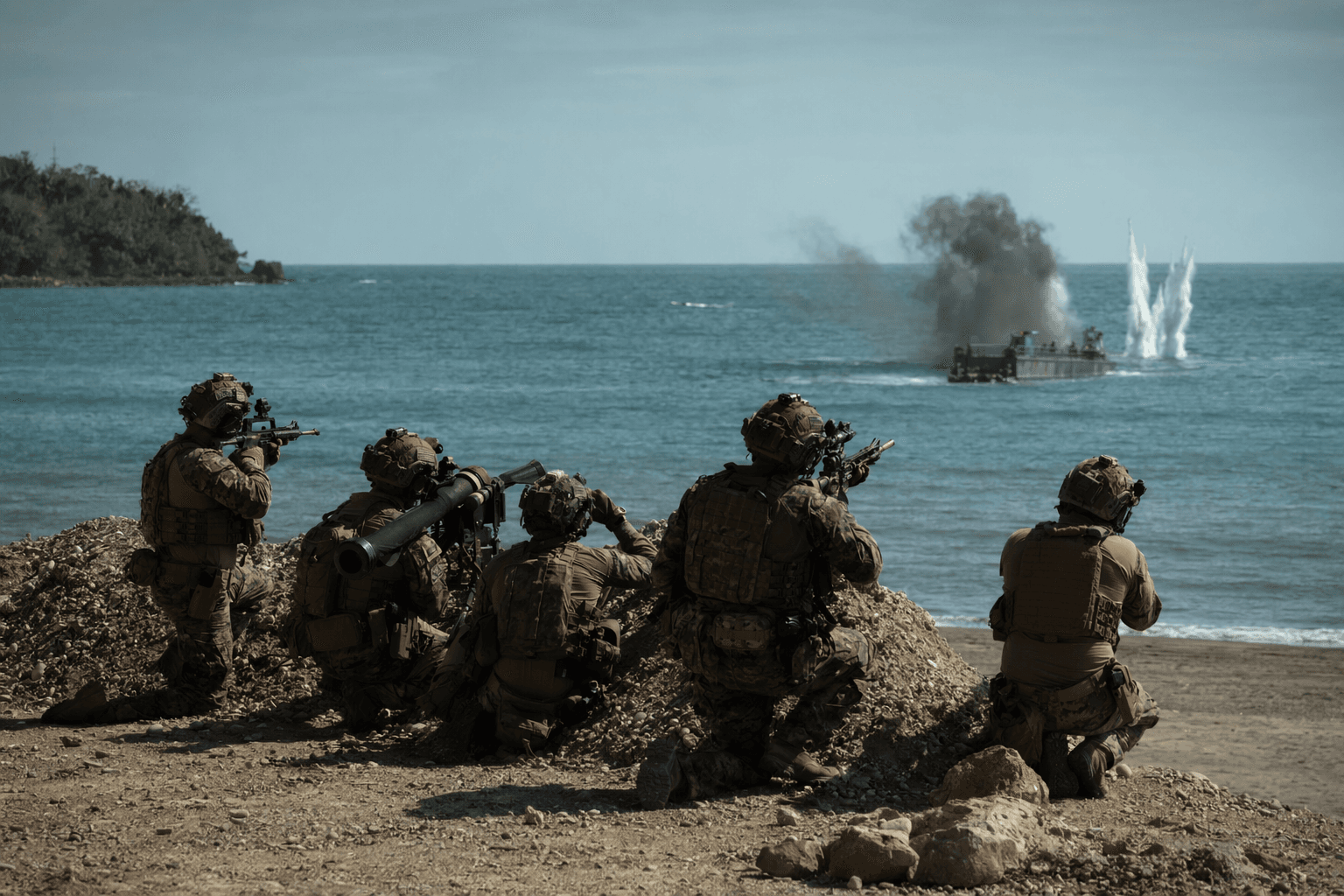
The exercise came during Balikatan 2026, the 41st iteration of the annual drills, which ran from April 20 to May 8 and involved more than 17,000 troops. U.S. military statements described it as the most expansive Balikatan to date, and the timing carried extra weight because it coincided with the 75th anniversary of the U.S.-Philippine Mutual Defense Treaty. Beyond the live-fire event in Palawan, the program stretched across air, land, sea, cyber and space operations, along with humanitarian projects and defensive training against hostile drone systems.
What made this year different from the familiar Balikatan theater was the widening coalition. Australia and New Zealand joined the Palawan coastal-defense rehearsal, while Japan took part as an active participant for the first time, adding to the message that Manila’s security partnerships are no longer limited to a bilateral U.S.-Philippine frame. Canada and France were also among the partner countries involved, with 17 additional nations in the observer program.
The political backdrop was equally sharp. China criticized the exercises and warned that they could raise regional tensions. Defense Secretary Gilberto Teodoro dismissed that criticism and said Beijing’s intentions were “sinister,” while the Armed Forces of the Philippines defended the drills as a legitimate exercise of Philippine sovereignty and not aimed at any country. On Palawan, the message was practical and unmistakable: coastal defense is now being trained as a coalition mission, not just a national one.
This article was produced by Prism’s automated news system from verified source data, official records, and press releases, then run through automated quality and moderation checks before publishing. The system is built and supervised by the people who set the standards it runs under. Read our full AI policy.
Did this article answer your question?