Philippine Watchdog Warns of Toxic Chemicals in Cheap Lucky Charm Bracelets, Necklaces
A Philippine watchdog warned on February 16, 2026 that inexpensive lucky charm bracelets and charm necklaces from low-cost suppliers may contain toxic chemicals in their metallic components and plated charms.

A consumer watchdog in the Philippines issued a warning on February 16, 2026 about the potential presence of toxic chemicals in inexpensive "lucky charm" bracelets and charm necklaces, citing concern over metallic components and plated charms supplied by some low-cost vendors. The advisory singled out low-cost suppliers as the likely source of compromised components, and it asked shoppers to be cautious when purchasing budget charm jewelry.
The February 16 warning focused on the construction of these pieces: tiny clasps, jump rings, base-metal chains and thinly plated charms. The watchdog highlighted that metallic components and plated charms from some low-cost suppliers can contain hazardous substances, and it urged consumers to treat very low price points as a possible indicator of untested materials. The alert did not list specific brands, but it named the product types at risk as inexpensive lucky charm bracelets and charm necklaces.
As of March 1, 2026 I spoke with jewelers who handle plating and findings for small-scale designers; several independently confirmed that base metals and plating baths sourced from low-cost supply houses can vary widely in composition. Those jewelers noted that consistent testing and certification for nickel, lead and other regulated substances is less common among sub-dollar component suppliers, a gap that aligns with the watchdog's concern about plated charms and metallic components in mass-produced charm jewelry.
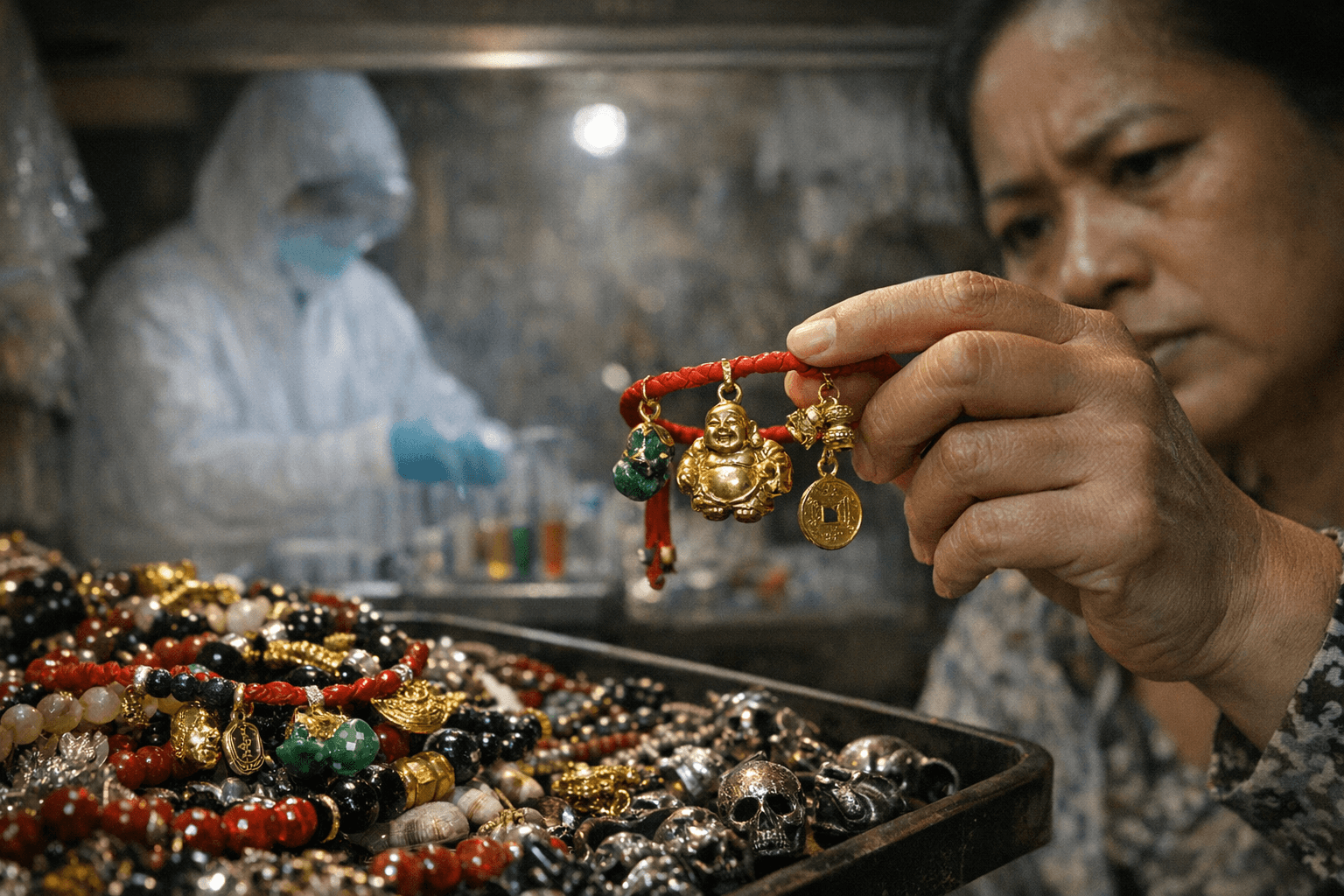
For buyers who prefer charm bracelets and charm necklaces, the February 16 advisory points to practical steps: demand material disclosures from sellers, ask whether components are tested for regulated substances, and request any available certificates for plating or metal composition. When sellers cannot provide documentation for metallic components or plated charms, consider avoiding purchases priced well below typical retail for finished charm jewelry; the watchdog specifically linked low-cost suppliers to higher risk of toxic materials.
The watchdog's February 16 warning arrives amid growing consumer attention to provenance and materials in jewelry, and it underscores a persistent problem: small, inexpensive components - chains, clasps, jump rings and plated charms - often escape the testing and certification expected of finished fine jewelry. The advisory ends with a clear implication for manufacturers and retailers: transparency about metallic components and plated charms is not optional when health risks are raised.
Know something we missed? Have a correction or additional information?
Submit a Tip