Phillips County's Lake View: 1930s New Deal town spawns school funding lawsuits
A New Deal resettlement project built Lake View for Black farm families; its 1930s origins, shrinking population and 1990s school-funding lawsuits continue to shape local services and equity.
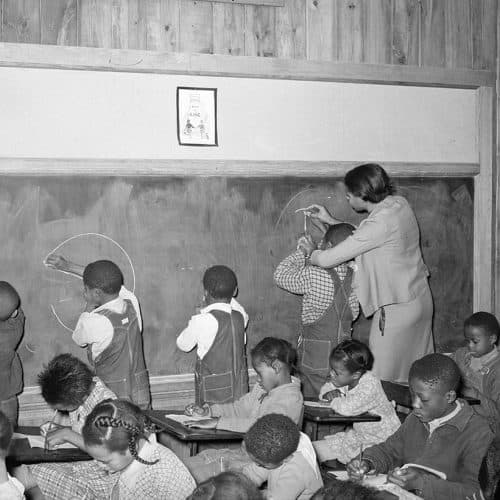
A New Deal-era experiment in Phillips County left a durable imprint on the Arkansas Delta and on how the state funds public education. Established as the Lakeview Resettlement Project in the 1930s, the community was created to house Black farm families and later became central to court fights over school funding in the 1990s.
"The Resettlement Administration—which became part of the Farm Security Administration (FSA) in 1937—claimed much of this federal land and created new farming communities to assist needy farming families." The Lakeview Resettlement Project was officially dedicated in 1938, and sources note it was one of only three RA communities in Arkansas reserved for Black farm families. "Most of these communities, such as Dyess (Mississippi County) and Lake Dick (Jefferson County), were open only to white farmers, but three communities in Arkansas were reserved for Black farm families. The Lakeview Resettlement Project, officially dedicated in 1938, was one of those three."
Accounts of the project’s footprint differ. One description says the development "consist[ed] of 5,600 acres on the north side of Old Town Lake" divided into "ninety-five farms of forty-four acres, each with a farmhouse and barns," supported by "a general store, a cotton gin, a feed mill, repair shops, and a herd of livestock." National Register documentation describes the historic district as covering nearly 4,400 acres, with NRHP metadata giving the area as 4,371 acres and listing the district as added January 28, 2019 with reference number 100003357 and coordinates 34°25′0″N 90°47′11″W.
Lake View remains a predominantly African-American town. "In 2010, the federal census reported a population of 443 citizens in Lake View, of which 413 were African American." The town is described as "one of two cities in Arkansas (and one of three incorporated communities in Arkansas) where African Americans make up more than ninety percent of the population." The 2020 census shows the total population falling to 327, a drop that echoes wider Delta trends of outmigration and shrinking services.

Residents today still rely on local civic anchors. Lake View has a public library, a medical clinic, and an office for Mid Delta Community Services; mail is routed through the Wabash post office. The town is also a featured stop on the Delta Heritage Trail, tying preservation and tourism to community identity.
The community’s role in reshaping education funding in the 1990s links directly to questions of equity that touch health and social services. Concentrated poverty, population loss, and school-funding disputes affect staffing, mental health supports, and clinic capacity in small towns. For Phillips County, preserving the Lakeview Resettlement Project Historic District on the National Register acknowledges the town’s architectural and social history even as policymakers grapple with how legal rulings and declining tax bases have reshaped school budgets and local services.
For readers in Phillips County, the story matters because it ties local preservation, school finance, and public health together. How the region translates a New Deal legacy into sustainable funding for schools, clinics, and community programs will determine whether Lake View’s next chapter bolsters equity or deepens existing gaps.
Know something we missed? Have a correction or additional information?
Submit a Tip