Pivotal's Helix eVTOL Flying Car Available for $200,000 Reservation Now
Palo Alto startup Pivotal is taking $200,000 reservations for its Helix eVTOL, but with only 50 trained pilots and no published specs, who's actually first in line?
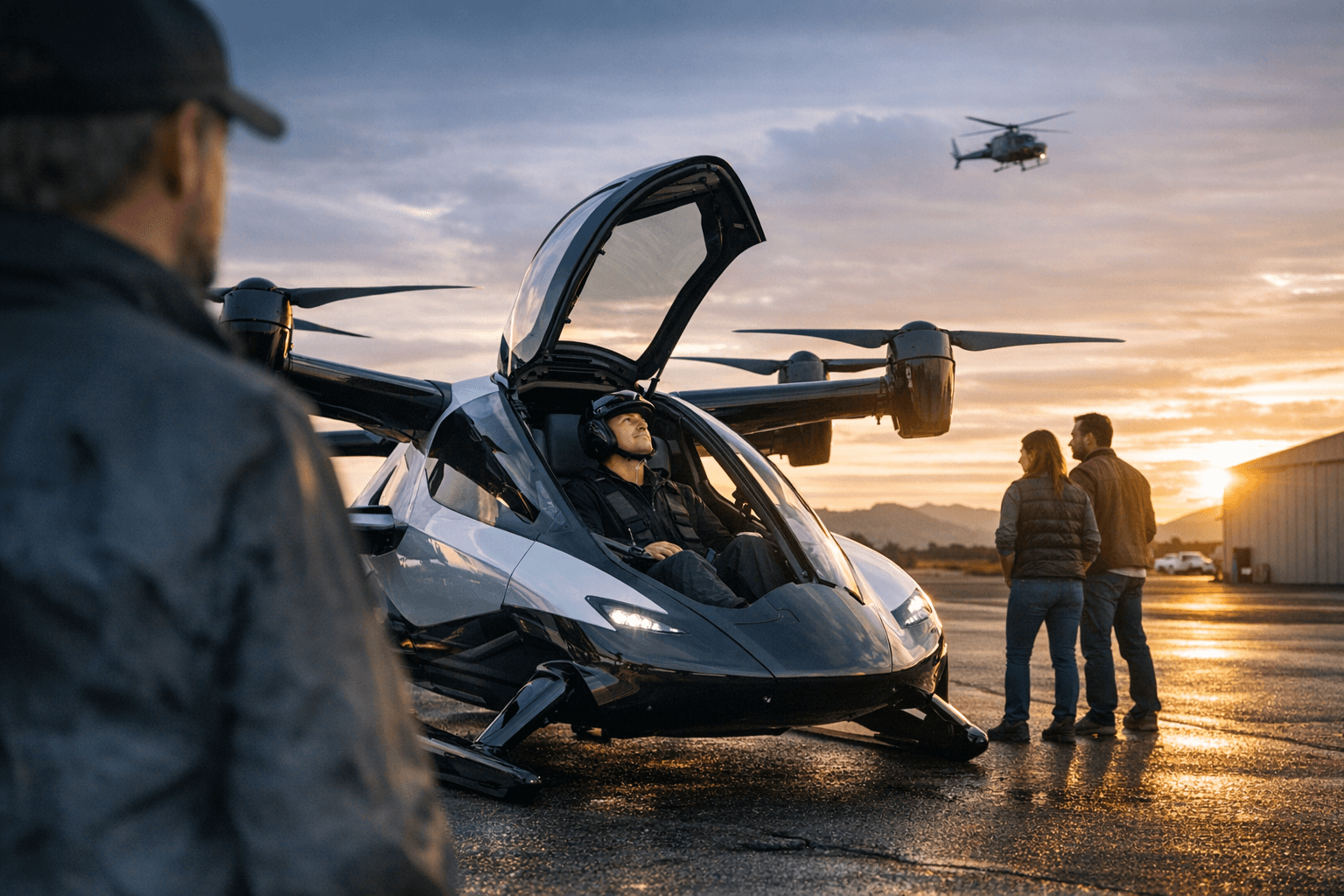
Just over 50 people have been trained to fly a Pivotal aircraft since founder Marcus Leng first took one airborne in 2011. Now the Palo Alto company is open for $200,000 reservations on its latest eVTOL, the Helix, with delivery potentially less than a year away, on a vehicle whose range, speed, certified noise output, and FAA approval path have not been publicly disclosed. The central question the company has not yet publicly addressed: who is the first real customer, and what exactly are they buying?
The Helix is the second-generation product of a company Leng started in 2009, designing an electric aircraft that could take off vertically without gasoline. He flew the real version himself in 2011, called it BlackFly, and refined it quietly as the company relocated to the Bay Area in 2014 and emerged from stealth to reveal BlackFly publicly in 2018. That design became the foundation for Helix. Ken Karklin took over as CEO in 2022 and moved the company from experimental flights toward customer reservations and structured training, supported by a staff now exceeding 100 full-time employees.
Karklin has sketched a three-segment market: personal use, public safety, and defense. "You're going to see business generated by all three," he said. "We talk about recreation and short hop travel, and sometimes folks can be a little dismissive about that. I think that's a huge mistake." But the regulatory infrastructure for any of those three segments remains thin. Urban landing pads do not exist at scale. Airworthiness rules specific to eVTOLs are still being written. Pivotal has not published a cost-per-mile figure against rideshares or EVs, has not specified a safety certification milestone, and has not clarified whether Helix pilots need an existing private license, a new eVTOL-specific credential, or something else entirely.
The company addresses noise and airspace concerns in principle. "Earning public trust is essential to making electric aviation part of everyday life, and noise is a key factor," Pivotal said in a statement. Without published decibel measurements or third-party community noise studies, that commitment remains aspirational.
Internationally, the competitive clock is running. China's EHang has received government certifications to operate autonomous eVTOLs and plans to launch sightseeing flights in several cities. Dubai expects to begin Joby Aviation air taxi service as early as this year. Archer's Midnight, backed by Stellantis and United Airlines and built to carry four passengers on 60- to 90-minute trips, completed its first test flight outside the United States at Abu Dhabi's Al Bateen Executive Airport in July 2025. U.S. Transportation Secretary Sean Duffy, in a Department of Transportation video, framed the moment with urgency: the new aircraft "are going to make the airspace far more interesting and far more fun, and we have to be prepared for that." The industry still faces significant technical, regulatory, and economic hurdles.
Pivotal's reservation list may confirm there is a $200,000 market for the promise of certified personal flight. The specifications, safety targets, and FAA timeline will determine whether the promise can be kept.
This article was produced by Prism’s automated news system from verified source data, official records, and press releases, then run through automated quality and moderation checks before publishing. The system is built and supervised by the people who set the standards it runs under. Read our full AI policy.
Did this article answer your question?