Pizza Hut Managers and Staff Face AI-Driven Shift as Byte Rolls Out
Pizza Hut managers and staff face AI tools from Yum! Brands' Byte that change scheduling, training and shift work and raise surveillance and cost concerns.
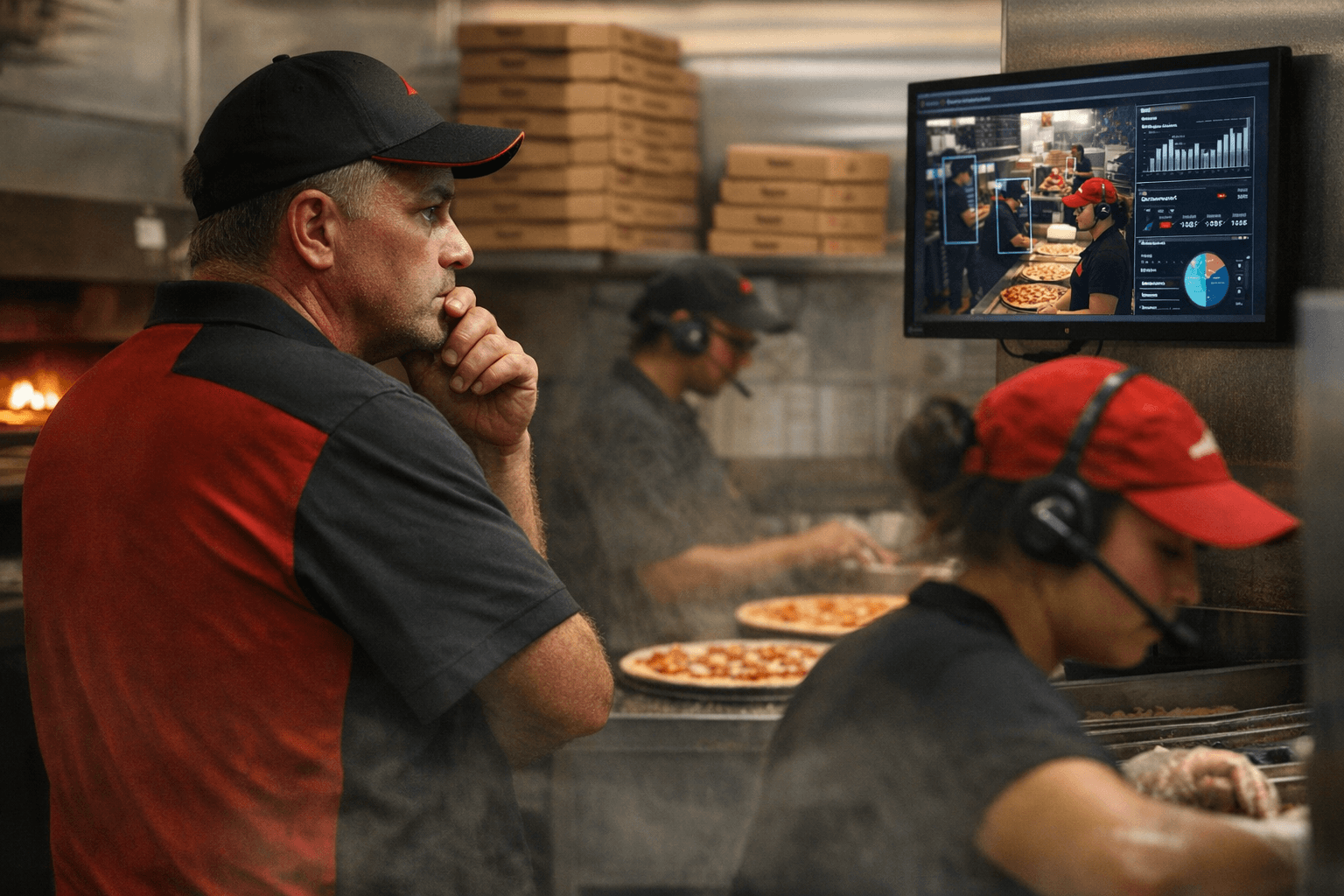
Yum! Brands is rolling out Byte by Yum, an AI-driven restaurant technology platform that consolidates ordering, point-of-sale, kitchen and delivery optimization, menu management, inventory and labor-management tools into a single software-as-a-service stack used across KFC, Taco Bell, Pizza Hut and other brands. The platform includes manager-facing coaching tools, labor and scheduling analytics, computer-vision pilots and voice AI for ordering, and it is already reshaping how managers and hourly teams organize work.
For managers, Byte promises new dashboards and analytics that track labor productivity and compliance in granular detail. Scheduling analytics can recommend shift patterns and staffing levels, while manager coaching modules automate training prompts and performance guidance. For hourly employees, the change means more structured in-shift task prompts and digitally driven training responsibilities that formerly fell to shift supervisors. The combined effect is a shift in day-to-day job tasks and potentially in job design itself, as some supervisory functions move into software and new monitoring data become part of performance reviews.
Franchisees must weigh operational benefits against implementation costs and labor impacts. Byte’s single-stack approach is pitched as a way to increase order accuracy, speed kitchen operations and reduce waste through tighter inventory management, which could improve margins. At the same time, franchise owners are evaluating how capital and subscription expenses fit into franchise economics and how automated scheduling might affect labor flexibility and overtime. Those calculations will determine whether individual Pizza Hut locations adopt all of Byte’s features or roll them out selectively.
The platform’s computer-vision pilots and voice AI for ordering have sparked ethical and surveillance questions among operators and employees. Past industry discussions have noted rising productivity expectations when AI systems are introduced, along with concerns about the scope of monitoring and how data will be used in discipline or staffing decisions. Byte centralizes a great deal of front-line operational data, increasing the kinds of metrics available to managers but also amplifying privacy and fairness debates that have accompanied workplace tech elsewhere in the restaurant sector.
Implementation will test how corporate-led technology meets franchisee autonomy and front-line realities. Training programs, scheduling practices and labor cost forecasts will all need updating, and managers will face new reporting responsibilities as they adapt to automated coaching and analytics. For Pizza Hut managers and hourly staff, Byte promises more consistent operations and potential efficiency gains but also a new layer of data-driven oversight.
How franchisees balance the promise of reduced waste and faster service against subscription costs and worker concerns will shape the pace and scope of Byte’s adoption. The rollout’s next phase will reveal whether the platform becomes another operational tool in the kitchen or a major redesign of how Pizza Hut stores are run and staffed.
Know something we missed? Have a correction or additional information?
Submit a Tip