Pékerman reflects on Messi's rise from debut to World Cup glory
From a red card in Budapest to a title in Lusail, Messi's Argentina story became Pékerman's lesson in legacy, pressure, and how greatness survives transition.
José Pékerman's place in Lionel Messi's story begins with a risky first cap and ends with a World Cup crown that changed the meaning of the whole journey. The arc runs from an 18-year-old sent on against Hungary in Budapest on 17 August 2005, then shown a red card almost immediately, to the captain of Argentina lifting the trophy in Lusail on 18 December 2022. Read that span closely and it becomes more than nostalgia, it becomes a study in how a national team and its most famous player learn to survive each other.
A debut that announced the stakes
Pékerman gave Messi his senior debut with Argentina against Hungary, and the detail that has lasted is not the pass or the scoreline, but the shock of how quickly it unraveled. The AFA marked the anniversary by noting that the captain entered from the bench and almost immediately saw red, a rough beginning for a player who was still only 18. FIFA later looked back on "the little boy from Rosario" making his international bow as a second-half substitute, a reminder that Messi's international identity began in vulnerability, not celebration.
That opening mattered because it set the tone for the entire relationship between Messi and the national team. From the beginning, Argentina asked him to carry expectation before it had fully solved how to support him, and he had to grow into a role that was never going to be ordinary. Pékerman's significance is tied to that first call, because he saw enough in Messi to put him on the field before the world had agreed on what he might become.
The long climb from promise to burden
Messi's Argentina career was never only about individual talent. It became a referendum on whether a player who had already conquered club football could turn national pressure into a title, and for years the answer remained unresolved. Every major tournament added another layer of scrutiny, because the gap between what Messi could do and what Argentina had not yet done kept widening.
By 2026, the language around him had shifted. Coverage around the World Cup described Messi as a six-time tournament participant whose path had moved from promise to legend, and that transition says as much about Argentina's football culture as it does about one man. The teenager who debuted in Budapest had become the reference point for an era, the player against whom every later Argentine team would be measured.
That is the deeper layer in Pékerman's reflection. The debut was accidental in one sense, because the red card made it look like a false start, but history turned it into the first chapter of a career that carried the weight of a nation for nearly two decades. What looked fragile at the beginning became durable enough to define an age.
Lusail changed the scale of the argument
The 18 December 2022 final in Lusail gave that arc its defining proof. Argentina and France finished 3-3 after extra time, Messi scored in the match, and Argentina won 4-2 on penalties to secure his first World Cup title. The FIFA Match Centre logged the final as Argentina 3-3 France, with Messi's goal coming in the 108th minute, a detail that underscores how central he was even in a game that swung wildly from one side to the other.
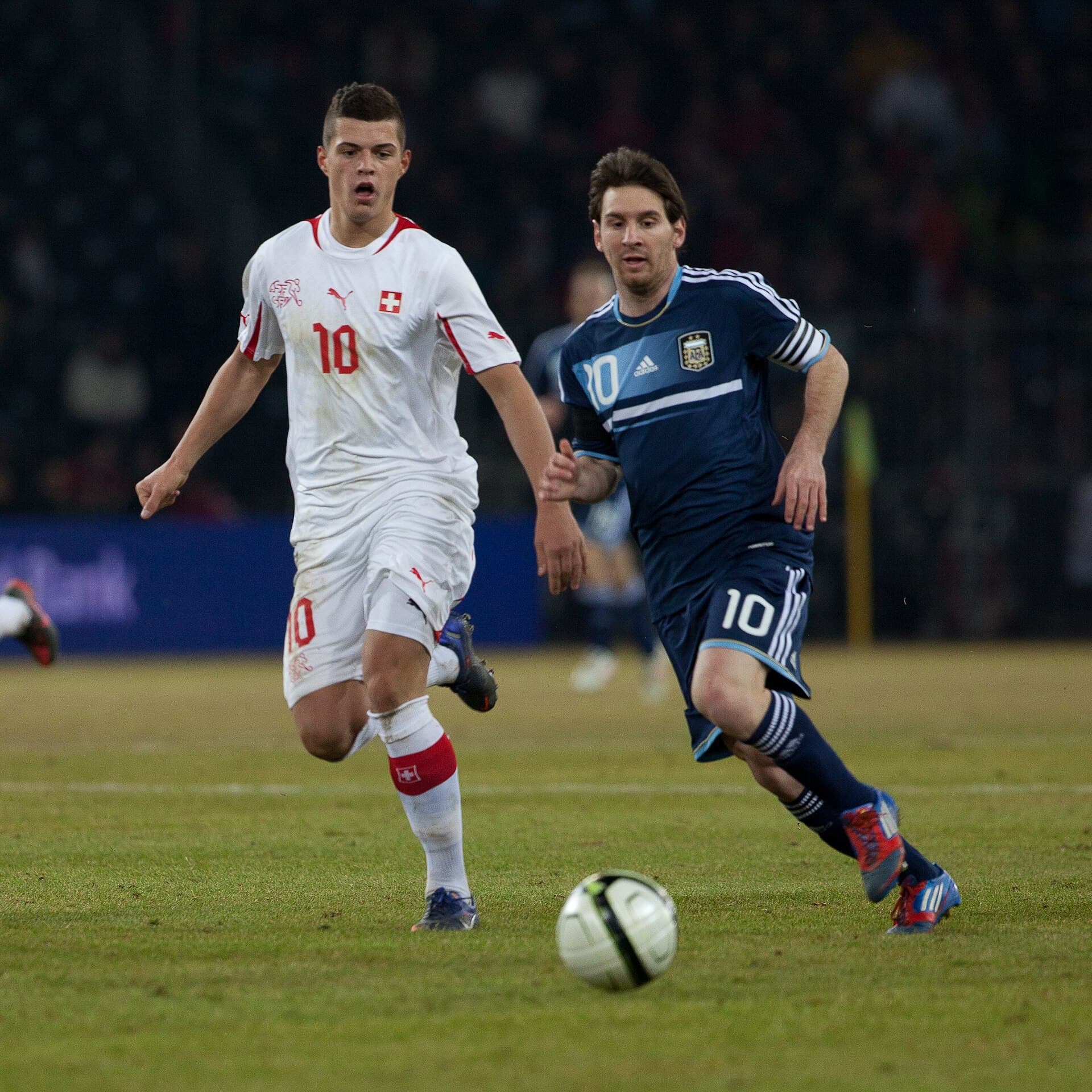
That result altered the way Messi's career can be discussed. Before Lusail, the conversation always had an unfinished edge, because the one prize that most strongly defines global soccer still sat outside his record. After Lusail, the conversation shifted from what was missing to what had finally been completed, and that completion gave his international story a final chapter worthy of the years that preceded it.
It also changed Argentina's own self-image. A team that had spent years trying to convert talent into a defining international ending finally did so on the sport's biggest stage. The title did not erase the earlier disappointments, but it recast them as part of a longer climb that ended with the most important victory of all.
What Pékerman's frame says about Argentina now
Pékerman's perspective turns Messi's story into a legacy-and-transition narrative because it connects the first call-up to the final crown. Argentina's identity under Messi evolved from dependence to belief: the team that once looked to him for rescue eventually built a championship run around his presence, then closed the circle in the one tournament that had defined the debate for almost twenty years. That shift matters because it shows a national team learning how to make genius sustainable instead of merely hoping for it.
The post-Messi era will not be about finding a clone of the No. 10. It will be about preserving the standards that his career forced into view, especially the demand that Argentina combine talent with emotional control, tactical maturity, and the patience to absorb pressure in the biggest matches. The AFA now carries that task, and the measure of the next generation will be whether it can inherit the same competitive calm without the same singular player.
The broader lesson for global soccer
Messi's sixth World Cup in 2026 coverage confirmed that the game had already entered the late stage of his international era, where memory and legacy matter as much as trophies. That is why the Budapest debut still resonates: it shows how a career that began in disorder ended in complete vindication. Global soccer will spend years adjusting to the absence of a player who could make an entire national project feel inevitable, then uncertain, then triumphant all over again.
Pékerman's lens keeps the story honest. Messi's rise was never just a triumph of ability, it was a test of endurance under national pressure, and the final answer came in Lusail with a title that turned promise into record, and record into history.
This article was produced by Prism’s automated news system from verified source data, official records, and press releases, then run through automated quality and moderation checks before publishing. The system is built and supervised by the people who set the standards it runs under. Read our full AI policy.
Did this article answer your question?