Planning a Trip to Monument Valley and Four Corners: What Residents Need
Monument Valley Navajo Tribal Park and the Four Corners Monument are among Apache County’s top visitor destinations, but both lie on Navajo Nation land with seasonal hours, limited services, and specific cultural rules. Residents and visitors should plan fuel and supplies in advance, verify current hours with tribal authorities, and respect tribal regulations to protect cultural sites and support local Navajo-owned businesses.
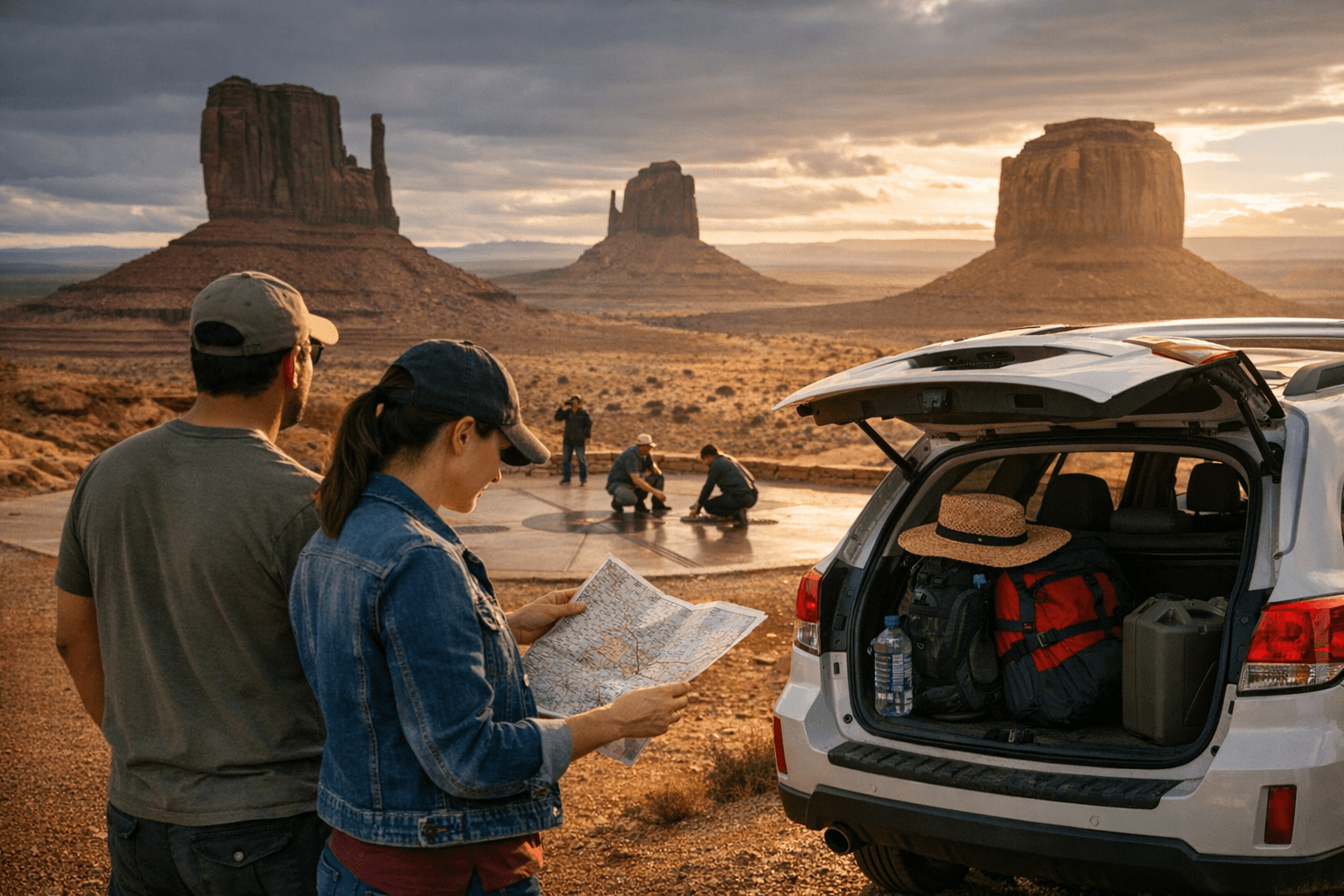
Monument Valley Navajo Tribal Park and the nearby Four Corners Monument draw photographers, motorists, and tourists to Apache County for iconic desert scenery and the rare meeting point of four states. These attractions sit on or adjacent to Navajo Nation land, where tribal authorities set hours, fees, and operational policies that vary by season. That governance framework affects access, visitor services, and local economic flows.
Monument Valley is best known for its buttes and mesas, scenic drives such as Valley Drive, and Navajo-led guided tours that offer cultural context and controlled access to sensitive sites. Four Corners Monument, where Arizona, New Mexico, Utah and Colorado meet, functions as a roadside tourist stop with vendor booths and limited visitor facilities. Both locations have limited infrastructure; visitor hours and on-site services change seasonally and can be constrained by tribal or partner oversight.
Practical constraints have direct implications for Apache County residents and local businesses. Fuel, groceries and lodging are concentrated in small nearby towns; plan refueling and supplies ahead of time. Suggested service points depend on travel route: St. Johns, Kayenta and Chinle within Arizona provide the most immediate support, while Mexican Hat, Utah is an option for some routes. Cell coverage is spotty across the region; download maps and directions before arriving and carry a paper map as backup.
Weather and road conditions can change quickly. Summer brings monsoon storms that can render unpaved and low-lying roads hazardous, while winter conditions can produce snow and ice on higher elevation roads. Visitors should prepare for temperature swings and limited shade, and bring water and sun protection.
Respect for tribal rules and cultural sites is central to responsible visitation. Follow tour operator guidance, stay on designated roads and trails, and comply with posted rules and tribal directives. Supporting Navajo-owned tour operators and artisans keeps tourism dollars within the community and reinforces local economic sovereignty.
For day-to-day planning, verify current hours and fees with tribal authorities or official park pages before traveling. Carry sufficient water, sun protection and printed directions, and confirm lodging and fuel availability in advance. Thoughtful preparation protects visitors, preserves cultural sites, and supports the local economy governed by tribal institutions.
Know something we missed? Have a correction or additional information?
Submit a Tip