Police Drones Spread Nationwide, Raising Privacy and Security Concerns
A Maryland drug case showed drones now sit beside wiretaps and search warrants as police drone use surges nationwide with still patchwork rules.
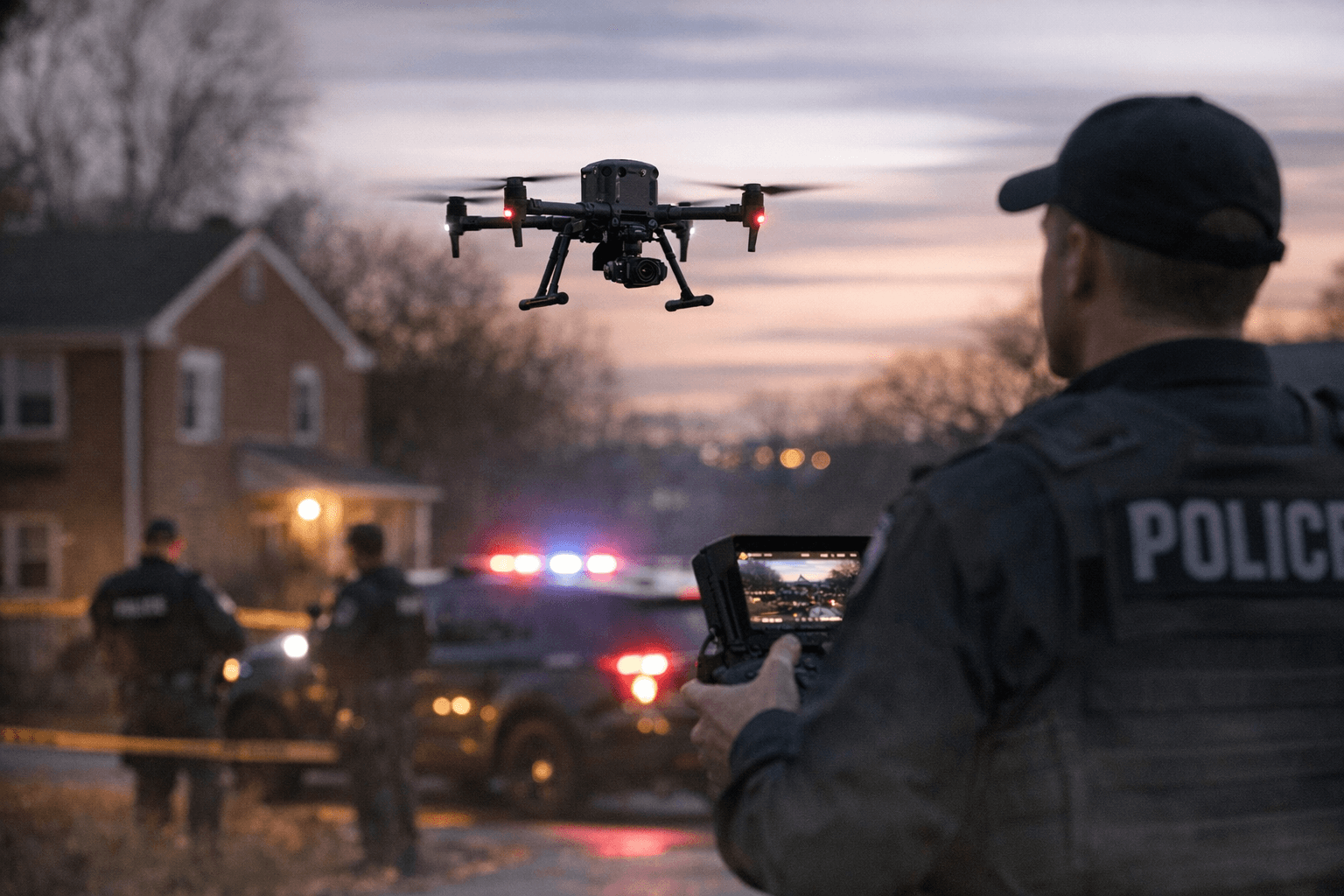
A 15-month Maryland drug-trafficking investigation ended with 12 arrests, more than 40 kilograms of cocaine seized, 11 guns recovered and $23,000 in cash taken, but the case also underscored something larger: drones are becoming routine police tools. In that probe, 13 agencies used drones, tracking devices, wiretaps and more than 80 search warrants, a sign that aerial surveillance is moving from specialty tactic to everyday policing.
That shift has accelerated across the country. Bard College’s Center for the Study of the Drone tallied 1,578 state and local police, sheriff, fire and emergency agencies believed to have acquired drones in its 2020 report, a number that captured how quickly the technology spread beyond novelty. Minnesota law enforcement agencies later reported a 268 percent increase in drone deployments between 2020 and 2023, showing that public safety drones are no longer confined to a few large departments or border units.
Federal rules have not kept pace. A 2023 Congressional Research Service report said there is no specific legislative framework governing federal law enforcement use of drones, even as the Department of Justice’s five law enforcement components, including the FBI, Drug Enforcement Administration, Bureau of Alcohol, Tobacco, Firearms and Explosives, U.S. Marshals Service and Bureau of Prisons, all use unmanned aircraft systems in support of their missions. The Department of Homeland Security also relies on agency-level drone programs, leaving major questions about warrants, data retention and oversight to be handled unevenly from one agency or state to the next.
The policy debate is not about whether drones can help. A 2025 CNA white paper said drones now support search and rescue, scene management, tactical information gathering, suspect tracking and traffic management. It also warned that those programs require substantial spending on equipment, maintenance and personnel, while raising privacy, Fourth Amendment, First Amendment, data management and weaponization concerns.
Researchers have been warning about the scale of the shift for years. The National Institute of Standards and Technology surveyed 183 first responders in 2019 and 2020 to examine how drones were being used in public safety operations and where they could improve future work. More recently, border enforcement has pushed the issue further, with local agencies on the U.S. southern border increasingly using AI-programmed drones to track traffickers and migrants, while Mexican cartels use their own drones to scout desert terrain and move contraband. The technology is spreading faster than the rules built to govern it.
This article was produced by Prism’s automated news system from verified source data, official records, and press releases, then run through automated quality and moderation checks before publishing. The system is built and supervised by the people who set the standards it runs under. Read our full AI policy.
Did this article answer your question?

