Political violence deepens polarization and weakens faith in democracy
Jan. 6 showed how political violence can shrink participation, harden identities and weaken trust. Research suggests it also can trigger the authoritarian backlash it claims to resist.
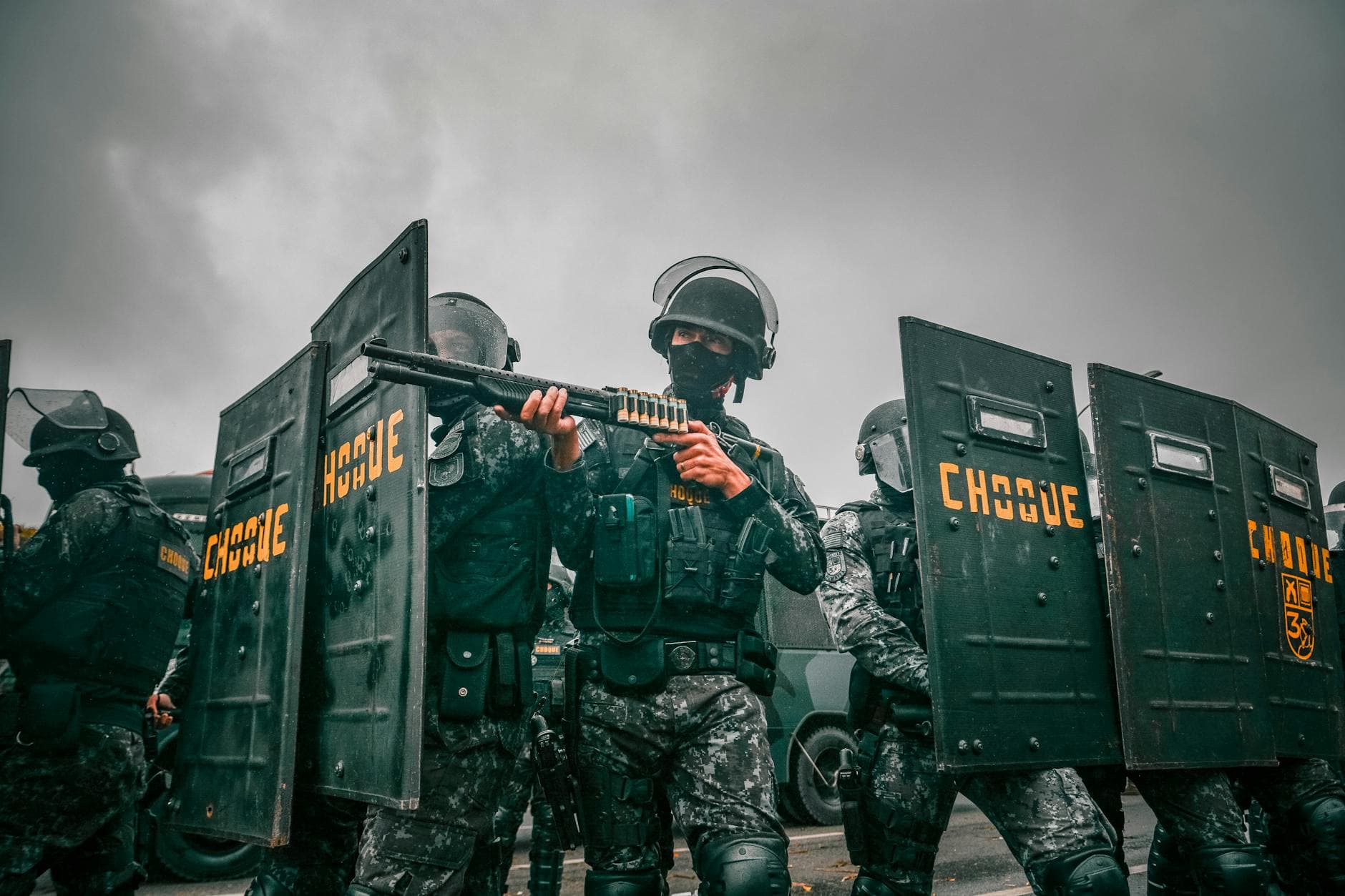
The Jan. 6 attack on the U.S. Capitol in Washington, D.C., was not just an assault on a building. The Cline Center for Advanced Study of Collective Behavior classified it as an attempted dissident coup, a warning that political violence can move quickly from disruption to a direct challenge to democratic order.
That matters because violence does more than injure people in the moment. It can fray civic trust, make political identity feel more brittle and give anti-democratic actors a wider opening. In the United States, the evidence from Jan. 6 shows that the costs were not only moral. They were political, social and institutional.
How violence reshapes democracy
Researchers have found that Jan. 6 produced measurable political aftershocks. A study in the American Political Science Review found that the Capitol insurrection caused a large-scale decrease in outward expressions of identification with the Republican Party and Donald Trump in Twitter bios, with no sign that those expressions bounced back in the weeks that followed. That is a striking sign that violence can alienate even some people who once sat closer to the movement that produced it.
A separate Northwestern University study examined former President Donald Trump’s rhetoric, including his rally speech and tweets on Jan. 6, and found they were associated with higher levels of violence that day. The finding underscores a blunt reality: elite language can shape whether unrest escalates, and political leaders do not simply watch violence unfold from the sidelines. Their words can help set its tempo.
The public health of a democracy under strain
Political violence also has a public-health dimension because it affects how safe communities feel in public life. When people believe elections, institutions or opponents are under threat, they often withdraw rather than participate. That narrowing of participation is itself a civic injury, especially when fear concentrates in already vulnerable communities and makes the democratic space feel smaller than it should be.
Scholars have argued that violence does not only wound victims. It can normalize anti-democratic behavior, deepen polarization and make democratic institutions look weaker or less legitimate. In practical terms, that means more distrust, more caution around public gatherings and more room for narratives that portray force as a political tool rather than a democratic failure.
That concern was echoed in 2023 by more than 100 global scholars surveyed for a report from Johns Hopkins University’s SNF Agora Institute and Protect Democracy. They said political violence was eroding the overall health of democracy in the United States, with elections the area they worried about most. Once violence becomes linked to voting, it reaches beyond protest and into the basic legitimacy of peaceful transfer of power.
What Americans actually believe
The public response is more mixed than the worst-case scenarios suggest. A survey linked to Dartmouth College, Stanford University and the University of Pennsylvania found that most Americans reject political violence and are not on the brink of a citizen-supported push toward authoritarianism. That distinction matters. It means the country is not uniformly primed for collapse, even if the loudest factions are grabbing disproportionate attention.
Still, the same body of research shows that support for violence is not evenly distributed. PRRI has reported that Americans who score high on authoritarianism scales are significantly more likely to support political violence. It also found that Republicans favorable to Donald Trump were 36 percentage points more likely than those unfavorable to Trump to score high on the RWAS. White evangelical Protestants and some Christian nationalist respondents were also more likely to fall into this pattern.
Those findings point to an uncomfortable truth. Political violence is not only a fringe impulse, nor is it evenly spread across the electorate. It clusters where loyalty, grievance and authoritarian sentiment reinforce one another, which makes it harder to dismiss as a temporary outburst.
Why violence often backfires
The temptation behind political violence is usually framed as resistance. Yet the evidence suggests the opposite outcome is common: violence can strengthen the very authoritarian impulses perpetrators claim to oppose. It alienates some supporters, justifies crackdowns, feeds retaliation and hardens the argument that ordinary democratic competition is not enough.
Robert Pape of Harvard’s Ash Center has argued that the United States has entered an era of political violence since the COVID-19 pandemic unlike anything seen since at least the 1960s. That historical comparison matters because it places today’s turbulence inside a longer stress test, not as an isolated episode to be forgotten once the headlines move on. The country is living through a period in which the boundaries of legitimate political action are being tested again and again.
As Sean Westwood put it in discussing the Dartmouth, Stanford and University of Pennsylvania data, "Democracy is under threat in America, but these data show we are not on the brink of a citizen-supported push toward authoritarianism." That is a measured warning, not a reassurance that the danger has passed. It suggests the democratic system still has public support, but also that repeated acts of violence can steadily erode the trust that keeps that support intact.
The lesson from Jan. 6 is not that violence always succeeds on its own terms. It is that even failed political violence can do lasting damage by narrowing participation, inflaming distrust and giving would-be authoritarians a louder case for force, fear and control. In a democracy, those are losses that linger long after the broken windows are repaired.
This article was produced by Prism’s automated news system from verified source data, official records, and press releases, then run through automated quality and moderation checks before publishing. The system is built and supervised by the people who set the standards it runs under. Read our full AI policy.
Did this article answer your question?

