Pollock’s Number 7A sells for record $181.2 million at Christie’s
Pollock’s Number 7A fetched $181.2 million, nearly doubling its estimate and setting a new auction record for the drip-painting icon.

Jackson Pollock’s Number 7A, 1948 sold for $181.2 million with fees at Christie’s in New York, a price that pushed the Abstract Expressionist’s best-known drip technique into a new tier of financial concentration. Estimated at about $100 million, the painting became Pollock’s most expensive work ever sold at auction and one of the clearest signs that the top end of the art market remains a refuge for enormous private fortunes.
The oil-and-enamel-on-canvas work, measuring 35 by 131½ inches, or 88.9 by 334 cm, had been in the S.I. Newhouse collection and was offered in Christie’s Masterpieces: The Private Collection of S.I. Newhouse sale, a 16-lot single-owner auction. Christie’s described Number 7A as one of the first truly abstract paintings in art history and said Pollock made it by placing the canvas on the floor and dripping, pouring and flicking paint across the surface rather than working on an easel. Christie’s also called it the largest of the few remaining privately held drip paintings, a designation that helped explain why the canvas drew such intense attention from bidders.
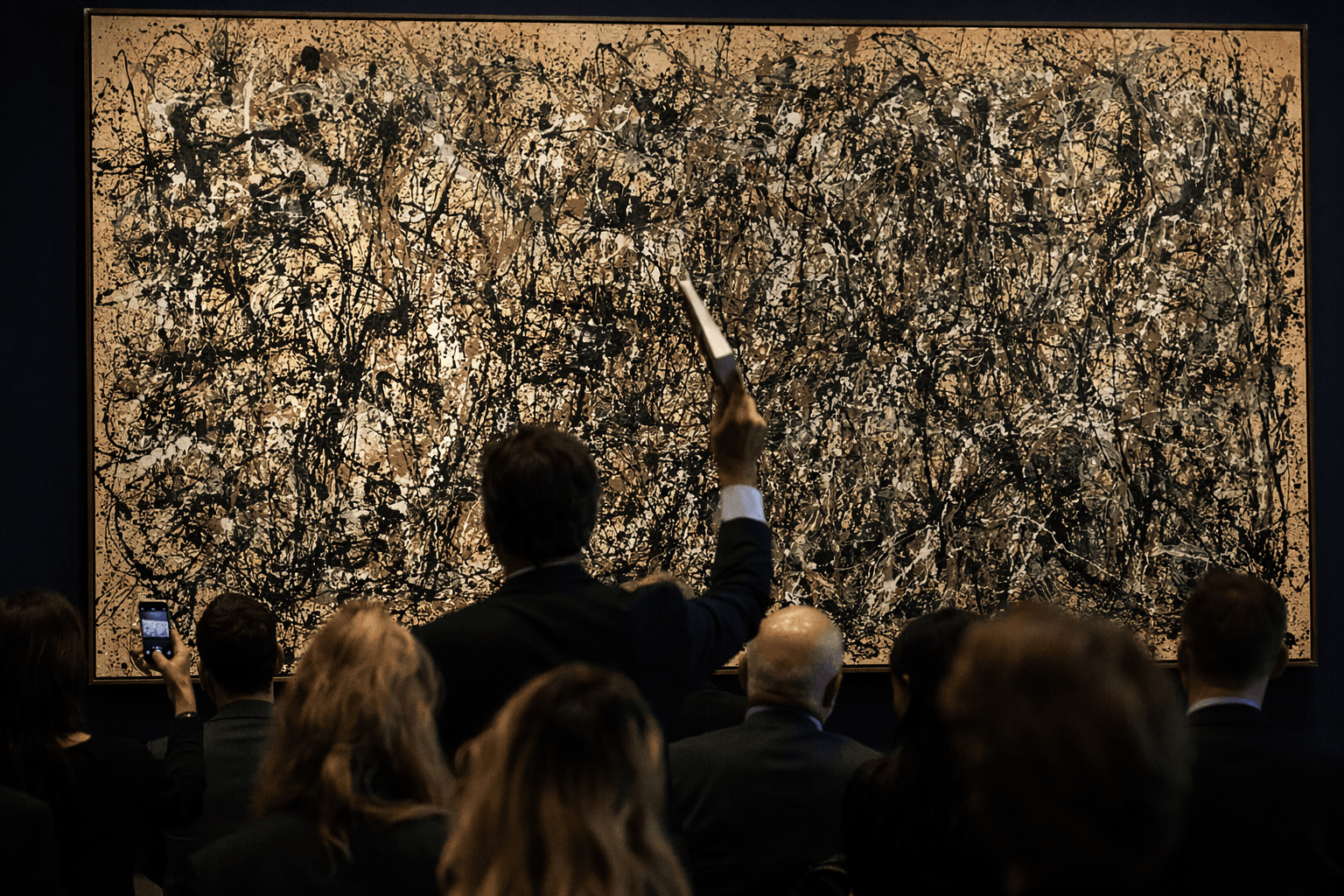
The work’s provenance traced a narrow line through some of the most recognizable names in 20th-century collecting. Pollock gave it to photographer Herbert Matter around 1949, and it later passed to Harold Diamond, John and Kimiko Powers, Alfred Taubman and then to Newhouse in 2000. Newhouse died in 2017, but his collection continued to function as a kind of condensed map of elite taste, with one of modern art’s key canvases moving from one wealthy owner to the next over decades.
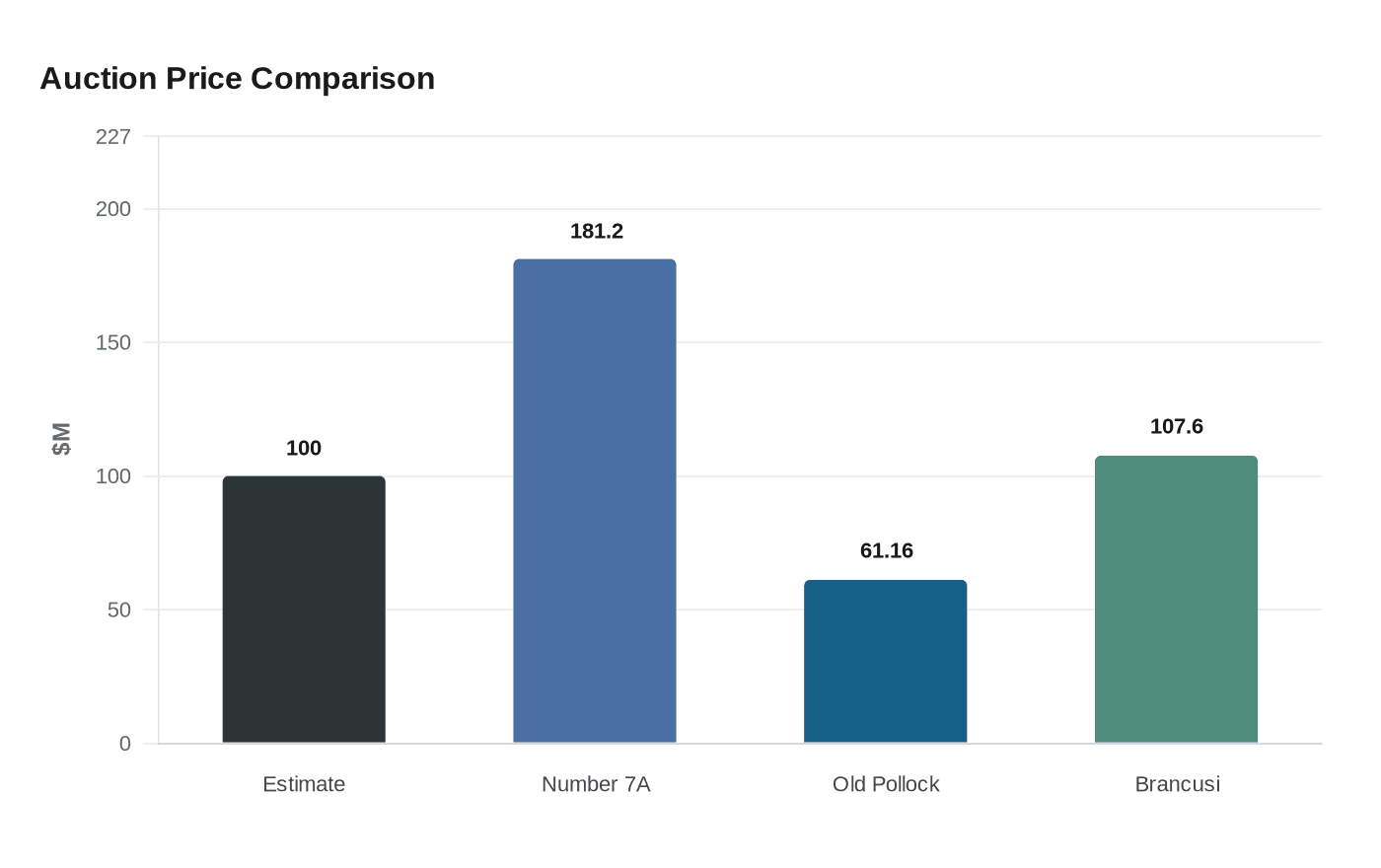
The sale also reset Pollock’s auction record, which had stood at $61.16 million for Number 17, 1951 at Sotheby’s New York in 2021. On the same night, Constantin Brancusi’s Danaïde set its own record at $107.6 million, giving Christie’s two headline results that underscored the resilience of the highest rung of the market. Together, the prices raised the broader question that now shadows every blockbuster auction: whether such results reflect deep, genuine demand for modern masterworks, or the continuing financialization of cultural assets, where scarcity itself becomes a product and trophy art becomes a parking place for capital.
Know something we missed? Have a correction or additional information?
Submit a Tip