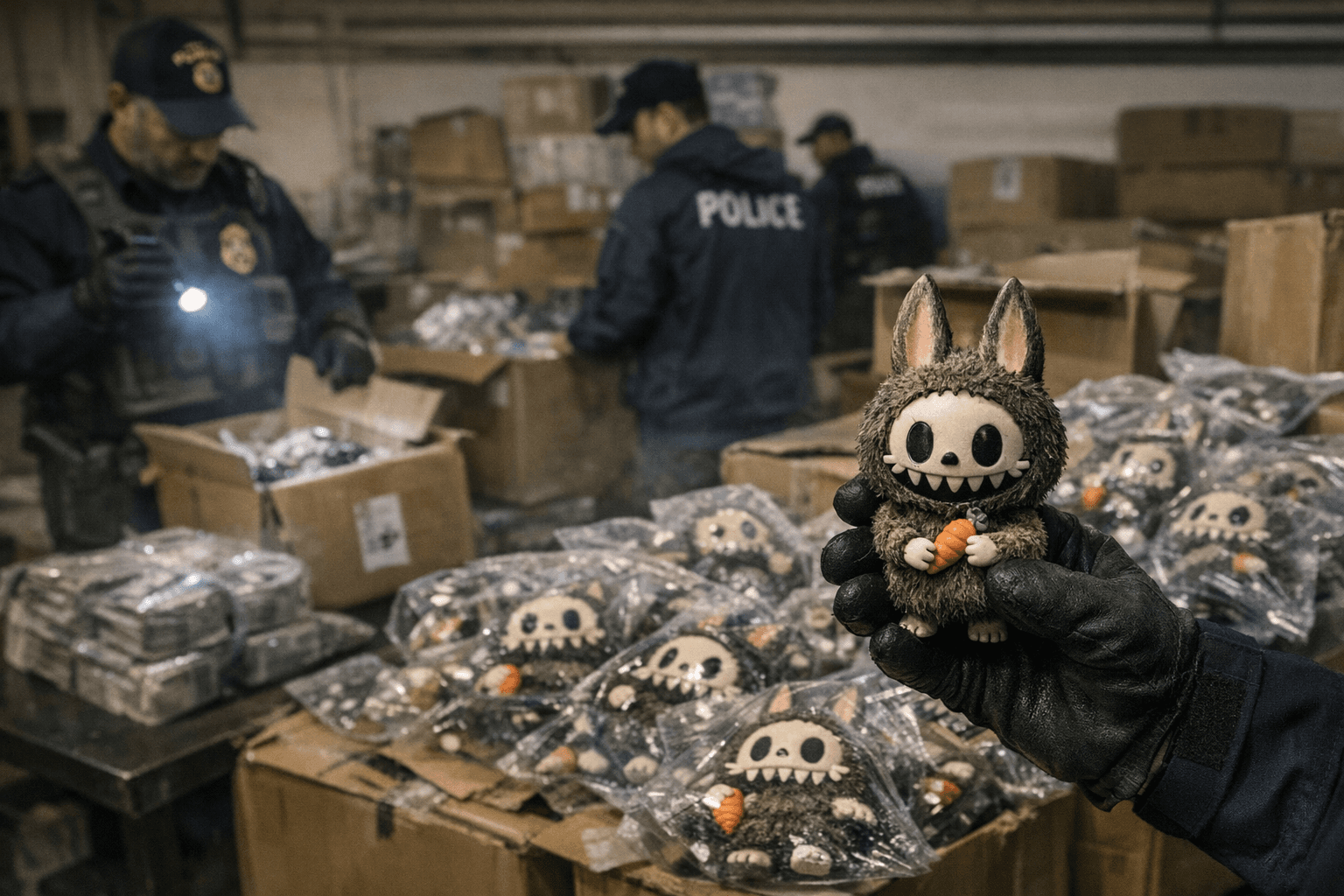
Pop Mart expands manufacturing to Mexico, Cambodia, Indonesia to ease Labubu shortages
Pop Mart says it will add manufacturing in Mexico, Cambodia and Indonesia to ease Labubu shortages and speed shipments to North America, while planning dozens more U.S. stores.
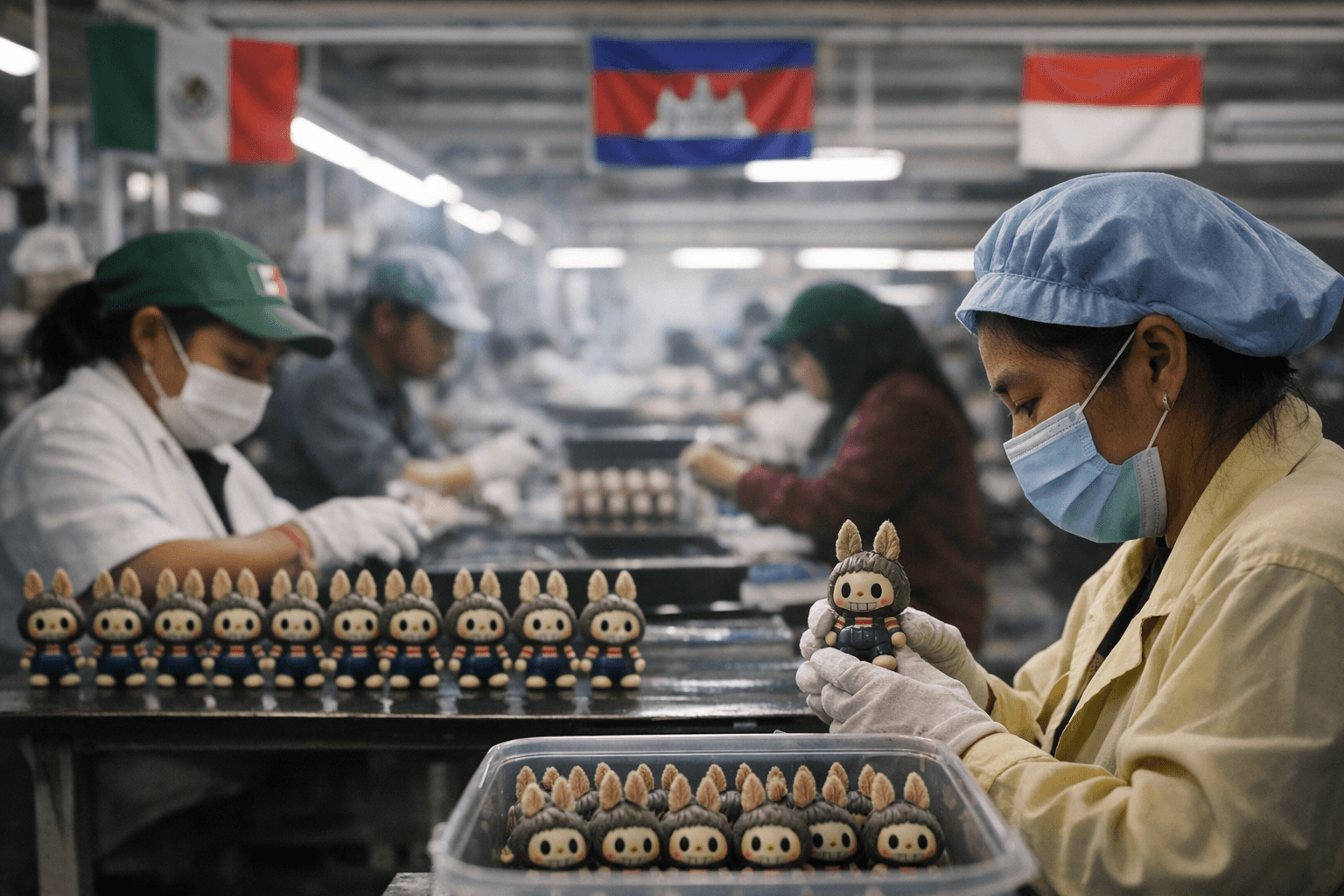
Pop Mart has begun widening its production map to tackle chronic Labubu shortages and cut delivery times to collectors in North America. The company said it will add manufacturing capacity in Mexico, Cambodia and Indonesia and is pushing a larger U.S. retail footprint beyond the roughly 60 stores it already operates, with plans to open “dozens” more locations.
The expansion was flagged in company communications in early January and again in a Feb. 28 report summarizing fresh moves tied to Mexico and additional international projects. Pop Mart has historically relied on contract manufacturers in China and Vietnam for its blind-box figures and plush lines - Labubu, the toothy-grinned mascot of the THE MONSTERS IP, has driven much of that demand - and the new facilities are intended to broaden that production base and shorten cross-Pacific transit.
The strategic push arrives as Pop Mart’s sales balloon. Total revenue reached RMB 13.04 billion in 2024, a 106.9% year-over-year increase, with Mainland China contributing about ¥7.97 billion or roughly 60% of sales. Non-China revenue surged roughly 375% last year and now accounts for 38.9% of the company’s totals; the company’s revenue "further increased" in the first half of 2025. Pop Mart’s rapid growth traces back to 2017 revenues of ¥158 million, rising to ¥514 million in 2018 and ¥1.68 billion in 2019 before the company listed on the Hong Kong Stock Exchange in 2020.
Analysts say the expansion is as much defensive as it is growth-oriented. Lisa Zhang, Project Leader at Daxue Consulting, noted: “Since its IPO, Pop Mart has remained focused on two consistent strategic pillars: international expansion and IP-driven group transformation. These long-term priorities have helped it weather domestic market fluctuations while continuing to build a scalable brand ecosystem.” Logistics analysts echo that framing, saying moving production into Southeast Asia and North America is a bet on resilience over a centralized, China-heavy supply model.
Operational benefits cited for the Mexico site include shorter lead times and lower logistics costs for U.S. distribution; shifting some production out of China addresses concentration risk in a sector where China accounts for more than 80% of toys sold in the U.S. The company’s peers have pursued similar diversification: Hasbro and Lego have added capacity in Vietnam and Mexico in recent years, undercutting single-country exposure.
Regulatory and execution risks remain. Chinese state media flagged possible tighter rules on blind-box sales in June amid gambling-related concerns, and key details about the new plants - ownership, opening dates, production capacity, and whether Mexico output will be destined mainly for North America - have not been disclosed publicly. If Pop Mart follows through, the combination of new factories and added U.S. stores could materially ease Labubu scarcity and reshape availability for collectors worldwide as the company moves its IP-driven rollout into a broader global supply chain.
Know something we missed? Have a correction or additional information?
Submit a Tip