Pope Leo XIV urges AI to serve human dignity, common good
Pope Leo XIV’s first encyclical put AI under a moral ceiling, warning that control by “a few” could deepen inequality, exploitation and war.
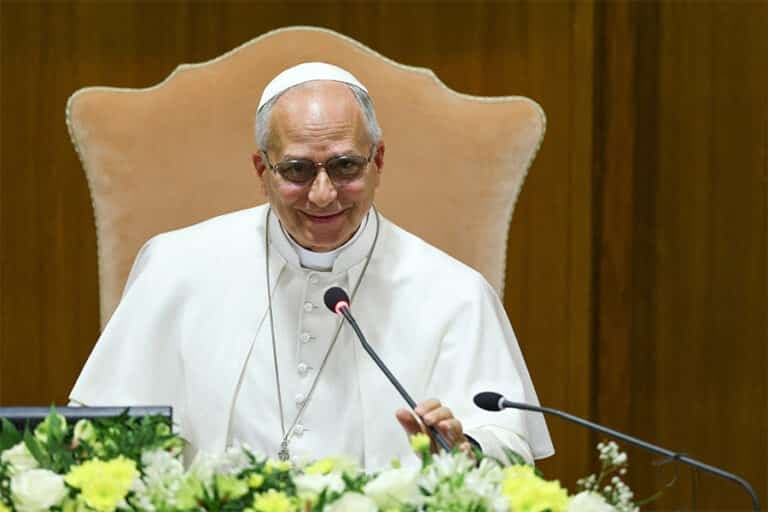
Pope Leo XIV used his first encyclical to make artificial intelligence a test of human dignity, warning that the technology must serve the common good rather than concentrate power, wealth and control in the hands of “a few.”
The Vatican said Magnifica Humanitas, or “Magnificent Humanity,” was signed on May 15, 2026, the 135th anniversary of Pope Leo XIII’s Rerum Novarum, and was presented on May 25 at 11:30 a.m. in the Vatican’s Synod Hall. By choosing that date, Leo tied his warning about automation and algorithmic power to a long Catholic tradition of social teaching, placing AI beside labor, dignity and the rights of workers as a defining moral question of his papacy.
In the encyclical and related remarks, Leo urged that AI be “disarmed” and directed to the common good. He warned that it could deepen inequality, weaken human relationships, fuel warfare and create new forms of slavery or hidden exploitation. The message was not simply about restraining a tool. It was about setting strict moral limits on a technology increasingly embedded in finance, security, media and everyday work, where the ability to train, deploy and control advanced systems is already becoming a source of strategic advantage.

Leo also framed AI as a matter of agency, insisting that the future should not be left to systems that strip people of judgment or reduce human beings to data. The Vatican said the pope has repeatedly pressed this theme throughout 2025, including in a June 17 message to the Second Annual Conference on Artificial Intelligence, Ethics and Corporate Governance in Rome and again on Dec. 5, 2025, when he addressed participants in a conference on Artificial Intelligence and Care of Our Common Home. In that speech, he argued that building a future with young people requires restoring confidence in the human ability to guide these technologies toward the common good.
The pope even invoked Gandalf, the wizard from J.R.R. Tolkien’s The Lord of the Rings, to underline the need for moral courage in confronting AI’s risks. That choice gave the encyclical an unusual cultural reach, but the core message was unmistakably political and economic: if AI is going to transform labor, security and social life, then its rules will be fought over not just in boardrooms and laboratories, but in Washington, in Europe and in the Vatican’s own language of dignity, restraint and shared human purpose.
Know something we missed? Have a correction or additional information?
Submit a Tip