Potomac sewer collapse spills 240 million gallons, triggers federal action
A 1960s sewer line failed near the Beltway, sending 240 million gallons into the Potomac before a bypass was restored days later.

A 72-inch sewer line built in the 1960s failed near the Clara Barton Parkway and I-495 interchange in Montgomery County, Maryland, and sent roughly 240 million gallons of raw wastewater into the Potomac River before a bypass came online five days later. The collapse hit a system that conveys up to 60 million gallons a day from parts of Virginia and Maryland to DC Water’s Blue Plains Advanced Wastewater Treatment Plant, one of the region’s most important pieces of clean-water infrastructure.
The U.S. Environmental Protection Agency said the overflow began after the January 19 collapse and continued until the bypass was activated on January 24. DC Water later said emergency repairs were completed and full flow returned to the interceptor on March 14, while restoration work continued along the river and the C&O Canal. The pipe segment was tied to the original 1960 authorization of the project, Public Law 86-515, which was passed to connect Dulles to the Washington, D.C. sewer system and support growth in surrounding Maryland and Virginia.
The response quickly moved from a local utility failure to a federal case. The White House assigned EPA as the lead federal agency, and EPA took over river water-quality sampling near the site. The agency also filed a complaint alleging that DC Water discharged raw sewage without authorization and failed to properly maintain the interceptor and broader sewer system, underscoring the governance questions behind the spill, not just the environmental damage it caused.
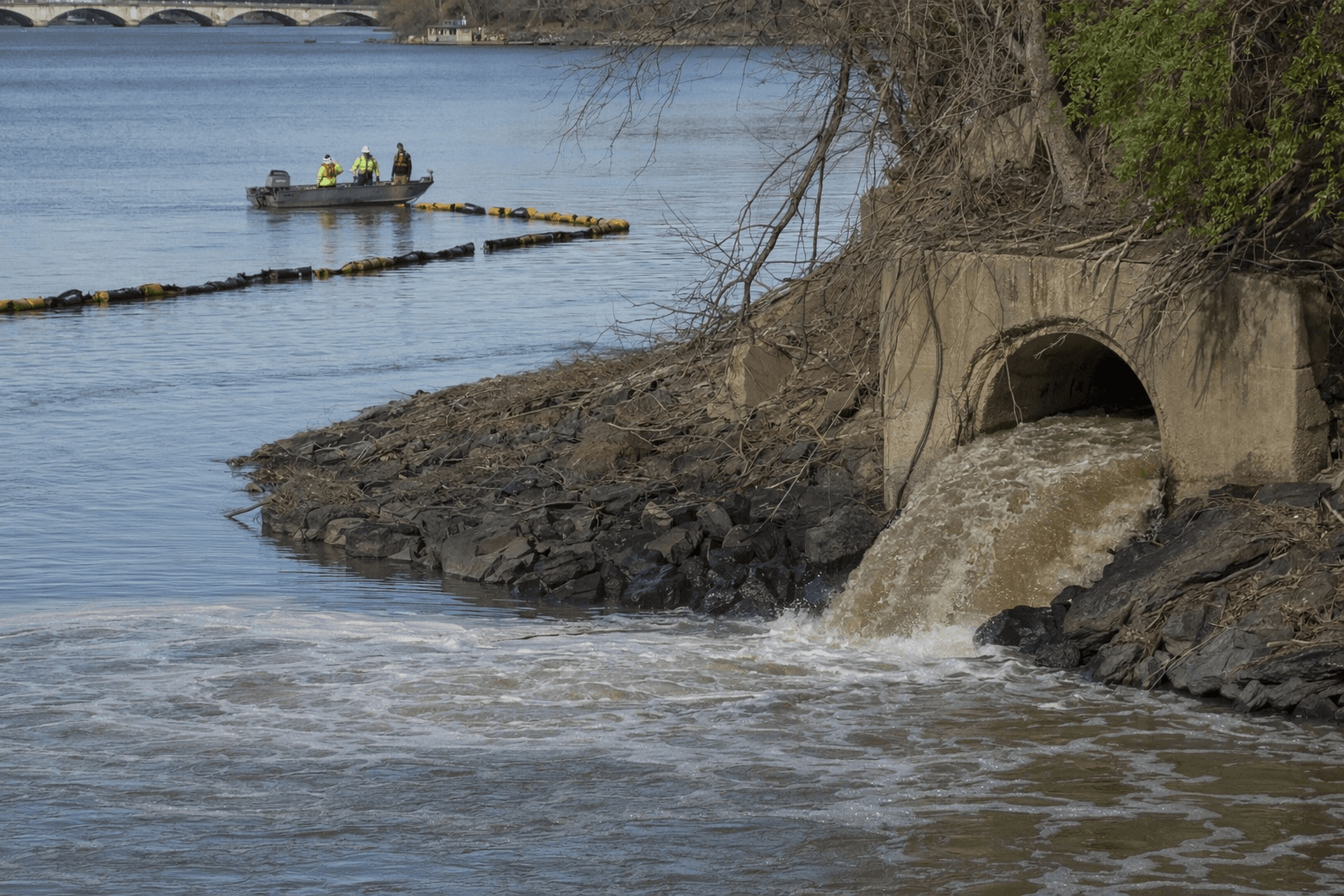
The public-health risk was serious, but officials said the drinking-water supply was not impacted because the sewage moved away from the Great Falls intake. The Washington Aqueduct, which serves DC Water, Arlington County and Fairfax Water, took precautionary steps to protect the regional water supply. Maryland’s Department of the Environment said it was supporting the response with state and federal partners, while Virginia’s Department of Environmental Quality began special bacteria monitoring along the Potomac shoreline.
The spill has become a case study in what happens when aging infrastructure outpaces replacement schedules and the permitting process drags on. Blue Plains treats close to 300 million gallons of wastewater on an average day and has a daily capacity of 384 million gallons, but even a system that large depends on miles of buried pipe that must be inspected, repaired and eventually replaced before failure. Advocates for permitting reform say faster, better infrastructure review could reduce the odds of another collapse like this, while critics warn that any overhaul must preserve environmental safeguards. Potomac Conservancy said more than 2,100 residents and 21 environmental leaders and organizations signed its letter demanding answers and action from DC Water, a sign that the costs of delay now reach beyond cleanup into public trust, climate resilience and the regional economy.
This article was produced by Prism’s automated news system from verified source data, official records, and press releases, then run through automated quality and moderation checks before publishing. The system is built and supervised by the people who set the standards it runs under. Read our full AI policy.
Did this article answer your question?

