Powerball Jackpot Surges to About $1.7 Billion Before Christmas Eve
The Powerball grand prize has rolled to an advertised annuity of roughly $1.7 billion for the Christmas Eve drawing after Monday night produced no jackpot winner, placing the prize among the largest in U.S. lottery history. The size of the prize, the long unbroken streak of drawings, and differing lump sum estimates matter for players deciding between annuity and cash options and for state revenue and tax planning.
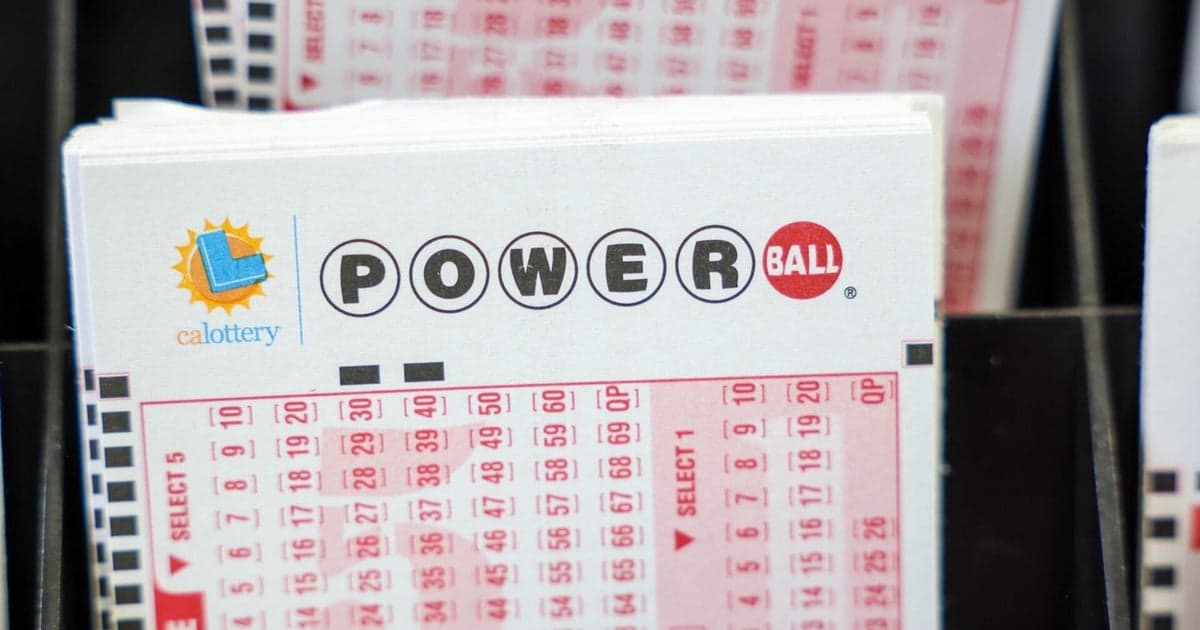
Monday night’s Powerball drawing failed to produce a jackpot winner, sending the advertised annuity for Wednesday evening’s Christmas Eve drawing to an estimated $1.6 to $1.7 billion. The numbers drawn on Monday were 3, 18, 36, 41 and 54, with Powerball 7 and Power Play 2. Several tickets won secondary prizes, with $1 million winning tickets reported in Florida, Georgia, Illinois, New York, Ohio, Pennsylvania, Tennessee and Wisconsin.
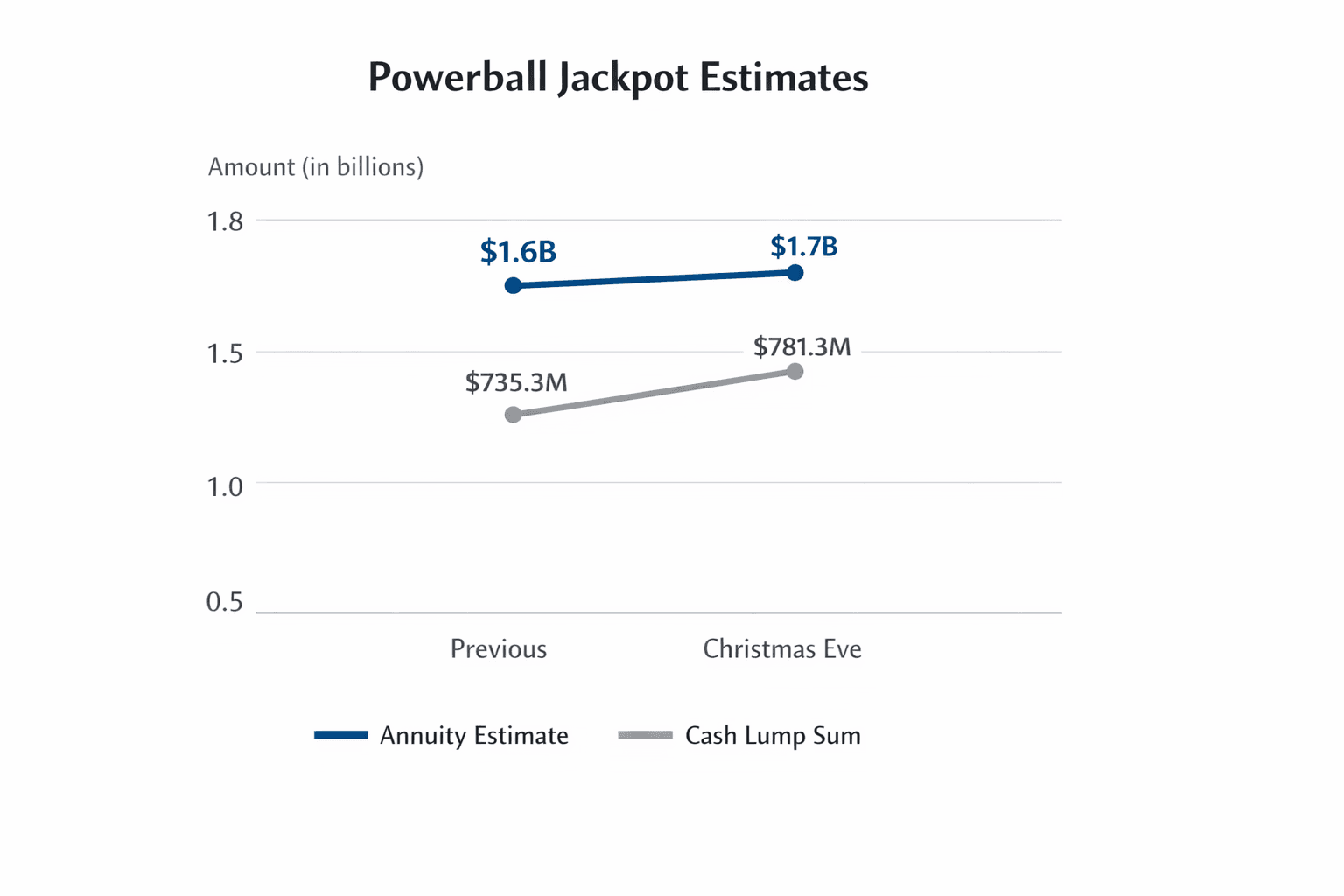
The announced annuity, commonly described as about $1.7 billion, remains the headline figure available to the public. The lump sum cash option presented to a single winning ticket varies in different public updates, reflecting evolving calculations tied to interest rates and market conditions. One reported estimate put the before tax cash value at about $735.3 million in a Monday update, and a subsequent update pushed that figure to about $781.3 million. All advertised figures are stated before federal and applicable state taxes.
For players the choice is straightforward on paper but consequential in practice. The annuity option is structured as an immediate payment followed by 29 annual payments that rise by 5 percent each year. The cash option is a one time payment that is substantially lower than the advertised annuity but provides immediate liquidity. Tax treatment for either option depends on the winner’s residency and tax planning decisions, and the scale of this prize amplifies those considerations for financial advisers and state tax authorities.
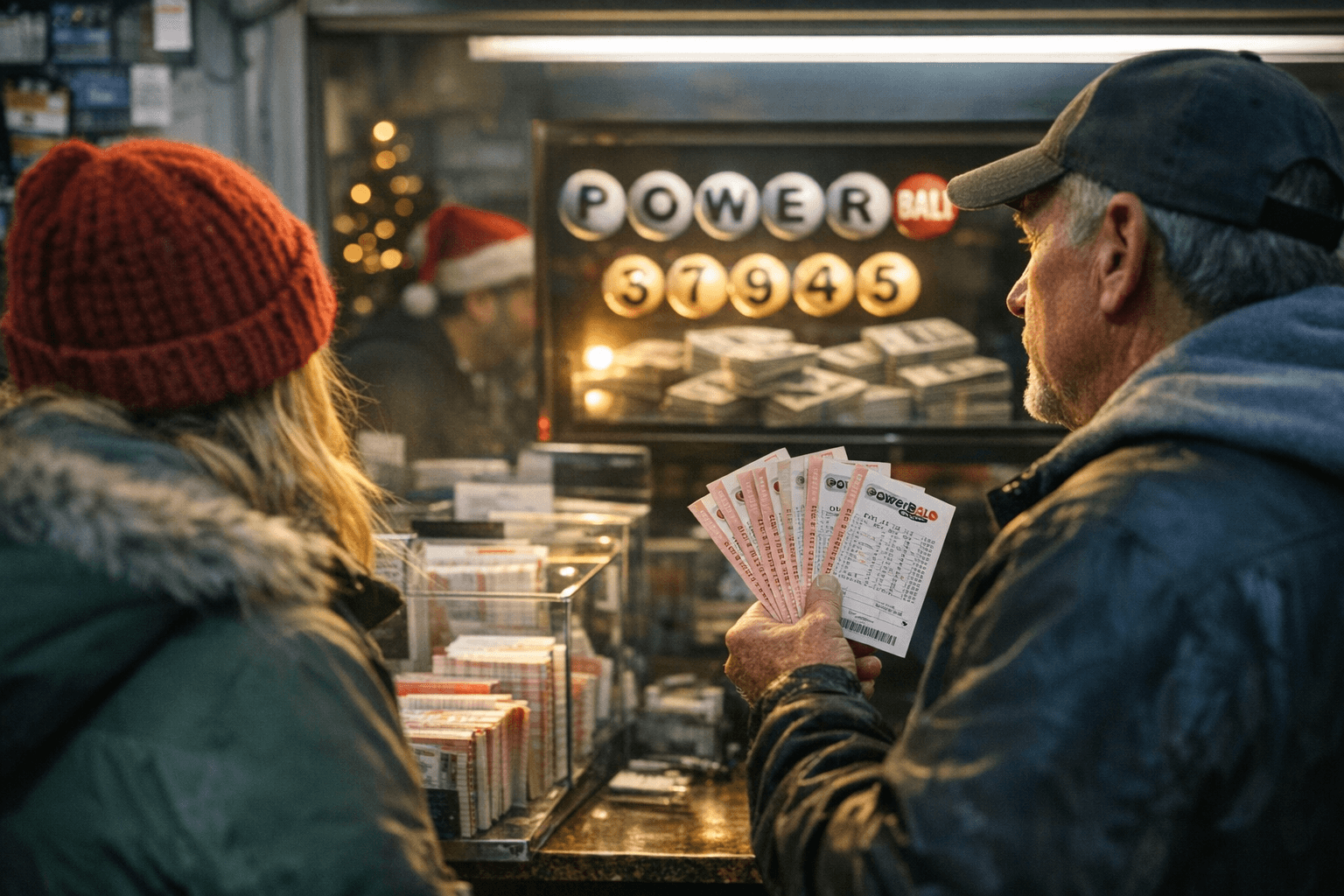
The current jackpot run began on September 7 and has continued through weeks of drawings. Monday was the 46th drawing in this sequence. If no ticket matches all six numbers on Wednesday, the cycle will reach a 47th drawing, which would surpass previous runs to become the most drawings in a single jackpot cycle on record. Drawings are held three times a week at 10:59 p.m. Eastern Time, and the odds of winning the jackpot remain 1 in 292.2 million.
Large jackpots often have broader institutional and civic effects. Elevated ticket sales around holidays can generate substantial revenue for state programs that receive lottery proceeds, intensify scrutiny of how prize revenue is allocated, and prompt renewed calls for clear disclosure of odds and payout mechanics so that consumers can make informed choices. The divergence in public cash estimates during this run highlights the need for timely, transparent updates when market conditions alter the advertised values.
With the drawing set for Wednesday night, players have one more chance to purchase tickets and decide between annuity and cash should a single jackpot ticket emerge. Secondary prizes remain accessible to players who match portions of the draw, but officials and analysts continue to underscore the long odds inherent in the game as it approaches what may become a historic conclusion.
This article was produced by Prism’s automated news system from verified source data, official records, and press releases, then run through automated quality and moderation checks before publishing. The system is built and supervised by the people who set the standards it runs under. Read our full AI policy.
Did this article answer your question?

