Powerful Storms Threaten 45 Million Across Midwest, Strong Tornadoes Possible Near Chicago
A rare Level 5 high-risk designation and a dangerous triple-point atmospheric setup put 45 million at risk as powerful storms tore through the Midwest.

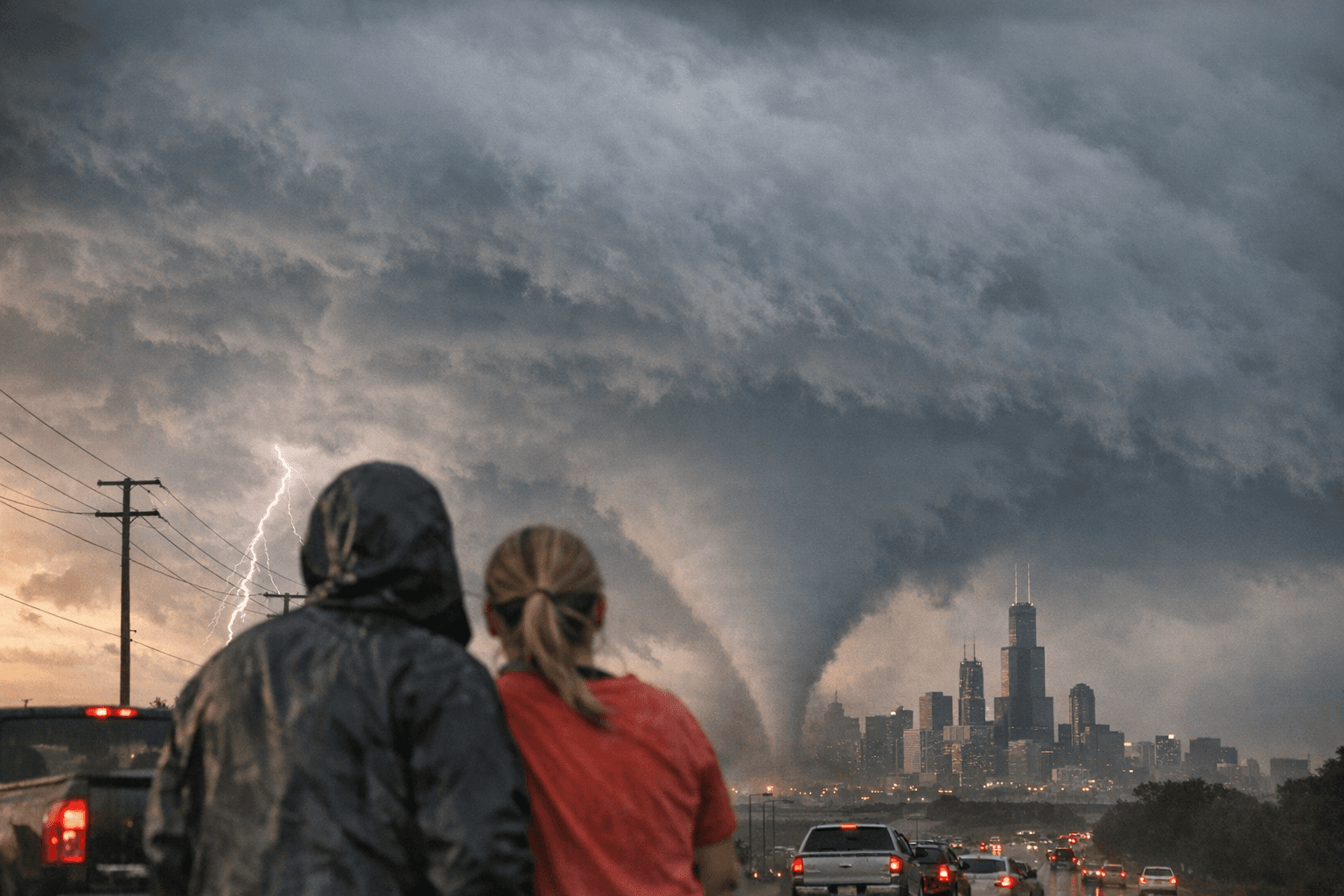
A severe weather outbreak on April 2, 2025 brought powerful tornadoes and destructive winds across a 700-mile corridor from Missouri to Michigan, threatening more than 45 million people across the Midwest and Great Lakes region and ultimately causing $4.1 billion in damage.
NOAA's Storm Prediction Center designated a rare Level 5 of 5 high risk for severe thunderstorms stretching from parts of Arkansas northward into Illinois, while a Level 3 Enhanced Risk covered southern Wisconsin, northern Illinois including Chicago, and eastern Iowa. The SPC had begun monitoring the threat as early as March 28, five days before the outbreak.
The setup forecasters flagged was unusually dangerous: a triple-point regime, where a cold front, warm front, and dry line converged simultaneously over the central United States. Triple-point configurations concentrate atmospheric energy, moisture, and wind shear into a confined area, creating conditions exceptionally favorable for rotating thunderstorms capable of producing strong tornadoes.
Thunderstorms formed over eastern Iowa by late Thursday morning and pushed into Illinois and Wisconsin by noon, with Chicago and St. Louis in the crosshairs shortly after. The Quincy-to-Peoria corridor in Illinois drew the closest monitoring from forecasters, as did the I-80 corridor across Iowa. Cities including Chicago, Milwaukee, Madison, Rockford, Davenport, Cedar Rapids and Des Moines all fell within the elevated risk zone.
The storms produced EF-2 or stronger tornadoes across Chicagoland, Rockford, southern Wisconsin and eastern Iowa, with wind gusts reaching 60 to 70 mph. As the initial severe weather threat eased through the first half of the evening, heavy rain persisted, triggering flash flooding across Wisconsin, Michigan and northern Illinois. Widespread rainfall of 1 to 2 inches fell across the Midwest and Great Lakes. The National Weather Service office in Memphis had warned beforehand of "generational flooding," and NWS offices broadly characterized the multi-day event as potentially historic, specifically noting areas at risk for flooding that had never flooded before.
The April 2 outbreak was not an isolated event but part of a historically active 2025 severe weather season. NOAA's preliminary data through April showed the season had already resulted in 35 deaths. The March 13-16 outbreak had set a record as the largest tornado outbreak in the history of the month of March, with 115 confirmed tornadoes across Mississippi, Alabama, Arkansas, Missouri, Illinois and Indiana, including three EF-4 tornadoes and 12 EF-3s. One tornado during that outbreak tracked 117.15 miles from Stone County, Arkansas to Butler County, Missouri.
From March 26 through April 7, at least one tornado was reported every single day, a 12-consecutive-day stretch that Penn State's Weather World identified as the earliest 10-day tornado streak on record. AccuWeather Lead Long-Range Expert Paul Pastelok attributed the persistent activity to "a corridor of storms heading into the Plains and strong high pressure in the Southeast bringing up moisture from the Gulf."
NOAA scientists linked the elevated activity to La Niña atmospheric conditions, a climate pattern associated with above-normal tornado and outbreak frequency. Climate Central, a nonprofit research group, has documented a broader trend of increasing heavy precipitation extremes across all U.S. regions as warmer air temperatures allow the atmosphere to hold significantly more moisture.
This article was produced by Prism’s automated news system from verified source data, official records, and press releases, then run through automated quality and moderation checks before publishing. The system is built and supervised by the people who set the standards it runs under. Read our full AI policy.
Did this article answer your question?

