Practical paddle guide helps Asian clubs and players choose gear
A clear paddle-selection primer breaks down shape, core, face, weight and grip to match play styles and support club buying or loaner programs.

Paddle choice shapes how you play from the baseline to the kitchen. This practical primer walks through the core attributes that matter when buying or stocking paddles so players and clubs across Asia can match equipment to skill, budget and community programs.
Start with shape. Standard, elongated and wide-body heads each shift sweet-spot size, reach and maneuverability; pick a shape that complements your preferred court position and shot set. Core material and thickness are next: nomex, polymer foam and polypropylene variants, combined with core thickness, influence the balance between control and power. Face materials also matter, fiberglass versus graphite or carbon will affect feel and response. Together these choices determine how the paddle behaves on volleys, dinks and third-shot drops.
Weight bands are simple to remember and essential when demoing paddles: light paddles are under 7.2 ounces, mids are 7.3 to 8.4 ounces, and heavy paddles are above 8.5 ounces. Lighter paddles favor quick hands at the net and reduce fatigue during long social sessions; heavier paddles can add pop on drives and serves. Grip size and handle length complete the fit checklist. Measure grip circumference and perform fit checks such as the index-finger gap test to ensure you can control wrist action and recover between shots. Handle length affects reach and leverage; different players will trade off reach for manageability.
Testing is non-negotiable. Try demo paddles when possible and take at least a short hitting session to evaluate how a paddle performs across common drills, serves, third-shot drops and kitchen exchanges. Fit checks during play will reveal whether grip size or handle length needs adjusting. For beginners, prioritize comfort, control and a forgiving sweet spot; for intermediate and advanced players, choose paddles that match your tactical priorities, control for placement-focused players, balance for all-court versatility, or power for aggressive baseline and serve strategies.
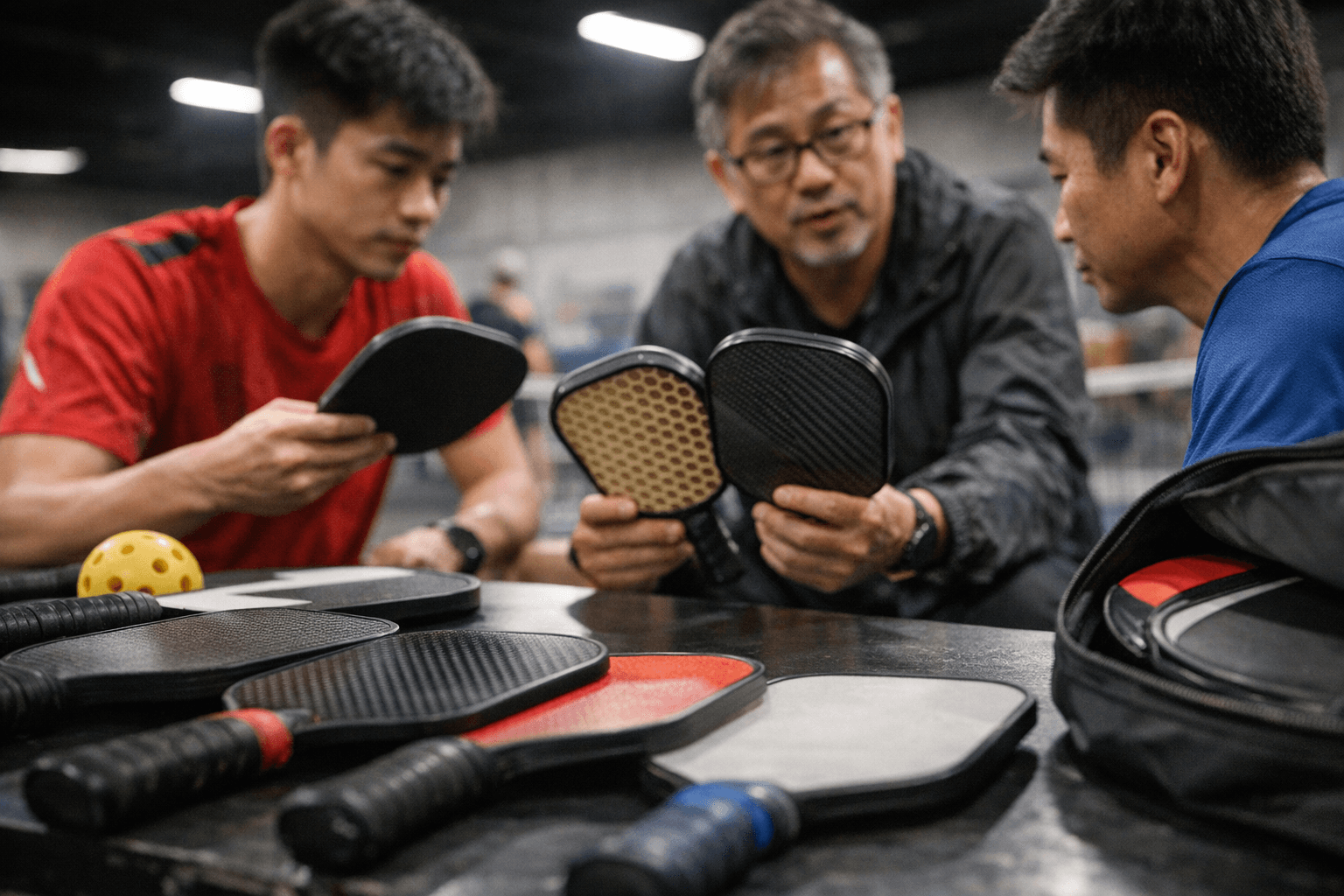
For clubs and community programs across Asia, build loaner racks that cover the three weight bands, a mix of shapes and two or three core/face combinations so visiting players can find a close match. Label paddles with weight, grip circumference and recommended player type to speed fitting and reduce confusion. Encourage members to demo before purchasing and to record preferences so bulk club orders reflect local tastes and playing styles.
Matching paddle to player reduces injury risk, speeds learning and improves enjoyment on court. Take the time to measure grip, try a range of paddles and, for clubs, assemble a diverse loaner collection, those steps will help players hit more dinks, control more rallies and keep community play running smoothly.
Know something we missed? Have a correction or additional information?
Submit a Tip