Practical Playbook Empowers Communities to Launch Local Slamball Leagues
This practical playbook lays out step‑by‑step guidance for organizers launching local Slamball pickup leagues or recurring community sessions. It matters because with clear venue, safety, staffing, and promotion templates, communities can create fast, safe, and repeatable Slamball play without a regulation court.
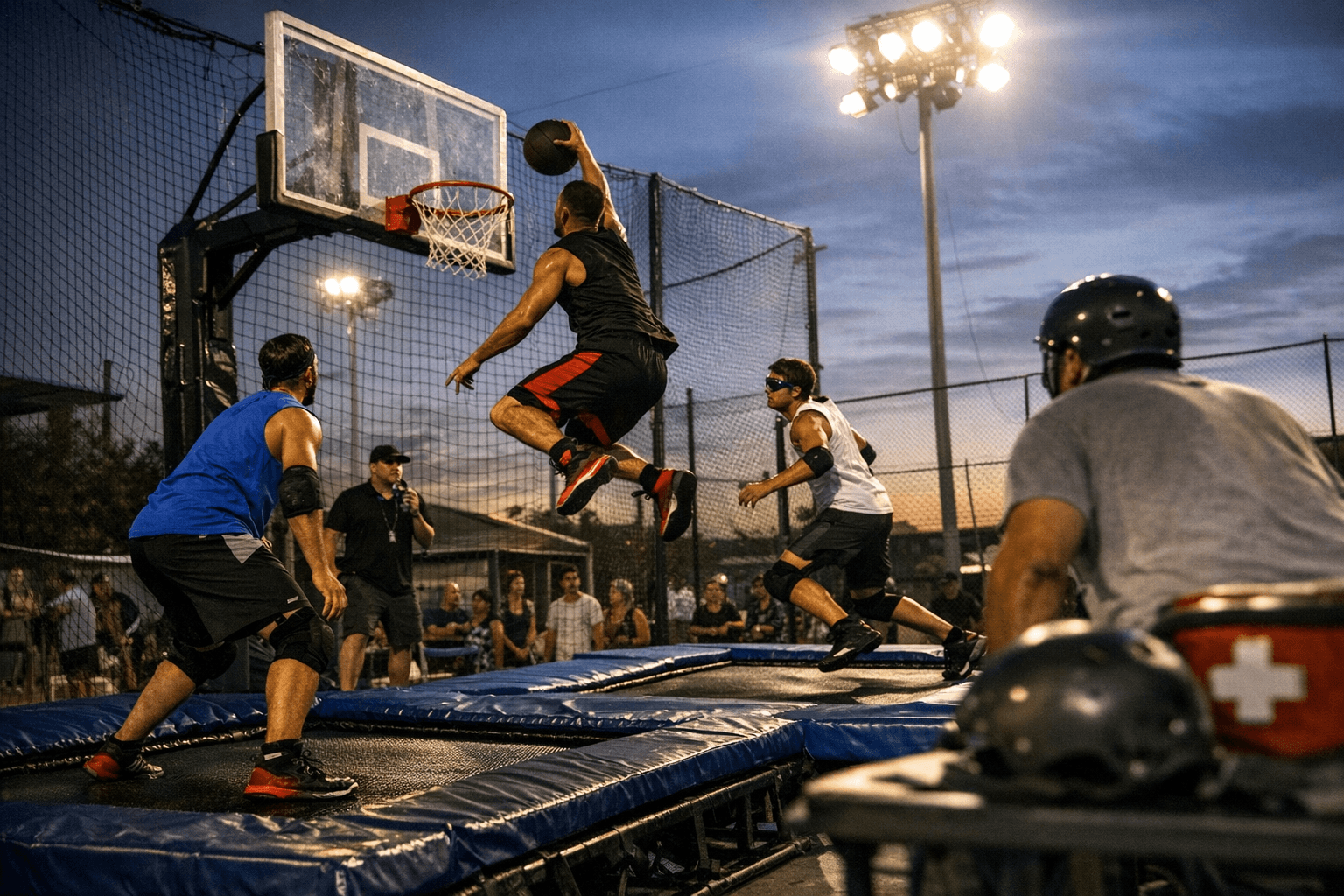
Slamball can be brought to neighborhoods and rec centers with modest planning, a venue partner, and sensible safety protocols. This playbook condenses venue options, a minimal court setup, simplified pickup rules, insurance essentials, staffing roles, sample event formats, equipment lists, and low‑cost promotion tactics so organizers can start small and scale.
Venue choice drives feasibility. A regulation Slamball court is ideal but rare. Trampoline parks are the most accessible option; work with park managers to reserve lanes or adapt court space and confirm insurance and staffing rules. Temporary courts using modular tramp platforms or staging vendors can create pop‑up courts in gyms or event centers but require contractor coordination. When negotiating a site, confirm available dates and times, spectator capacity and parking, liability insurance requirements, on‑site staff support for safety and first aid, and accessibility.
Keep the court setup simple for pickup sessions. Use four trampolines in front of each net or a single larger tramp zone per side if converting a trampoline area. Mark clear boundaries, pad walls and boards, provide two hoops or adjustable height hoops, and use a scoreboard or phone timer. Safety mats and at least one foam or pit area help with learning progressions.
Rules should be fast, safe, and repeatable. Run 4v4 on court with rosters of 6–8 for subs, play 12–15 minute running clock games or first to 15 points, and choose a scoring system that fits your group, standard Slamball values or a simplified 2/3 system for newcomers. Allow on‑the‑fly substitutions at a designated zone. Limit full contact until training and a referee pool are established, and remove a player after three personal fouls. Simplify certain calls into an uncontested in‑bounds start to keep play flowing.
Safety and insurance are nonnegotiable. Require signed waivers, verify whether the venue’s general liability policy covers contact sport liability, and secure single event GL insurance if needed. Have a trained first aid responder or athletic trainer on site, maintain an emergency action plan with EMS contacts, implement a concussion protocol with immediate removal and return‑to‑play steps, and keep incident logs.
Staffing can start small: one to two referees to manage rules and the clock, a safety lead or spotter to watch landings, a scorekeeper, a check‑in person for waivers, and a social photographer with media consent included in waivers. Equipment for event day includes extra balls, pump and repair kit, padding and cones, first aid kit and ice packs, a scoreboard or timer app, waivers and rosters, and a cash or online payment setup for fees.
Begin with a Casual Pickup Night or a Skill and Scrimmage Clinic plus mini tournament, and consider a weekly league over 6–10 weeks once officials and a venue are consistent. Promote via social pages, partnerships with local parks and universities, flyers, intro nights with discounts, and a weekly newsletter to convert first‑timers into regulars. Track retention, roster size, and net promoter score to guide growth.
Start small, prioritize safe landings and progressive training, and build a referee pipeline and youth clinics to seed future players. With this practical structure, community Slamball is achievable and repeatable.
Know something we missed? Have a correction or additional information?
Submit a Tip