Practical Playbook for Running Successful Pickleball Retreats
This guide walks you through everything needed to plan, run, and scale multi-day pickleball retreats with minimal stress. You’ll get a step-by-step operations playbook covering session design, player management, payments, staffing, on-court programming, and community-building so you can focus on coaching and hospitality.

1. Define your retreat format and daily schedule
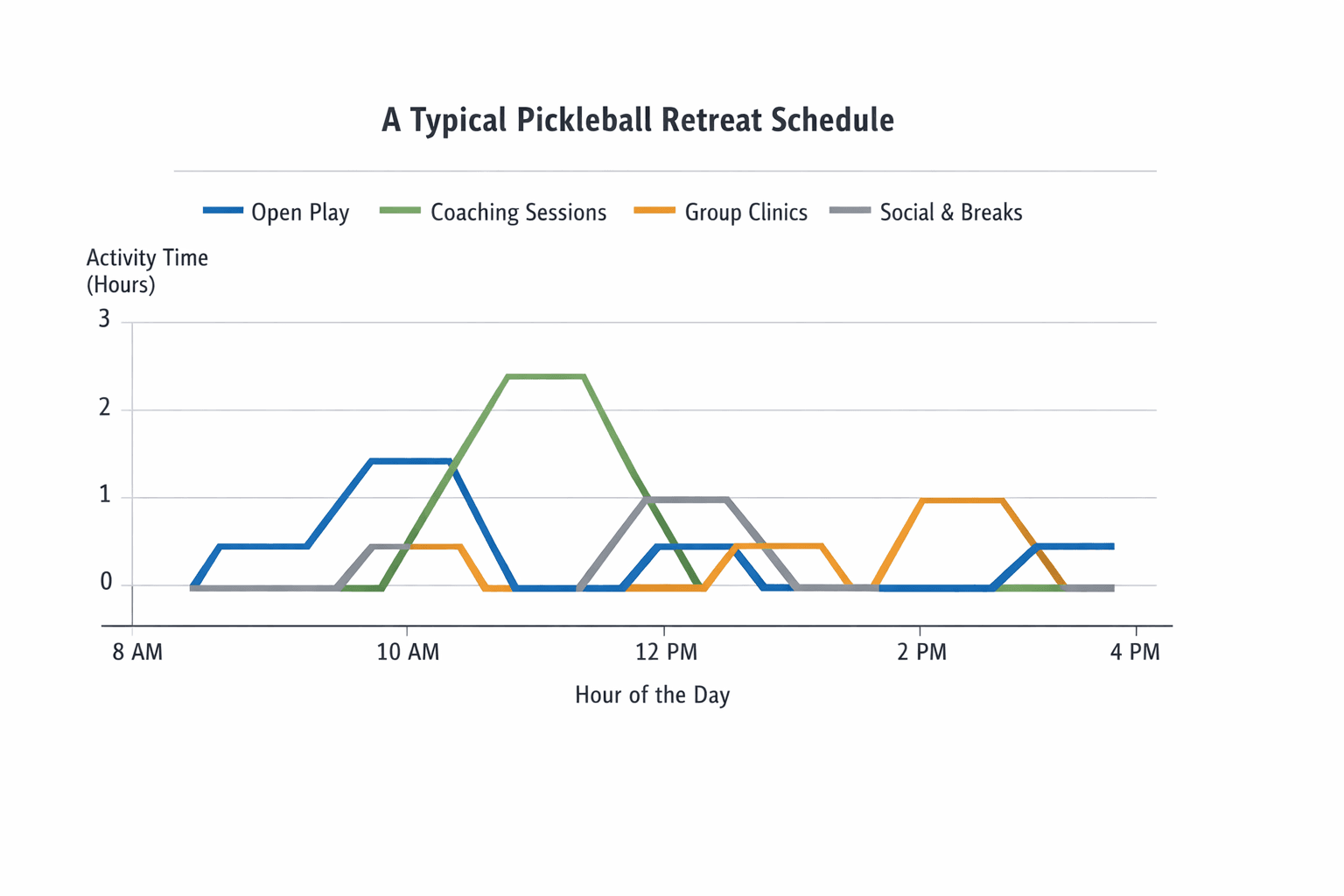
Decide whether you’re running a weekend escape, a multi-day retreat, or a recurring retreat series and map the daily cadence before you open registration. Set clear blocks for open play, coached sessions, small-group clinics, and social time so players know what to expect; clarity increases sign-ups and reduces day-of confusion. Include buffer time between sessions for court turnover, announcements, and brief re-grouping so logistics don’t eat into teaching time.
2. Use an evergreen playbook and short video modules
Adopt an operations playbook that combines written steps and short video modules to onboard staff and volunteers quickly. These resources are ideal for new hosts because they show exactly how to set up sessions, manage players, and handle payments without reading through long event manuals. Keep the modules available to co-hosts so everyone runs the same process and the retreat feels seamless.
3. Create session types and group players by skill
Design session types, beginner clinic, mixed open play, advanced drills, and small-group coaching, and group players by ability to improve their experience. Use skill-specific “bins” or scheduled time slots so players self-select into the right level; this reduces frustration and makes coaching more effective. For mixed-ability sessions, set clear expectations about rotation, court etiquette, and learning goals to keep play constructive.
4. Implement timers and rotation systems to keep courts moving
Use visible timers and a rotation system to maximize court usage and avoid downtime between games. Timers can signal practice-to-rotation transitions, enforce time-limited court play, and keep random mixes fresh; a consistent system prevents disputes about who’s next. Teach players the rotation rules at the start of the retreat and post them at court-side for quick reference.
5. Staff smartly with co-hosts and court marshals
Recruit co-hosts, court marshals, and a point person for logistics so you can focus on coaching and hospitality. Co-hosts can lead warm-ups and small clinics, while marshals keep rotations on time, handle simple disputes, and support safety. Assign one staff member to manage communications (schedule changes, reminders) and another for registration/check-in so responsibilities are clear.
6. Set up payments, Stripe integration, and clear refund policies
Collect registrations and payments using a reliable payments setup like Stripe integrated into your registration flow to keep transactions clean and trackable. Be upfront about refund windows, cancellation penalties, and how refunds are processed so you avoid last-minute disputes. Test the payment flow before opening registration and keep receipts automated to reduce manual accounting work.
7. Manage waitlists and automate seat offers
Use an automated waitlist system that auto-offers freed spots to the next players to cut down on manual reshuffling. Define how long players have to accept an offered spot and decide whether offers should be automatic or require manual approval; automation speeds registration and decreases no-shows. Have a clear refund or transfer policy for players who can’t accept a spot when it opens.
8. Build private groups and automate communications
Create private groups for each retreat cohort so you can invite players, share schedules, and post last-minute updates in one place. Automate reminders, pre-event checklists, arrival instructions, and daily schedules, to reduce day-of questions and increase on-time attendance. Use group messages for weather updates, court assignments, and easy sharing of photos and follow-ups.
9. Streamline check-in and attendance tracking
Simplify check-in with pre-printed name tags, a dedicated sign-in table, and a digital attendance list to mark who shows up each session. Streamlined check-in reduces bottlenecks, helps enforce player caps, and gives you accurate attendance data for billing or refunds. When day-of friction is low, you can spend more time coaching, welcoming players, and running drills.
10. Scale small-group coaching efficiently
Divide players into small pods for focused coaching and rotate pods through skill stations to maximize coach-to-player ratios. Use consistent lesson plans across pods so every group receives comparable instruction, and rotate coaches between pods to mix teaching styles. This structure lets you scale instruction while preserving quality and ensuring every participant gets meaningful court time.
11. Run simple, effective drills for mixed-ability groups
Choose on-court drills that are adaptable to differing skill levels, dinking circuits with progressive targets, serve-and-return stations with adjustable target zones, and cooperative rally games that reward placement over power. Structure drills with clear objectives and scalable options: add movement or target difficulty for advanced players while keeping basics for beginners. These drills keep energy high and create natural opportunities for peer coaching and social interaction.
12. Reduce day-of friction so you can focus on hospitality
Eliminate common bottlenecks, payment questions, late check-ins, equipment needs, by handling pre-event communication and designating staff for on-site logistics. When routine tasks are automated or delegated, you can spend your time greeting participants, arranging food or social hours, and delivering better coaching moments. Hospitality builds retention: players who feel cared for are more likely to return and recommend future retreats.
13. Follow up and cultivate a retreat community
After the retreat, invite participants into a private group to share photos, drills, and event notes and to announce upcoming sessions. Solicit feedback via a short survey to refine future retreats and act on repeat requests to show players you’re listening. Maintaining a community keeps momentum between retreats, helps fill future events, and turns attendees into local ambassadors.
14. Why this operational approach matters for retreat hosts
A structured, repeatable operations playbook reduces stress, improves player experience, and helps events scale without burning out hosts. When registration, payments, communications, staffing, and session design are systematized, you can concentrate on coaching and hospitality, the parts of running a retreat that create loyalty and long-term community. Use the combination of short video modules and written steps to train teams quickly and keep your retreats consistent and welcoming.
Know something we missed? Have a correction or additional information?
Submit a Tip