Practical Safety and Format Checklist for Community Slamball Events
Local Slamball organizers and trampoline-park operators need a concise, actionable plan to run safe, engaging community tournaments. This checklist lays out format options, venue and player safety requirements, staffing and insurance priorities, and post-event steps that directly reduce risk and improve the participant experience.
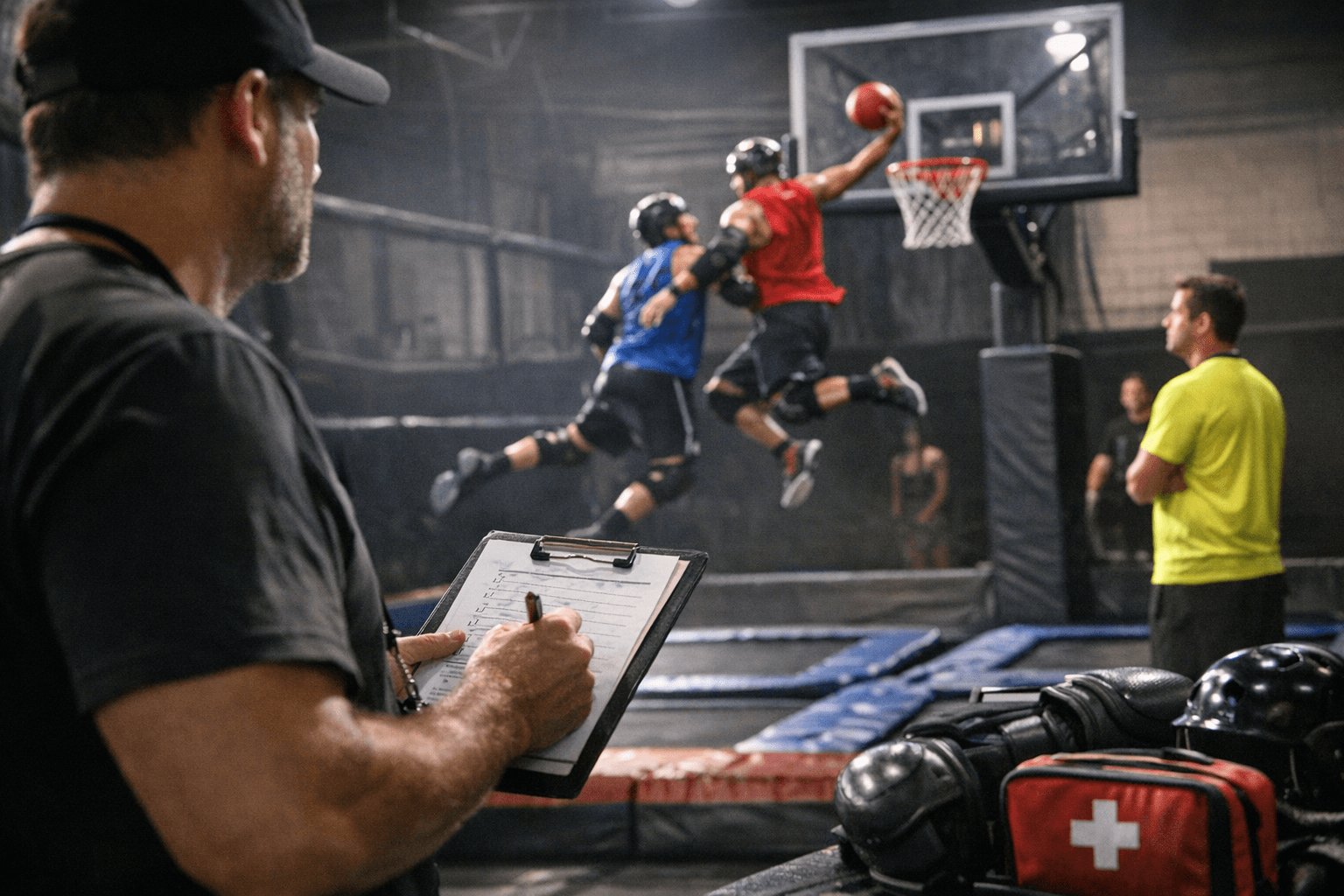
Community Slamball events are growing in popularity, and organizers must balance excitement with clear safety practices and smooth logistics. Start by simplifying format and rules so players and staff understand expectations before arriving. Short games, such as two 8-minute halves or 20-minute single games, keep pace fast and lines moving. Use a 3v3 format for trampoline-park tournaments, maintain smaller rosters of four to six players for quicker substitutions, and pre-publish simplified rules covering scoring, fouls, contact limits, and required equipment.
Venue and court safety are non-negotiable. Ensure trampolines and padding are commercial-grade and inspected before play. Limit roster sizes per team and schedule warm-up windows for each squad to reduce on-court congestion. Have certified first-aid personnel on site and a clear emergency action plan that all staff understand. Assign spotters near trampoline beds to reduce landing risks during high aerial plays.
Player safety and protective equipment should be enforced consistently. Mandate helmets, scrum-cap style is suitable for head protection, and recommend knee and elbow pads. Require participants to sign waivers and conduct a pre-event concussion and safety briefing for all players, checking for existing injuries. If your participant pool varies widely in age, height, or weight, enforce sensible brackets to keep competition fair and reduce injury risk.
Staffing and officiating determine how well rules translate into safe play. Use trained referees or experienced park staff to manage contact and dangerous play, and keep a low referee-to-game ratio to ensure consistent calls. Position spotters and additional staff around high-risk zones and make sure everyone understands substitution and face-off or throwdown procedures.
Address logistics, permits, and insurance before you promote the event. Verify that your insurance covers organized sports and tournaments; consider an event-specific rider or supplemental coverage. Check local permit requirements for late-night events, selling alcohol, or using amplified music and secure those permits in advance.
Design tournament flow to minimize downtime and maximize community engagement. Use pool play for early rounds and single-elimination for finals to keep brackets tight; offer modest entry fees to cover insurance and a prize purse. Solicit local sponsor support and provide merch or small prizes. Capture highlights with video and photo, and collect participant release forms for promotional use.
Finish with post-event safety and feedback. Conduct quick health checks for players and recommend medical follow-up for significant impacts. Collect feedback from players and staff on rules, court surface, officiating, and scheduling to refine future events. For sanctioned league play, consult official SlamBall league rules and required equipment and officials to ensure compliance.
Know something we missed? Have a correction or additional information?
Submit a Tip