Pre-purchase Checklist for Tailored Blazers: Fabric, Weight and Drape Tests
Treat a tailored blazer as an investment: insist on natural fibres (wool, wool‑silk blends, linen for warm climates) and always perform the pinch drape test—thumb and fore, watch how the cloth falls.

Old‑money dressing is quieter than it looks: it’s not about logos but about decisions—material, weight and how a blazer moves when you lift your arm or reach for a coffee. If you’re buying a tailored blazer as an investment piece, the first and most revealing question is simple: what is it made of? Prefer natural fibres—wool, wool‑silk blends, and linen for warm climates—and make those fibres do the talking through a series of tactile tests before you buy.
Fabric first Natural fibres are nonnegotiable for an investment blazer because they dictate drape, breathability and how the jacket ages. Wool and wool‑silk blends offer the density and recovery that create a clean shoulder line and a soft roll at the lapel; linen works when you live somewhere hot because it breathes and gains personality with wear. Avoid synthetic blends that look fine on a hanger but will betray you in motion and time; the charm of old‑money tailoring is that the fabric earns its patina.
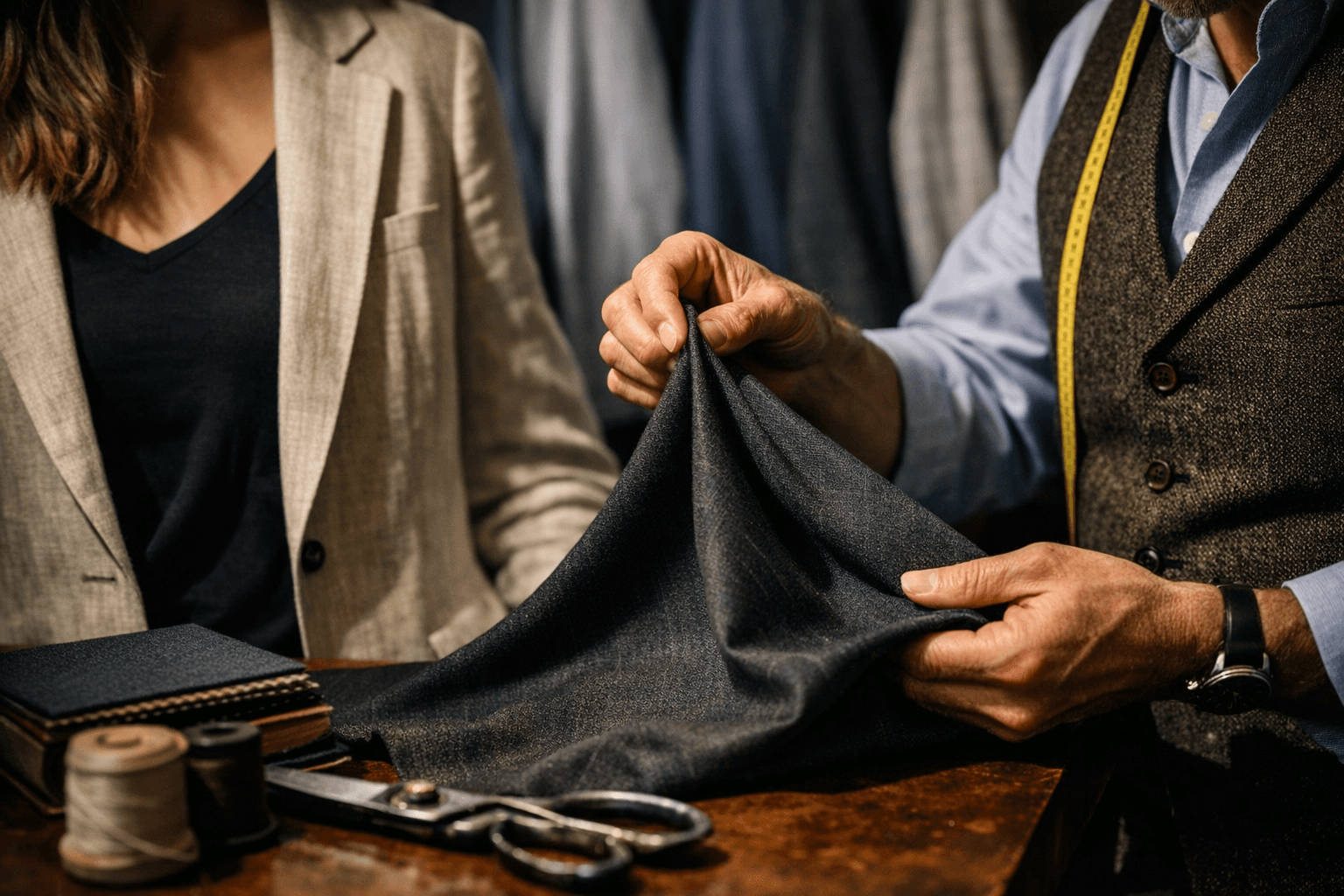
The quick drape test The single most useful in‑store check is the drape test: pinch the cloth between your thumb and fore to feel weight and give, then let it fall. Watch how the fabric settles—does it cascade smoothly or bunch into stubborn wrinkles? Wool and wool‑silk blends should show a controlled drop with a soft sheen and minimal creasing; linen will collapse more crisply and show character, which is why it’s recommended specifically for warm climates. Repeat the pinch test at the sleeve and the body to compare weight distribution across the garment.
How weight relates to seasons and structure Weight is not the same as thickness. A mid‑weight wool (roughly 240–320 g/m² in textile terms) will support structured shoulders and a defined lapel without feeling heavy; lighter summer wools and linen blends are for travel and warm climates where breathability matters. If the blazer feels papery when you pinch it, it will not provide the silhouette a tailored jacket should. For an investment blazer that bridges seasons, a wool‑silk blend gives a touch of drape and a smoother hand while still offering structure.
Construction and lining Natural fibres perform best when the construction respects them: canvassed or half‑canvassed fronts, hand‑stitched lapels and minimal polyester linings that trap heat. A full canvas gives the chest a soft yet stable architecture that will age with you; cheaper fused fronts often bubble after cleaning. Check the lining: a full viscose or silk lining breathes and reduces friction, whereas synthetic linings can make your blazer feel clammy—an important consideration if you’re buying for travel or variable climates.
Shoulder, sleeve and mobility checks A blazer should look effortless but not sloppy on the shoulder. Stand naturally and shrug—your shoulder pad should move with you, not sit like a helmet. Sleeve length should show a sliver of shirt cuff; test the reach by lifting your hand and putting it in your pocket. These simple motions reveal whether the jacket’s internal construction and chosen fabric allow movement without pulling across the back or creating strain lines.
Details that signal investment quality Small things betray or confirm value: working sleeve buttons (surgeon’s cuffs) are a practical mark of tailoring, horn or real‑metal buttons feel substantial in the hand, and single‑needle stitching at stress points keeps seams tidy over years. Vents affect ease of sitting and strolling—side vents are classic for movement, a single vent can gape if not cut properly. Pockets should be functional with neatly tacked flaps you can remove; cosmetic, glued pockets are a tell.
Fit as the last mile Fit is the point at which fabric and construction meet your body. Always test with a couple of movements: button the blazer, cross your arms, and bend forward—if the cloth pulls across the buttonhole or the lapel flares, note what needs altering. A good tailor can adjust sleeve length and waist suppression, but shoulder width and armhole height are costly to change; ensure these are close to right at purchase.
Practical in‑store sequence (a short checklist) 1) Inspect labels and composition for natural fibres: wool, wool‑silk blend, or linen for warm climates. 2) Perform the drape test—pinch between thumb and fore across sleeve, chest and skirt. 3) Try on, move, and check shoulder fit and sleeve mobility. 4) Examine lining, canvas, buttons and stitching details. This sequence preserves your time and keeps you focused on what matters.
Care, alterations and long‑term value An investment blazer needs care to justify its cost. Natural fibres respond well to professional pressing and seasonal rotation. Linen thrives with gentle steaming to reduce permanent creasing; wool benefits from airing and brush‑downs to remove surface dust. If the blazer is a hair off in waist or sleeve length, budget for a tailor—minor alterations will convert a good purchase into a piece you’ll wear for years.
Styling the old‑money way When your fabric and fit checks are satisfied, styling is straightforward: think restraint. Let the blazer be the anchor—pair mid‑weight wool with flannel trousers in similar tonal families, or use a linen blazer for sunlit country weekends. The point is cohesion: natural fibres paired with complementary materials create ensembles that read curated rather than curated‑for‑the‑camera.
Final appraisal Buying a tailored blazer as an investment is largely a material and motion exam: prefer natural fibres—wool, wool‑silk blends, linen for warm climates—and use the pinch drape test (thumb and fore) to feel whether the cloth has the right give and fall. If the fabric, construction and fit survive those tactile checks, you’ve found something that will live beyond seasons and trends—a proper entry in a restrained, enduring wardrobe.
Conclude with conviction: prioritize substance over flash; when a blazer passes the fabric, weight and drape tests, it will be the quiet, indispensable piece that defines an old‑money approach to dressing.
Know something we missed? Have a correction or additional information?
Submit a Tip