Prehistoric Pyrenees cave reveals copper mining and ritual clues
At 2,235 meters in the Pyrenees, a cave yielded copper-rich minerals, hearths and possible burial traces, while cats, octopuses and slapsticks also defied old assumptions.
Domestic cats are still correcting human assumptions. In tests from Iwate University and Nagoya University, free-roaming and captive cats consistently chose silver vine over catnip, rubbing and rolling toward it even when researchers offered plant extracts rather than intact leaves. That same habit of overturning expectations runs through a Pyrenean cave high above the Núria Valley, where archaeologists found repeated prehistoric visits, green mineral fragments and signs that people were using a mountain landscape far more deliberately than once believed.
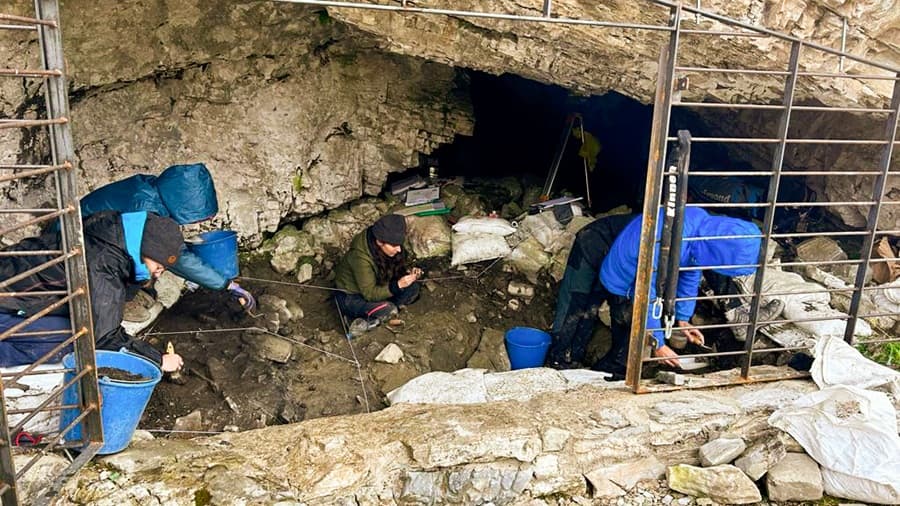
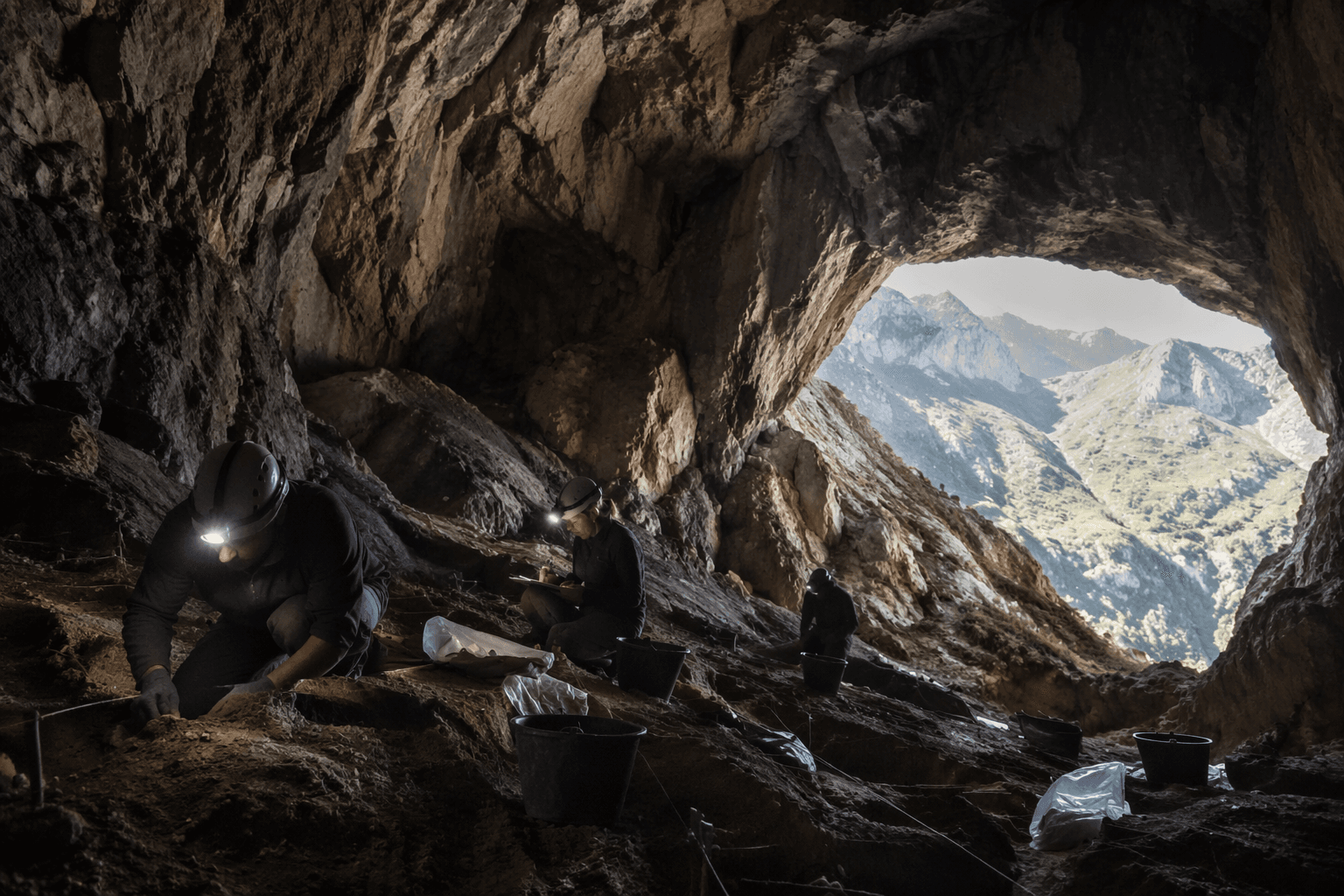
The site, Cova 338, sits at 2,235 meters above sea level in Queralbs, in the Ripollès region of the northeastern Iberian Peninsula. Led by researchers at Universitat Autònoma de Barcelona and IPHES-CERCA, the study reported recurrent occupations spanning from at least the early 5th millennium cal BC to the late 1st millennium cal BC, with gaps between phases of activity rather than a single brief visit. Dense hearths, faunal remains and ceramics point to repeated use, and the cave is now described as the highest-altitude prehistoric cave with evidence of sustained human occupation known in the Pyrenees.
The mineral evidence is what sharpens the picture. Researchers reported green fragments, most likely malachite, which suggest systematic exploitation of copper-rich mineral resources in a high-mountain setting from the Late Neolithic into the Bronze Age. Instead of treating elevations above 2,000 meters as marginal terrain used only fleetingly, the study argues that alpine zones were part of structured seasonal mobility systems and long-term resource use. The finds also raise a second possibility: archaeologists identified a child’s finger bone and a baby tooth, details that could point to burial or ritual activity if future excavation supports that reading.
The same spring of research produced another creature that reshapes assumptions, this time from the deep sea. Microeledone galapagensis was first seen during a 2015 expedition near Isla Darwin in the Galápagos Islands, when a remotely operated vehicle filmed the tiny octopus about 1,773 meters below the surface. Roughly the size of a golf ball, it had short arms about 3 to 4 centimeters long and about 30 suckers on each arm. Because only one female specimen was collected, scientists used micro-computed tomography rather than dissection to study its internal anatomy, and the species was later described in Zootaxa in May 2026. Janet R. Voight of the Field Museum in Chicago said it was the first new octopus species she had officially led the description of in her four-decade career.
Even a slapstick, the orchestral tool that mimics a whip crack, turned out to be a study in detail. At the 190th Meeting of the Acoustical Society of America on May 4, 2026, researchers compared five commercially available slapsticks, playing each five times in an anechoic chamber. Their findings showed that design details, and to a lesser extent playing intensity, shape how closely the instrument matches the crack that became familiar to listeners after Leroy Anderson’s Sleigh Ride. Across caves, octopuses, cat behavior and concert halls, the pattern is the same: the natural world keeps rewarding closer inspection.
This article was produced by Prism’s automated news system from verified source data, official records, and press releases, then run through automated quality and moderation checks before publishing. The system is built and supervised by the people who set the standards it runs under. Read our full AI policy.
Did this article answer your question?