Preseason Outboard Maintenance Checklist for Twin-Hull Power Catamaran Owners
A practical preseason checklist for twin-hull power catamaran owners outlines focused outboard maintenance steps to reduce at-sea failures and keep demos and charters running.
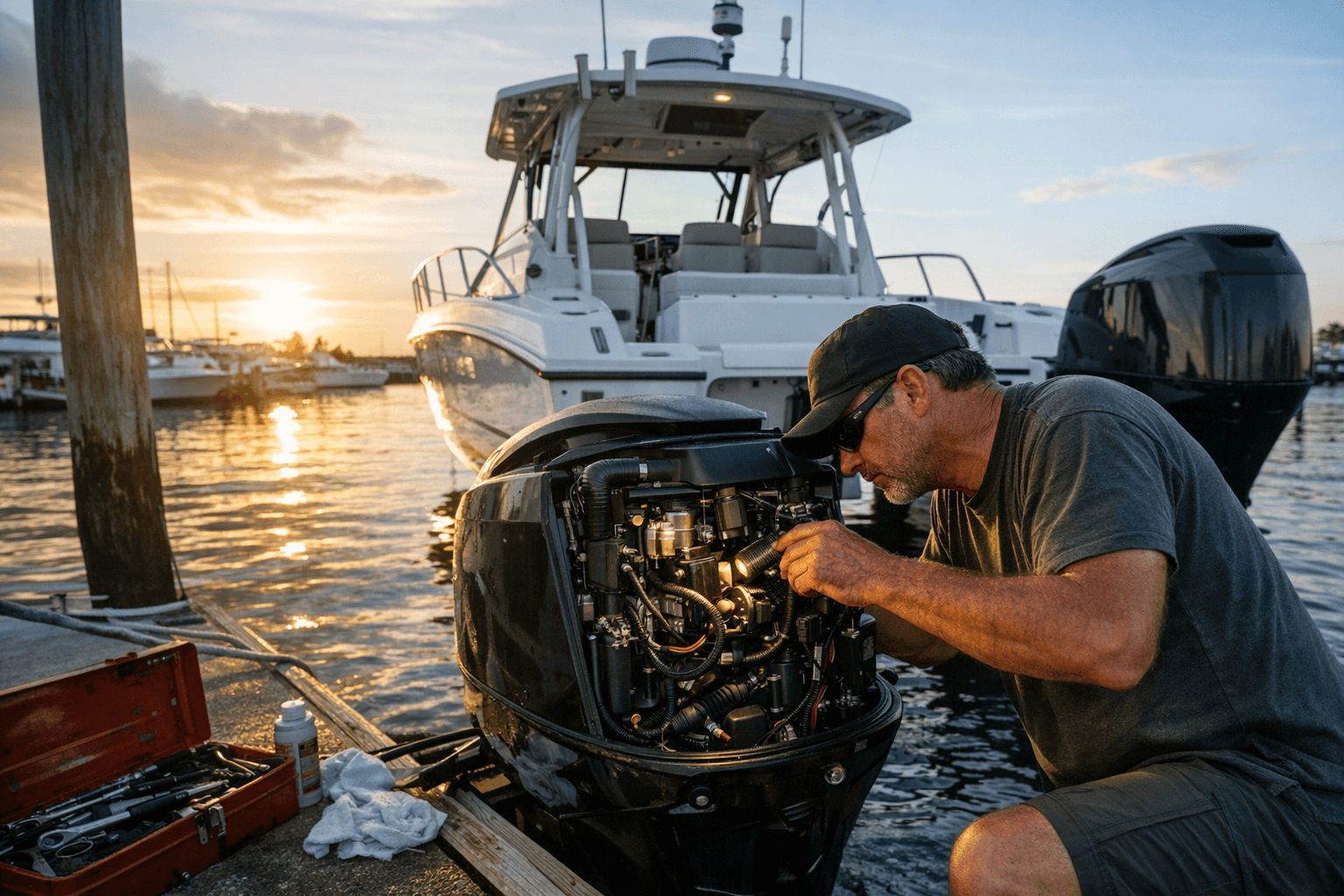
Outboard engines are the dominant propulsion choice for many modern power catamarans and daycats, and a focused preseason routine can make the difference between a smooth season and repeated callouts. Inspecting mounts, fluids, cooling systems, electricals, controls, and carrying the right spares will reduce downtime and prevent most common afloat failures.
Begin with a thorough visual inspection of engine mounts, transom attachment points, steering cables and ram condition, trim tab and tilt mechanisms. Look for corrosion, cracked hoses, loose hardware, or paint and gelcoat fretting at attachments. Replace corroded fasteners and re-torque bolts to manufacturer specs. Remove the propeller to check for dings, hairline cracks and deformation; inspect splines and shear pins, grease the prop shaft, and replace cotter pins. Carry a spare propeller and a spare set of shear pins aboard.
Change engine oil and oil filter where applicable, replace fuel filters and water separators, and drain and clean fuel/water separators before refilling with fresh, treated fuel. Replace lower unit gear oil and inspect for emulsification; milky oil indicates water intrusion requiring attention. Inspect fuel lines and hoses for chafe and age and replace any hose older than the recommended interval. Check fuel tank vents and fill caps for secure sealing and service tank pick-ups and strainers during refit.
Cooling system checks include clearing raw-water intake strainers and removing debris, testing thermostats, and replacing impellers annually or per heavy-use hours. For closed-loop cooled engines inspect coolant lines, anti-freeze condition and level. Test battery condition and voltage under load, check isolating switches, wiring harnesses, connectors and ground straps, and ensure alternator charging delivers expected output at cruising RPM. Clean and protect terminals and verify the engine-start circuit and spare fuses.
Exercise throttle and gear shift controls through full travel and lubricate per manufacturer recommendations. For hydraulic steering inspect fluid levels and hoses and bleed air if needed. Operate trim and tilt fully in and out, inspect hydraulic lines or electric motors and verify trim gauges read correctly while listening for abnormal noises. Inspect the exhaust and cavitation plate for damage and marine growth and replace cathodic anodes when more than 50% consumed.
Afloat, perform weekly to monthly checks: clear fouling from props, verify prop nut torque and cotter pins, monitor cooling discharge for reduced flow which signals impeller failure, drain water from separators after each refuel, and record battery voltages for flooded, AGM, or LiFePO4 systems. Troubleshoot overheating by checking raw-water intake, impeller and thermostat. Address hard starting by checking fuel quality, filters and spark plugs and excessive vibration by inspecting prop balance, shaft condition and transom brackets.
Stock spares and tools aboard: a spare prop and shear pins, an impeller and lower-unit gasket kit, fuel filter elements, hose clamps and a length of high-pressure fuel line, basic hand tools, a torque wrench, multimeter, starter-battery jumper pack, replacement anodes, cotter pins, fuses and marine grease. Always follow service intervals and part numbers from Yamaha, Mercury, Suzuki or Honda and use proper PPE; never perform electrical or fuel work near open flame or while smoking. With these checks and spares in place owners can cut avoidable failures, keep charters and demos on schedule and start the season with confidence.
Know something we missed? Have a correction or additional information?
Submit a Tip