Prince George's County Allows Ownership and Adoption of Pit-Bull-Type Terriers
Prince George's County legalized ownership and adoption of pit-bull-type terriers under CB-97-2025; new rules require registration, a special $25 permit, training and pilot adoptions.

Prince George’s County has ended a decades-long ban on pit-bull-type terriers with the passage of County Bill CB-97-2025, allowing legal ownership and county-facilitated adoptions under a new regulatory framework. The move changes a policy first enacted in the 1990s and replaces the blanket prohibition with registration, permitting and training requirements intended to balance public safety and pet welfare.
The County Council voted unanimously (7-0) to end the ban in November 2025, and the county issued an official press release announcing passage of CB-97-2025 on February 3, 2026. Under the new law, owners and prospective adopters must register dogs with county animal services; dogs will be identified by breed during registration and a special permit is required for pit-bull-type terriers. The permit carries a $25 fee, which the county has said is in addition to the standard county dog license fee, and NBCWashington described the $25 charge as an annual fee. Mandatory owner training and other compliance requirements are also part of the legislation.
County officials framed the change as a modernization. David Fisher, associate director of the Animal Services Division, said, “This legislation allows the county to move forward with a balanced approach that supports responsible pet ownership while maintaining safeguards for residents, pets, and the community.” The bill includes a pilot program to allow adoptions and fostering through county animal services and the county adoption center, enabling dogs that were previously ineligible for local adoption to be placed with qualified families.
Enforcement measures include expanded leash rules and tougher penalties for violations. NBCWashington reported that anyone who fails to obtain a permit or violates permit conditions can expect a $300 fine. The law also calls for case-by-case support for owners and dogs identified as needing additional training or intervention; community members and local advocates have emphasized training as central to the transition. “All these problems that they’re having get fixed; they need more training; the owners need more training,” said Richard Rea, a county resident. Supportive residents have urged equal accountability for all owners, with Tomeka Nelson saying, “I think it’s important that we make sure that all dog owners are being held responsible regardless of breed, regardless of size.” Opponents remain wary: Valencia Campbell of Fort Washington said, “We are not against dogs; we are against the fact that these dogs have been deemed vicious and they do not let go.”
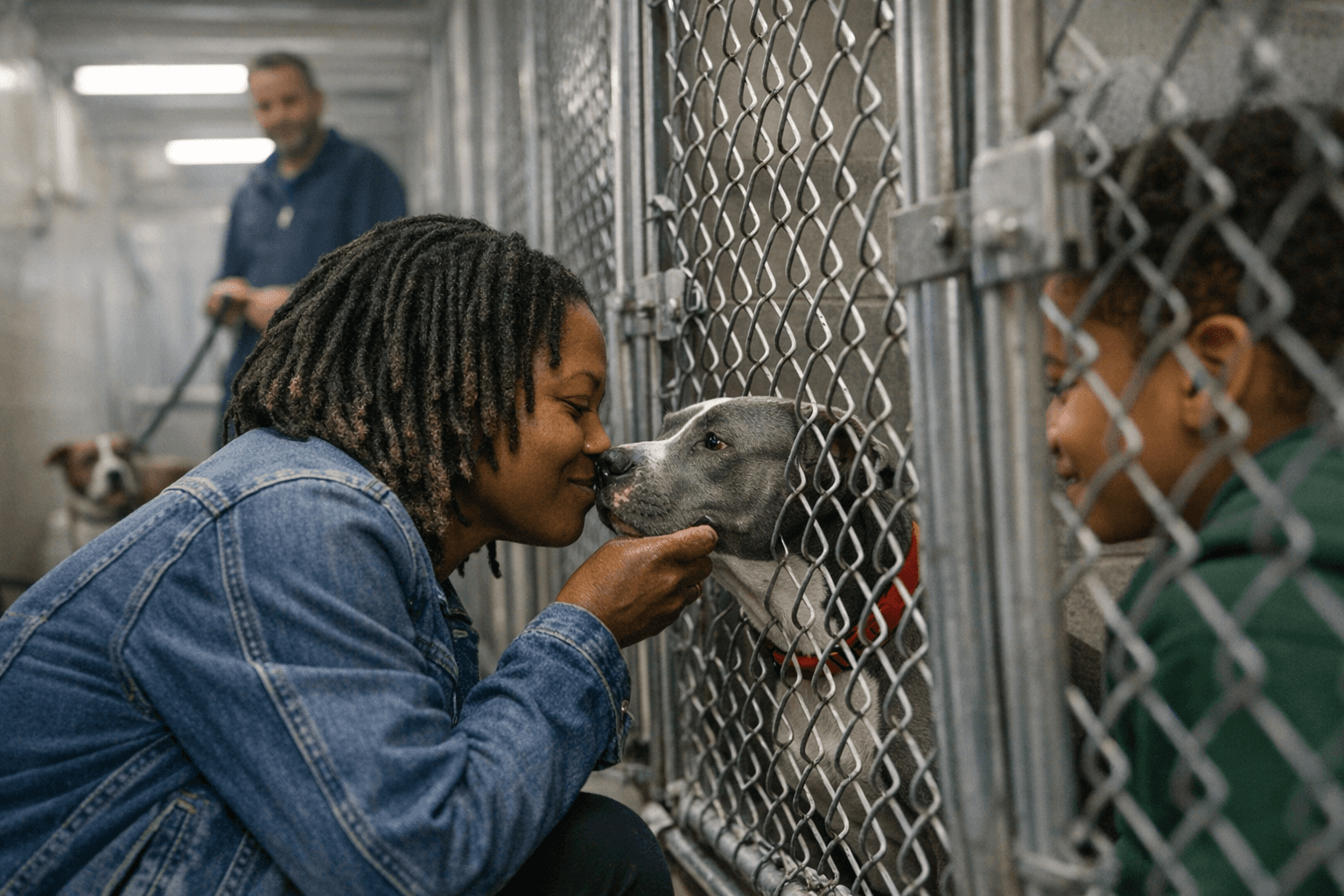
The law arrives after nearly 30 years of a ban that took effect in 1997. Advocacy groups such as PetUnityProject, whose mission header reads “Keeping People and Pets Together,” documented long-term shelter impacts: impounds and euthanasias in prior years were significant, and shelters historically separated pit-bull-type dogs and restricted local adoptions. Legal analysts note the term “pit bull” functions as an umbrella descriptor rather than a single breed, and county estimates cited in legal summaries have suggested roughly 33 percent of local dogs might be classifiable as pit-bull-type, with a range of 20,000–30,000 animals.
For readers in PG County, the immediate effect is practical: residents who own or plan to adopt pit-bull-type terriers must register, obtain the special permit and complete required training to comply with the new ordinance. The pilot adoption program and county implementation plans will determine how quickly shelters begin placing these dogs locally. County animal services still needs to publish detailed permit requirements, training curricula and the operational timeline for the pilot; residents should watch the county’s Animal Services announcements for those specifics. The repeal shifts the conversation from prohibition to regulation, and the success of the new approach will hinge on enforcement, training programs and community partnerships to keep people and pets together while protecting public safety.
Sources:
Know something we missed? Have a correction or additional information?
Submit a Tip