Prince Harry returns to London court in major privacy and libel fight
Prince Harry attended a High Court hearing against Associated Newspapers over alleged illegal information gathering and a libel claim, raising fresh questions about tabloid practices and accountability.
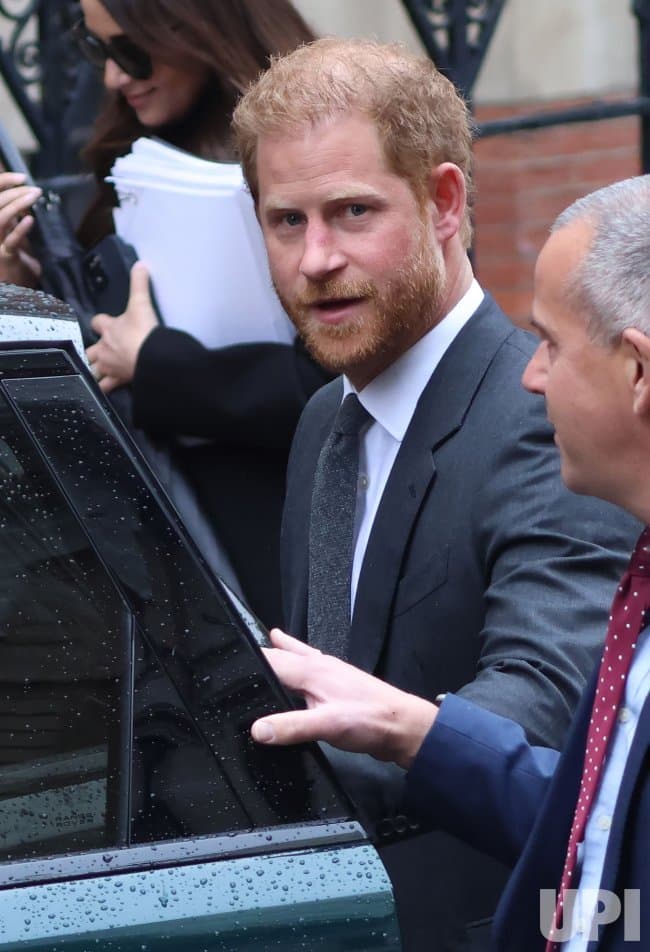
Prince Harry appeared at the Royal Courts of Justice on Jan. 19 to press privacy and libel claims against Associated Newspapers Ltd., the publisher of the Daily Mail, Mail on Sunday and MailOnline. The hearing is part of a wider legal campaign by prominent public figures who say the publisher engaged in unlawful information gathering to produce sensational stories.
Harry, 41, who lives in California, entered the court by a side door, wore a dark blue suit, waved to gathered cameras and said "good morning" before taking a seat in the back row beside co‑claimants Elizabeth Hurley and Sadie Frost. He is one of seven principal plaintiffs in the action, a group that also includes Sir Elton John. The case combines multiple privacy complaints with a separate libel claim arising from a February article about the duke's family's security arrangements in the United Kingdom.
Claimants allege that Associated Newspapers used private investigators to hack phones, bug cars, access private records and eavesdrop on calls in pursuit of stories. The litigation will rely in part on testimony from private investigators who say they worked for the publisher. Harry's libel claim contends a Mail on Sunday article falsely suggested he had "lied" and had "cynically" tried to manipulate public opinion; the publisher denies the article was defamatory.
Harry's legal team has framed the case as a contest over both personal harm and systemic newsroom practices. In court filings, his lawyer David Sherborne wrote that the duke "has been caused great distress by each and every episode of unlawful information gathering against him by Associated or on its behalf," and that the conduct has left Harry "paranoid beyond belief." Associated Newspapers has rejected the allegations as "preposterous," asserting the contested reporting contained "no hint of impropriety" and was not defamatory.
The trial, being conducted in the High Court, is expected to be lengthy and consequential. Court timetables anticipate a multi‑week hearing that could run for up to nine weeks, with damages and legal exposure in the tens of millions of dollars. Parties have framed the proceedings as one of the final outstanding lawsuits Harry has pursued against British tabloid companies.

Beyond the immediate financial stakes, the case has broader implications for the British press and public appetite for intrusive royal coverage. The litigation arrives after years of high‑profile legal wins against tabloid groups; Harry previously succeeded in a claim against Mirror Group newspapers and was awarded damages. That history has emboldened other public figures to seek redress for alleged breaches of privacy and has forced newsrooms to confront the ethics and legality of information‑gathering practices that once operated with little scrutiny.
For the industry, a ruling against Associated Newspapers could accelerate changes in how British tabloids source stories, potentially increasing reliance on public records and digital reporting over covert techniques. For the royal family and the public, the trial underscores tensions between celebrity accountability, press freedom and the right to private life, and it spotlights the transatlantic dimension of a prince who now lives in California but remains a flashpoint for U.K. media.
As the case progresses, courtroom testimony and evidence from investigators will test long‑held assumptions about the limits of tabloid reporting and may influence regulatory debate over media standards, privacy law and the business models that underpin sensational journalism in Britain.
This article was produced by Prism’s automated news system from verified source data, official records, and press releases, then run through automated quality and moderation checks before publishing. The system is built and supervised by the people who set the standards it runs under. Read our full AI policy.
Did this article answer your question?