Private Credit Strain Threatens Trump's Push to Expand Risky Investments
Trump's 401(k) executive order opening retirement savings to private credit arrives as defaults surge and a $162 billion maturity wall threatens the market.
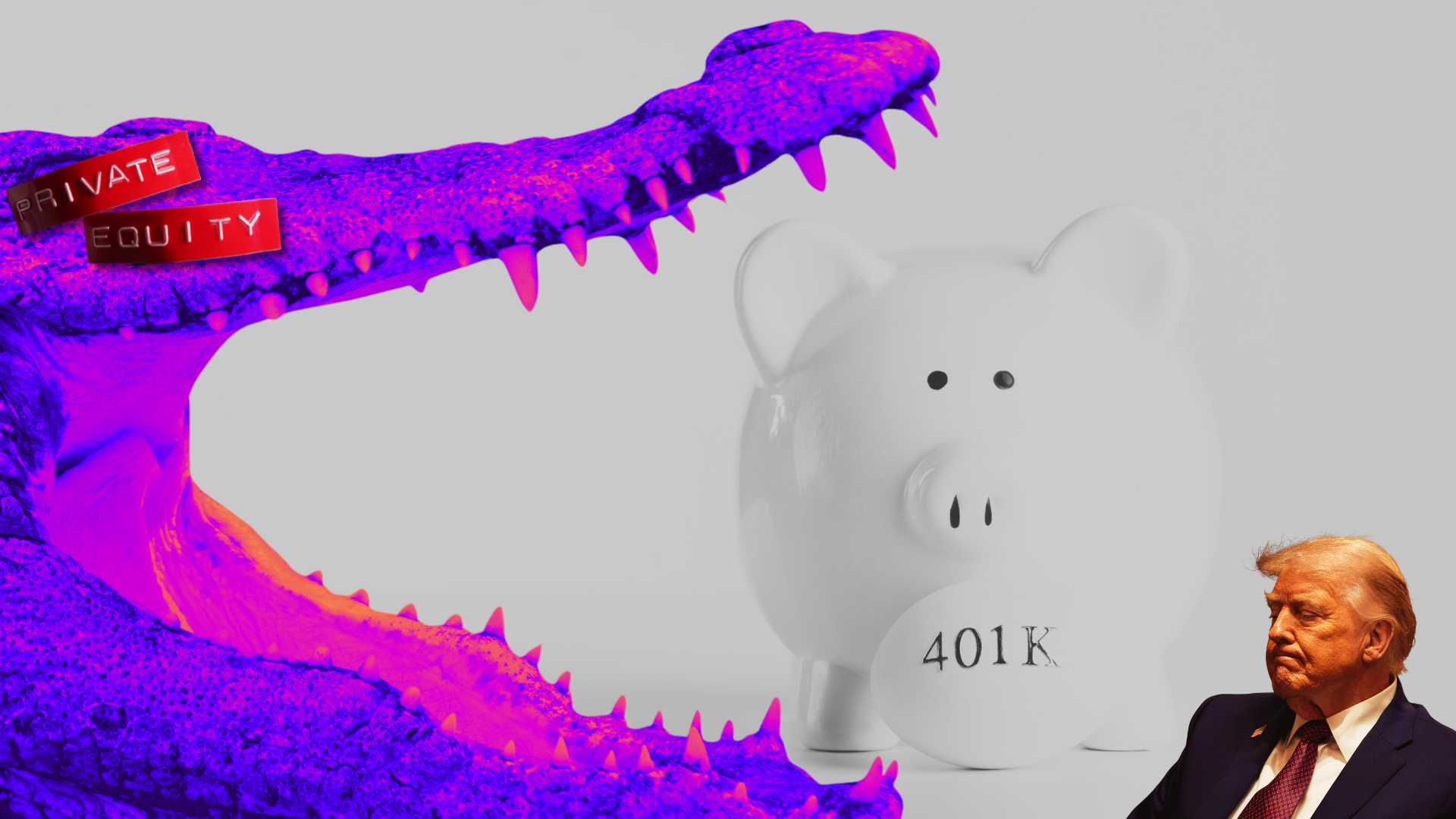
A $1.3 trillion lending market that spent years as Wall Street's most coveted growth engine is now showing its first serious structural cracks, and the timing could not be more politically inconvenient for President Trump. His administration is pressing forward with plans to open private credit investments to the tens of millions of Americans who hold 401(k) accounts, even as mounting evidence of borrower distress, frozen redemptions, and surging default rates unsettles the asset class.
The policy anchor is Executive Order 14330, which Trump signed on August 7, 2025, under the title "Democratizing Access to Alternative Assets for 401(k) Investors." The order directed the Department of Labor and the Securities and Exchange Commission to dismantle regulatory barriers blocking private equity, real estate, and private credit from defined-contribution retirement plans. Congressman Troy Downing subsequently introduced legislation, the Retirement Investment Choice Act, to codify the order into law. What began as a deregulatory talking point has now become an active rule-making process, just as the once-booming corner of lending markets has been showing signs of shakiness recently.
The mechanics of private credit make the timing particularly treacherous for ordinary savers. Unlike publicly traded bonds, private credit loans carry floating interest rates tied to benchmarks that have stayed elevated far longer than borrowers anticipated when they took on debt. Loans in the sector are rarely marked to market daily, meaning reported valuations can lag actual conditions by weeks or months. And because the deal environment of the past decade rewarded speed over protection, a substantial share of outstanding loans carry covenant-lite structures that strip away the early-warning triggers lenders would otherwise use to renegotiate before a borrower collapses.
The compounding pressures are now visible in the data. The U.S. private credit market, which expanded from roughly $500 billion to $1.3 trillion over the past five years, is confronting a $162 billion maturity wall, debt that must be refinanced in a rate environment that punishes highly leveraged borrowers. UBS strategists have raised a worst-case default scenario to 15 percent. By early 2026, interest coverage ratios for many mid-market firms have fallen below 1.0x, meaning they can no longer generate enough cash to cover their own interest payments. The International Monetary Fund's 2025 Financial Stability Report found that 40 percent of private credit borrowers had negative free cash flow, up from 25 percent in 2021. Several Business Development Companies, the publicly traded vehicles that give retail investors the closest existing access to private credit, have slashed dividends and moved to gate redemptions.

Critics have warned that expanding 401(k) exposure to this market now would put retirement funds at risk and rattle the broader financial system if private credit funds continue to teeter. The administration has framed the executive order as democratizing access to returns that wealthy investors have enjoyed for years. But a broader set of investors could soon be exposed to a new financial risk just as President Trump accelerates a push to loosen regulations across the financial sector, a pairing that gives political weight to every valuation markdown and every missed payment.
The deregulatory momentum inside the White House has not slowed. If private credit's stress deepens before the Department of Labor and SEC finalize implementing rules, the administration may find itself defending a policy built for a boom cycle in the middle of a reckoning.
This article was produced by Prism’s automated news system from verified source data, official records, and press releases, then run through automated quality and moderation checks before publishing. The system is built and supervised by the people who set the standards it runs under. Read our full AI policy.
Did this article answer your question?

