Private Label SEO Programs Help Agencies Scale Without Expanding In-House Teams
Private label SEO lets agencies deliver expert-level SEO under their own brand without hiring specialist staff, unlocking margins and scalability that in-house teams rarely match.
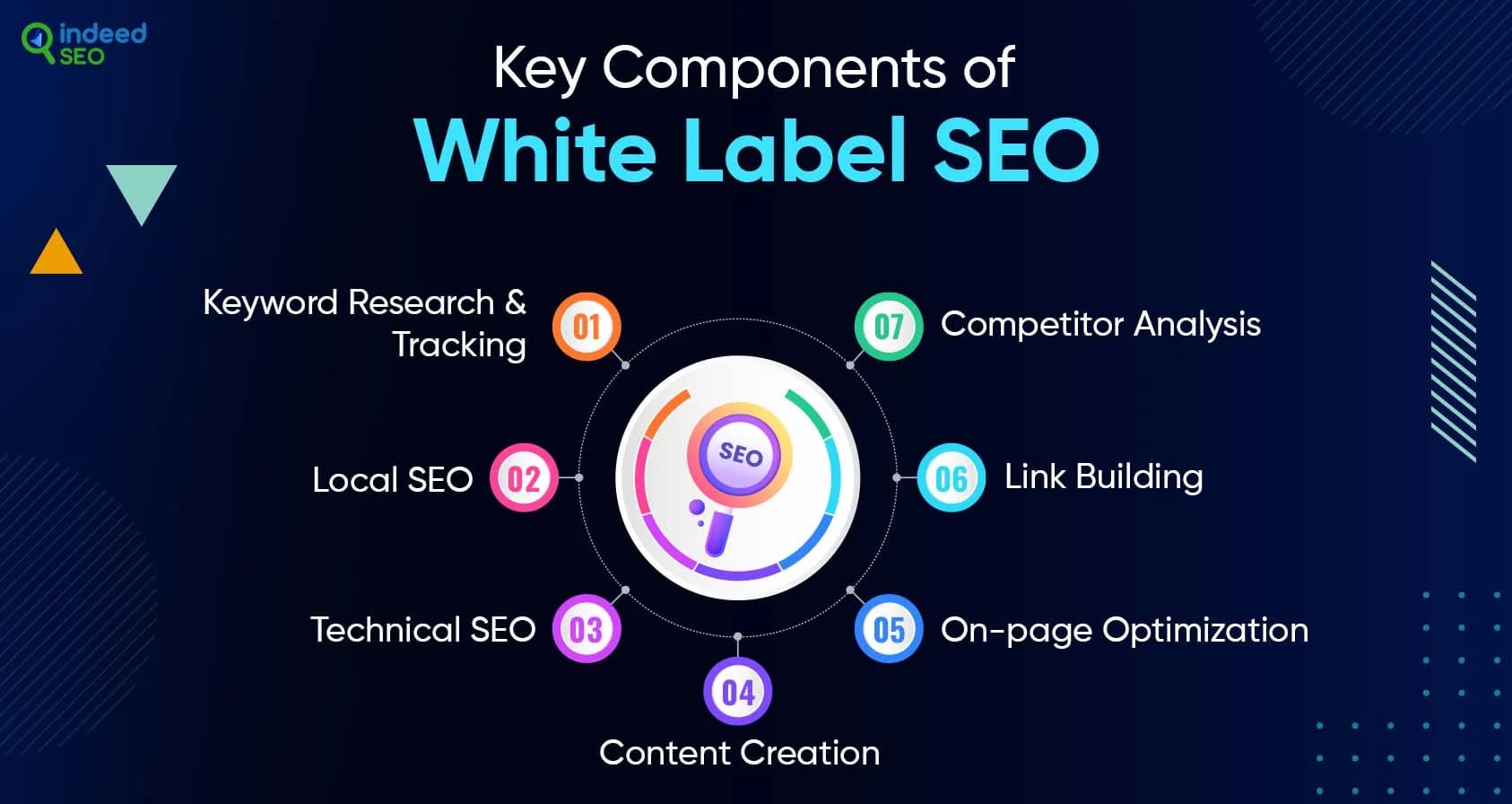
Private label SEO programs let agencies resell expert SEO services under their own brand name, outsourcing fulfillment to specialist providers while maintaining full client ownership. The agency bills the client, the provider does the work, and the brand on every deliverable stays yours. For growing agencies, this model removes the single biggest barrier to scaling: the cost and complexity of building an in-house SEO team.
What Is a Private Label SEO Program?
A private label SEO program is a fulfillment partnership where an outside SEO provider delivers services that the contracting agency repackages and presents under its own brand. The terms "private label SEO," "white-label SEO," and "SEO reselling" describe the same operational model, with no meaningful practical difference between them. According to SEOReseller, white-label SEO is "a business solution that gives you the ability to offer extra SEO services to your clients, irrespective of whether" the agency has internal SEO capability.
The distinction that matters is ownership: the agency retains the client relationship, sets pricing, and controls deliverable presentation. The provider remains invisible. Semify describes the arrangement as a partnership that "lets agencies resell services under their own brand name" while gaining access to a provider's team, tools, and expertise.
How a Private Label SEO Program Works
The operational workflow follows a consistent pattern across providers:
1. Agency onboarding: The agency signs a reseller agreement and typically receives a branded client portal or dashboard. Agency Platform, for example, launches resellers with a branded client portal and a presale audit tool as the entry point.
2. Client intake: The agency onboards its client, collects campaign goals, and passes a scoped brief to the provider. SEOReseller's model begins with an agency consultant reviewing what the agency delivers and aligning provider resources accordingly.
3. Strategy and execution: The provider builds and executes the SEO campaign, covering technical audits, content production, link acquisition, and reporting. OneIMS notes that clients receive "all the work of an SEO campaign without the stress."
4. White-labeled delivery: All reports, content, and communication assets carry the agency's branding. OneIMS explicitly allows agencies to "brand any content or other SEO deliverables to their agency, their client's agency, or however they please."
5. Ongoing management: The agency manages the client relationship and communicates results; the provider handles fulfillment updates and adjustments in the background.
What Services Are Typically Included
Private label SEO programs generally bundle a broad set of deliverables, though the exact scope varies by provider tier and contract structure. Standard inclusions across major providers include:
- Technical SEO audits and ongoing site health monitoring
- On-page optimization covering title tags, meta descriptions, schema, and internal linking
- Content creation, including blog posts, landing pages, and supporting editorial assets
- Link building, spanning link outreach, link insertions, content syndication, press releases, and high-authority placements
- Citation management and cleanup for local SEO clients
- Branded monthly reporting and dashboard access
- Keyword research, topic clustering, and competitor analysis
The HOTH organizes its reseller product menu into distinct categories: link building (with options for link outreach, link insertions, content syndication, press releases, and platinum links), technical SEO, and citation cleanup. This modular structure lets agencies select specific deliverables rather than forcing a bundled commitment.
Why Agencies Use Private Label Programs to Scale
The financial case for private label SEO rests on margin and operational leverage. Agency Platform reports that reseller partners can earn up to 80% margins through its white-label dashboard, with more than 1,200 agencies currently active on the platform.
From a cost perspective, Embarque notes that basic packages from providers like SEOReseller start in the range of a few hundred dollars per month, giving agencies a low-risk entry point. Because the cost is covered by the client retainer, agencies can begin generating revenue from SEO without carrying payroll for SEO specialists.
The operational benefits extend beyond cost:
- Agencies focus on their core strengths, primarily client acquisition, strategy, and account management, while SEO execution runs in the background
- Service capacity scales with client demand without hiring cycles or training overhead
- Agencies can enter new verticals or offer expanded service lines immediately
- Quality risk is transferred to a specialist provider with dedicated tooling and methodology
OneIMS frames this clearly: "With private label SEO services, you can focus on what you do best. Leave the SEO up to the experts."
Choosing the Right Private Label SEO Partner
Not every provider operates the same way, and the quality of the partnership depends heavily on structural factors that go beyond the service menu. Logic Inbound describes its program as a relationship where "all parties share successes, trust and understanding that could never be achieved with simply purchasing" a commodity service. That distinction separates genuine partnership models from fulfillment factories.
When evaluating providers, agencies should assess:

- Fulfillment transparency: Does the provider disclose the tools, methods, and content sources it uses?
- Communication responsiveness: What are the documented SLA windows for updates and escalations?
- Branded reporting quality: Are dashboards and deliverables genuinely rebrandable, or do provider logos and references bleed through?
- Contract terms: What are the cancellation terms, ownership clauses, and minimum volume commitments?
- White hat methodology: Semify emphasizes that white hat SEO "focuses on ethical, Google-approved strategies that improve search rankings" without exposing client sites to penalty risk.
Providers commonly active in this space include SEOReseller, The HOTH (based in Saint Petersburg, FL), Semify, OneIMS, Logic Inbound, Agency Platform, Embarque, Boostability, FATJOE, Vendasta, DashClicks, and WhiteLabelSEO.ai (which offers AI-powered content production with plans from $199.99 per month and branded agency portals). Each carries a different operational model, pricing structure, and specialization depth.
Common Concerns and How to Address Them
Can I trust a white-label provider with my clients? The short answer is: with careful vetting, yes. The critical protection is contractual: agencies should secure clear ownership clauses establishing that all work product, client data, and deliverables belong to the agency. Logic Inbound's emphasis on mutual understanding and shared goals reflects a partnership model where the provider invests in the agency's client outcomes rather than simply processing orders.
What if deliverable quality is inconsistent? The best defense is a structured trial period. Running a two-week or one-month pilot campaign before committing to full client volume lets agencies evaluate turnaround times, deliverable completeness, and revision responsiveness under real conditions. Embarque positions its managed plans as accessible starting points precisely because the low initial cost reduces the risk of this evaluation phase.
Is this ethical to do without disclosing it to clients? Most agencies operate under standard service agreements that do not require disclosure of every subcontractor relationship. The relevant obligation is delivering the promised outcome at the contracted quality level. Where client contracts specify exclusivity or direct staffing, agencies should review those terms specifically before reselling.
The Structural Advantage for Growing Agencies
Private label SEO programs solve a real operational problem: the gap between what a growing agency can sell and what it can actually deliver without adding headcount. By treating SEO fulfillment as a managed input rather than an internal function, agencies gain the ability to compete for clients that require full-service SEO delivery from day one.
The model is not passive. Agencies that extract the most value from reseller partnerships stay actively involved in strategy, review every deliverable before client submission, and treat the provider relationship as a performance partnership rather than a hands-off subscription. That level of engagement is what separates agencies that grow through private label SEO from those that find the model disappointing.
Frequently Asked Questions
What is white-label SEO?
White-label SEO, also called private label SEO or SEO reselling, is an arrangement where an agency sells SEO services to its own clients but outsources the actual fulfillment to a specialist provider. All deliverables, reports, and communications carry the agency's branding. The provider remains invisible to the end client, and the agency retains full ownership of the client relationship and pricing.
How does a white-label SEO reseller program work?
An agency signs a reseller agreement with a provider and receives a branded dashboard or portal. The agency scopes and sells SEO campaigns to its clients, passes briefs to the provider, and the provider executes all technical, content, and link-building work. Completed deliverables are rebranded under the agency's name before reaching the client. The agency manages communication and billing; the provider handles fulfillment.
What is the difference between white-label and private-label SEO?
There is no practical difference. White-label SEO and private-label SEO describe the same model: outsourced SEO services delivered under the reselling agency's brand. The terminology varies by provider preference. SEOReseller, for example, uses both terms interchangeably across its service pages. Agencies can treat the terms as synonymous when evaluating programs or explaining the model to internal stakeholders.
What services are typically included in white-label SEO?
Standard white-label SEO packages include technical site audits, on-page optimization, content creation, link building (outreach, insertions, and syndication), citation management for local clients, keyword research, and branded monthly reporting. The HOTH organizes its reseller menu into modular categories including platinum link building, content syndication, press releases, technical SEO, and citation cleanup, allowing agencies to purchase only the deliverables they need.
Know something we missed? Have a correction or additional information?
Submit a Tip