Project Vault: White House unveils $12 billion rare earth reserve
The White House launches Project Vault, a nearly $12 billion stockpile of rare earths to curb dependence on China and secure critical supplies for industry and defense.
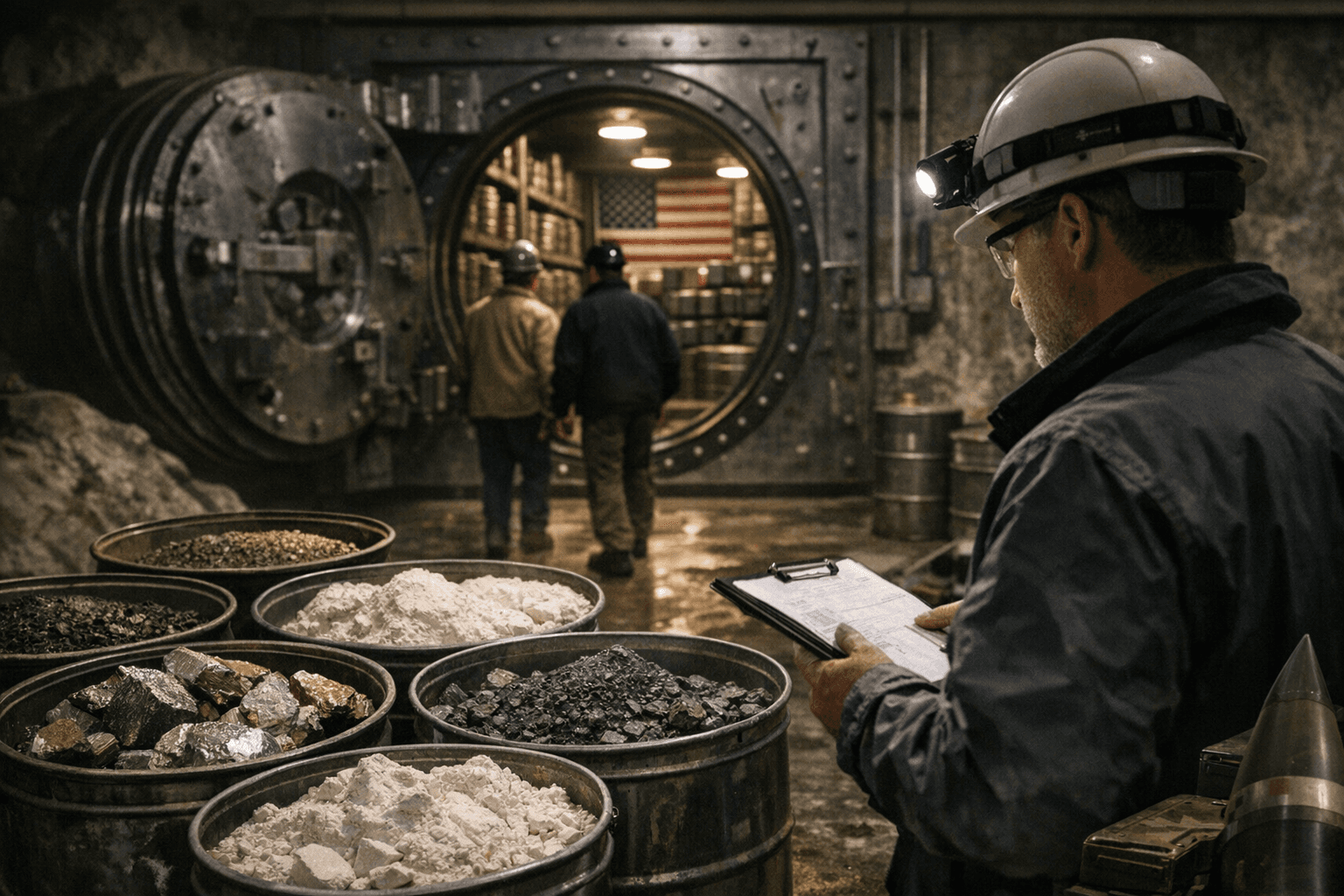
The administration announced Project Vault, a new strategic reserve that will assemble roughly $11.67 billion in initial funding to buy and hold rare earth elements and other critical minerals essential to autos, electronics and defense systems. The initiative is designed to reduce U.S. reliance on foreign processing capacity and to provide a buffer against supply shocks that have disrupted manufacturers and defense contractors.
Project Vault will be seeded with a $10.0 billion loan from the U.S. Export-Import Bank plus about $1.67 billion in private capital, for an initial pool often described as nearly $12 billion. The loan carries a reported 15-year term. Officials said materials will be accumulated in stages to limit market disruption and to avoid displacing private buyers, but they have not released a comprehensive list of targeted minerals, specific volume targets or the conditions that would trigger releases from the reserve.
Policymakers framed the reserve as a strategic complement to ongoing industrial policy measures that aim to expand domestic mining and processing capacity. The United States currently holds stakes and has provided financial backing to several domestic producers, and Congress and the administration have deployed tax credits, loans and a new financing agency with roughly $2.5 billion to coax private investment into projects that have lagged because of capital intensity and permitting hurdles. Project Vault is intended to provide immediate supply security while those capacity expansions play out over the medium term.
Strategic context informs the urgency. China accounts for roughly 70 percent of global rare earth mining and about 90 percent of processing capacity. The concentration has been cited by U.S. officials as a vulnerability after export curbs and trade tensions in recent years highlighted how dominant suppliers can leverage market power. Critical inputs cited as candidates for stockpiling include rare earths and associated elements such as gallium and cobalt, materials used in jet engines, radar systems, electric vehicles, batteries, smartphones and other high-value manufacturing.
Markets reacted quickly to the announcement, with shares of listed rare-earth and critical-minerals companies moving higher in premarket trading. Domestic miners and developers that have received government support in recent years are likely to be direct beneficiaries of a program that will buy physical materials or contracts for delivery. At the same time, the lack of published procurement schedules, storage plans, governance rules and loan terms raises questions about transparency and the program’s ability to avoid unintended market distortions.
In the near term, Project Vault could provide tangible risk insurance for manufacturers that depend on imported processed minerals while allied production ramps up in Australia, Canada and parts of Africa. Over the longer term, the program underscores a shift in U.S. industrial policy from inducements for private investment toward direct strategic asset accumulation. That approach can blunt supplier leverage but also requires clear rules to prevent political interference, price manipulation and inefficient capital allocation.
Key items for follow-up include the Export-Import Bank’s full loan terms, the identities and obligations of private investors, the precise list and tonnage targets for the stockpile, the agency or entity that will operate the reserve, and the operational rules for purchases and releases. How those details are disclosed will shape whether Project Vault stabilizes strategic supply chains or creates new frictions in critical-minerals markets.
This article was produced by Prism’s automated news system from verified source data, official records, and press releases, then run through automated quality and moderation checks before publishing. The system is built and supervised by the people who set the standards it runs under. Read our full AI policy.
Did this article answer your question?