Prosecutors say angry Uber driver sparked deadly Palisades fire
Prosecutors say Jonathan Rinderknecht lit a New Year’s Day blaze that smoldered underground before erupting into the Palisades Fire, which killed 12 people.

A New Year’s Eve Uber shift, prosecutors say, ended with Jonathan Rinderknecht, 29, seething over missed plans and driving into the hills above Pacific Palisades to ignite a fire that later became one of California’s deadliest.
Federal prosecutors say Rinderknecht started the Lachman Fire just after midnight on January 1, 2025, on land owned by the Mountains Recreation and Conservation Authority. Firefighters quickly knocked it down, but the blaze kept burning underground in dense root systems, then resurfaced on January 7 when heavy winds pushed it into the Palisades Fire, killing 12 people.
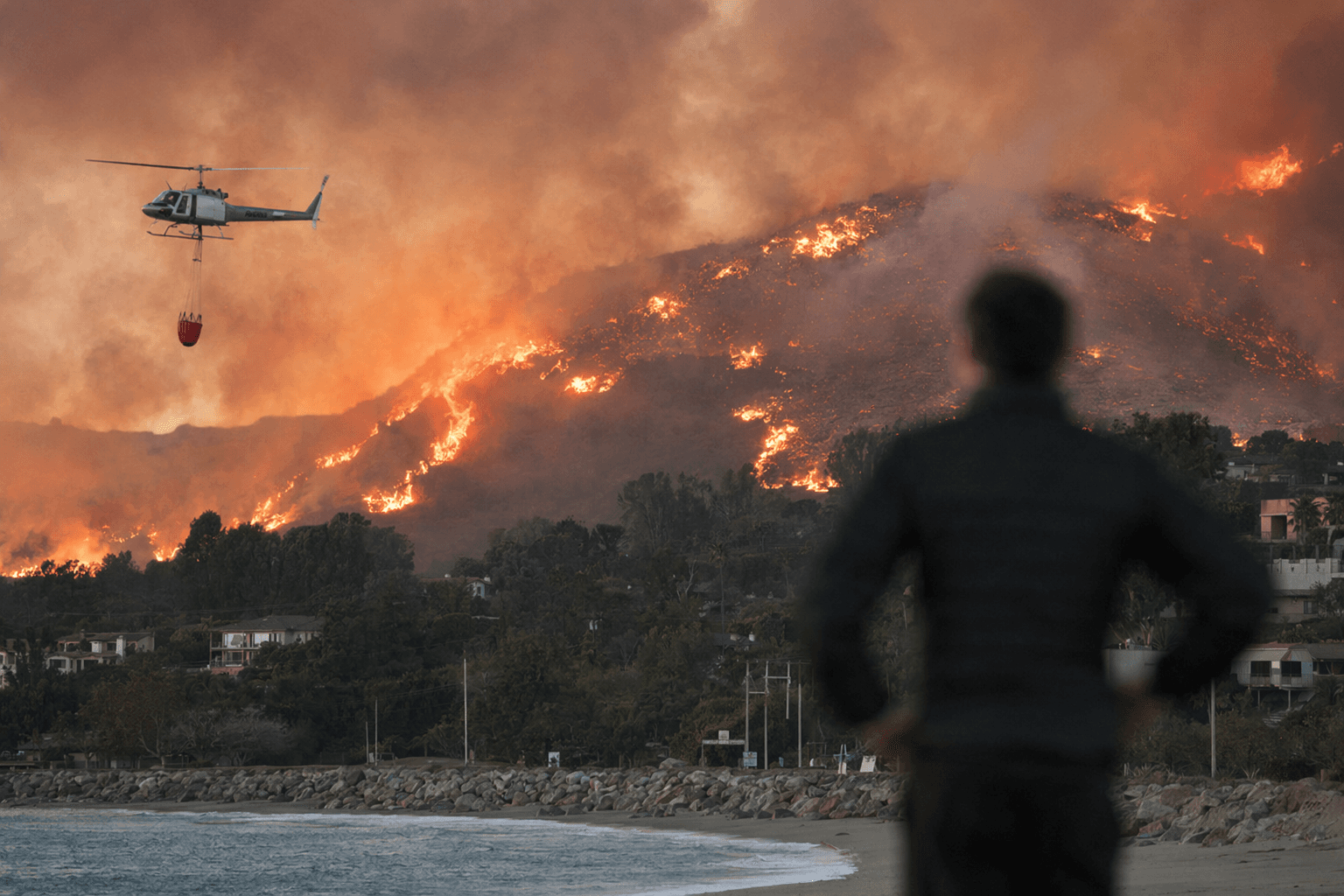
Investigators say the fire exposed a familiar weakness in wildland protection: a small ignition in dry terrain can survive initial suppression if heat remains buried in vegetation and roots. In this case, the Los Angeles City Fire Department later described the January 7 blaze as a historic, wind-driven vegetation fire in the Santa Monica Mountains’ Palisades Highlands, after reviewing nearly 100 interviews and collecting radio traffic, photos, videos and eyewitness accounts for its after-action review.
Prosecutors have also portrayed Rinderknecht as agitated and resentful in the hours before the fire. They say he was upset about not having New Year’s Eve plans, appeared angry while driving Uber passengers around the Pacific Palisades on December 31, 2024, and told investigators that if someone committed arson there it could stem from resentment toward rich people “enjoying their money” while “we’re basically being enslaved by them.” Court filings also say he ranted about Luigi Mangione, capitalism and vigilantism, and searched online for Mangione-related terms in the days around the fire.
Rinderknecht has pleaded not guilty and remains in federal custody. His trial is set for June 8, 2026. His attorneys, including Steve Haney and Christopher Weber, argue he is being used as a scapegoat for the Los Angeles Fire Department’s failure to fully extinguish the earlier blaze. The case has become a study in how quickly a deliberate ignition can turn catastrophic in vulnerable mountain terrain, and how a missed smolder can become a mass-fatality fire days later.
This article was produced by Prism’s automated news system from verified source data, official records, and press releases, then run through automated quality and moderation checks before publishing. The system is built and supervised by the people who set the standards it runs under. Read our full AI policy.
Did this article answer your question?

