Protecting Patina and Fragile Stones When Caring for Vintage Jewelry
Learn how to safeguard delicate stones and the irreplaceable patina of vintage jewelry—know what to avoid and which gentle techniques preserve value and beauty.
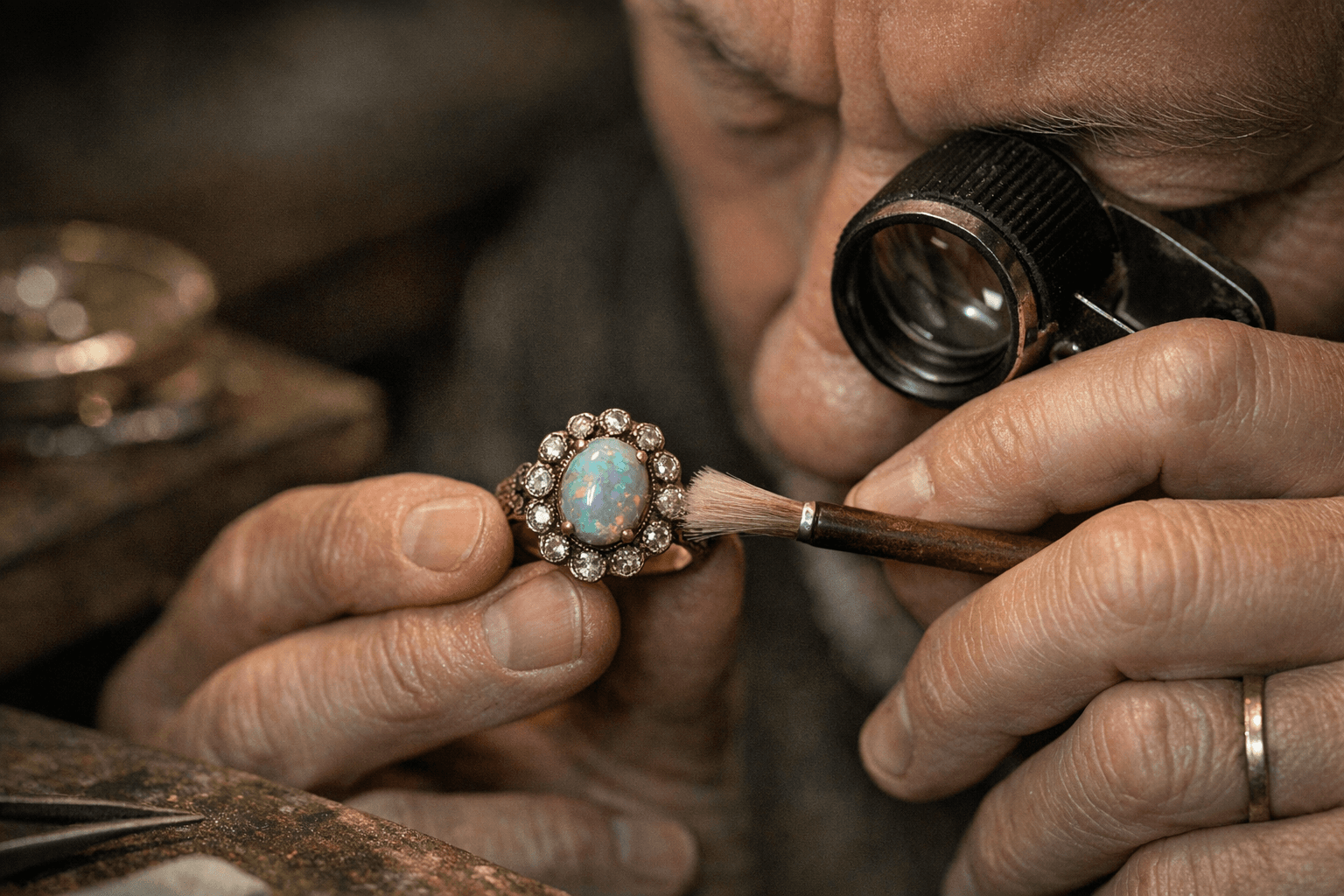
Vintage pieces wear stories in their surfaces: a softened bezel here, a faint solder line there, and the warm, lived-in glow we call patina. Caring for these objects demands more than routine polishing; it requires an understanding of older settings and the specific vulnerabilities of fragile materials — glass and early paste, old-cut diamonds, opals, turquoise, and pearls — and the clear rule to avoid aggressive cleaning, ultrasonic machines, and steam on porous or heat-sensitive stones.
1. Assess the piece: identify older settings and fragile materials
Begin by examining the mount and the stones to see whether you are dealing with an older setting or fragile materials such as glass, early paste, old-cut diamonds, opals, turquoise, or pearls. Older settings often use thin shanks, closed backs, collet bezels, or glue-secured stones; these features change how a piece responds to pressure, heat, and solvents. If you encounter a glued paste stone or a collet bezel, treat the piece as fragile until a conservator or experienced jeweler confirms otherwise.
2. Understand why patina matters and when not to remove it
Patina—surface oxidation, faint scratches, and soft edges—records a piece’s provenance and can be central to its aesthetic and market value. Heavy polishing to restore a “like-new” luster will remove that history and can thin gold plating or soft metal edges, especially on filigree and openwork. Preserve patina by using only the gentlest surface cleaning and by limiting any polishing to targeted, minimal work performed by a professional who can judge when retipping or stabilization is required.
3. Avoid ultrasonic cleaners and steam for porous or heat-sensitive stones
Ultrasonic machines and steam cleaners deliver energy and heat that can fracture, delaminate, or loosen fragile materials — do not use them on glass and early paste, opals, turquoise, or pearls. Porous stones like turquoise and early paste can absorb liquids or adhesives; steam can force moisture into fractures and dissolve historic glues, while ultrasonics can propagate existing hairline cracks in old-cut diamonds. When in doubt, default to manual, low-impact cleaning techniques.
4. Cleaning: safe, manual techniques that respect fragile stones
Use a soft-bristled brush, lukewarm water, and a drop of neutral pH soap for most metal surfaces; keep stone exposure minimal and brief for porous or heat-sensitive examples. For pearls and opals, wipe with a slightly damp microfibre cloth rather than submerging; pearls are particularly susceptible to chemicals and swelling from repeated soaking. For paste or glass, avoid soaking and never apply heat; instead, clean gently around the setting with a soft brush, reserving immersion only for robust, securely set stones.
- Glass and early paste: often glued into settings and sometimes backed; they react to heat and solvents and can delaminate. Clean around the surface; never steam or ultrasonicate, and avoid soaking in strong cleaners.
- Old-cut diamonds: while diamond is hard, early cutting and existing inclusions can make old-cut stones prone to cleavage along strain lines; avoid violent shocks and high-energy cleaning methods. Use gentle brushing and professional assessment for any suspected fracture.
- Opals: hydrated and sensitive to sudden temperature or humidity changes; they can craze or crack when exposed to heat or drying agents. Keep cleaning to a soft, barely damp cloth and avoid steam and ultrasonic treatments.
- Turquoise: porous and often dyed or stabilized; it can absorb oils and solvents that discolor or leach dye. Do not soak; clean with a dry or barely damp cloth and store away from moisture and chemicals.
- Pearls: organic and soluble to acids and heat; cosmetics, perspiration, and steam degrade their nacre. Wipe after wear with a soft cloth and avoid ultrasonic or steam cleaning; restring pearls regularly on silk to prevent excessive wear.
5. Stone-by-stone care notes: specifics for the vulnerable group
6. Inspect and stabilize settings before attempting cleaning
Look for thin prongs, loose bezels, missing glue, or signs of previous amateur repair—older settings can fail under routine cleaning if not stabilized first. If a stone is loose, do not attempt to clean around it; a simple brush stroke can dislodge a glue-secured paste or a tired old prong. Where stabilization is needed, commission a jeweler experienced in conservation techniques: re-tipping prongs, rebushing bezels, and using reversible, conservation-grade adhesives preserve integrity without erasing history.
7. Preserve delicate patina when performing repairs
When a repair is necessary—prong re-tipping, shank reinforcement, or re-soldering—ask the conservator to match the finish and respect patina rather than buffing it away. Polishing back to bright metal is quick, but it removes the wearable history that often underpins desirability and value. Request minimal intervention, color-matched solder, and a finish that blends with existing wear rather than erasing it.
8. Storage and wearing: simple habits that prevent damage
Store vintage pieces individually in soft pouches or lined compartments to prevent rubbing that will abrade patina and soften delicate stones like opal and pearl. Avoid humid extremes for pearls and opals; keep turquoise away from prolonged moisture or oils that might leach dye. When wearing vintage jewelry, apply perfume and cosmetics before putting pieces on, and avoid direct exposure to heat sources or vigorous activities that can shock old-cut diamonds or loosen paste.
9. When to consult a conservator or specialist jeweler
If you find cracks, flaking surfaces, visible glue, or a stone that moves, stop and seek a specialist: irreversible damage can occur from continued handling or inappropriate cleaning. Conservators can recommend tailored approaches—reversible adhesives, custom mounting supports, and minimal cleaning regimens—for pieces containing glass, early paste, old-cut diamonds, opals, turquoise, and pearls. Invest in a professional assessment for high-value or sentimentally important pieces rather than risking loss through home treatments.
10. Documentation and insurance: record the piece as it is now
Photograph the piece from multiple angles and note the condition of prongs, bezels, and the surface patina before any cleaning or repair. These records are essential for insurance and for conservators to plan an intervention that preserves both material and provenance. Keep receipts and conservation reports with the documentation so future caretakers understand what was done and why minimal intervention was chosen.
The governing principle for vintage jewelry is restraint: preserve patina, respect fragile materials, and avoid the blunt instruments of modern cleaning—ultrasonic machines, steam, and harsh solvents—that can erase decades of history in moments. Conservators and specialist jewelers exist precisely because these pieces require a lighter touch; when in doubt, stop, document, and seek expertise so that the next generation inherits the object with its story intact.
Know something we missed? Have a correction or additional information?
Submit a Tip