PSG’s turn from superstar era delivers first Champions League title
PSG’s first Champions League title crowned a rebuild: less superstar excess, more structure, youth and tactical discipline.
From bling-bling to realism
Paris Saint-Germain’s first Champions League title was not built on galactic stardom. It was built on a club decision, made in public and then tested in elite competition, to move away from the old logic of celebrity accumulation and toward a more coherent football project.
That turn began in June 2022, when Nasser Al-Khelaifi declared that PSG’s “bling-bling” era was over and said the club wanted to be more realistic and less flashy. The message mattered because it marked a clean break from the post-2011 identity associated with the arrivals of Lionel Messi, Neymar and Kylian Mbappe, when the scale of the names often exceeded the stability of the team structure. PSG had spent years chasing the Champions League without finding the formula, and the declaration made clear that the club itself now viewed that approach as part of the problem.
The change was not only symbolic. It signaled a broader institutional reset, one that treated the squad as a football project rather than a collection of headlines. In practical terms, PSG began shifting toward a younger, more collective group, with a greater emphasis on structure, tactical discipline and team cohesion.
The architects of the rebuild
Luis Campos arrived as transfer advisor in 2022 and became central to reshaping the squad. His role was to help move PSG away from a model that prized individual brilliance above all else, and toward a roster built around balance and fit. That meant a different standard for recruitment, with greater value placed on players who could operate within a system rather than dominate it.
Luis Enrique, who took charge in July 2023, became the on-field architect of the transition. His job was not simply to win matches but to turn the club’s new direction into a repeatable football identity. The difference was visible in the way PSG began to present itself, not as an attack built around one or two superstars, but as a side that could control games through collective movement, defensive organization and shared responsibility.
That distinction matters because PSG’s old model was financially powerful but structurally fragile. Star power generated attention and commercial reach, but it did not guarantee the kind of cohesion required in the latter stages of the Champions League. The rebuild was, in that sense, an attempt to correct a governance problem as much as a sporting one.
Luis Enrique’s most controversial call
One of the sharpest tests of the new project came in early 2024, when Luis Enrique said PSG would be better without Mbappe. At the time, that view was widely doubted. Mbappe was still the club’s defining figure for many observers, and saying PSG could improve without him sounded, to some, like a provocation.
The later success of the team made that judgment look more prescient. The point was not that Mbappe lacked quality, but that PSG needed a different center of gravity if it was ever going to become a more balanced side. Enrique’s logic was consistent with the broader rebuild: the team had to distribute responsibility, trust roles, and reduce dependence on a single superstar to set the tone.
That is where the institutional question becomes most interesting. If PSG’s change had only been about image, the departure from the superstar era would have been easy to market. What made it meaningful was that the tactical and selection choices appeared to match the rhetoric. The club’s own account of the season emphasized that it had become a more balanced, team-oriented side with a recognizable collective style, not merely a lineup of expensive soloists.
A campaign that ended in history
The 2024-25 Champions League run stretched across 17 matches from September to May, a long campaign that left little room for fraudulence. By the time PSG reached the final in Munich, the club’s new identity had been stress-tested across the tournament rather than announced in a single knockout performance.
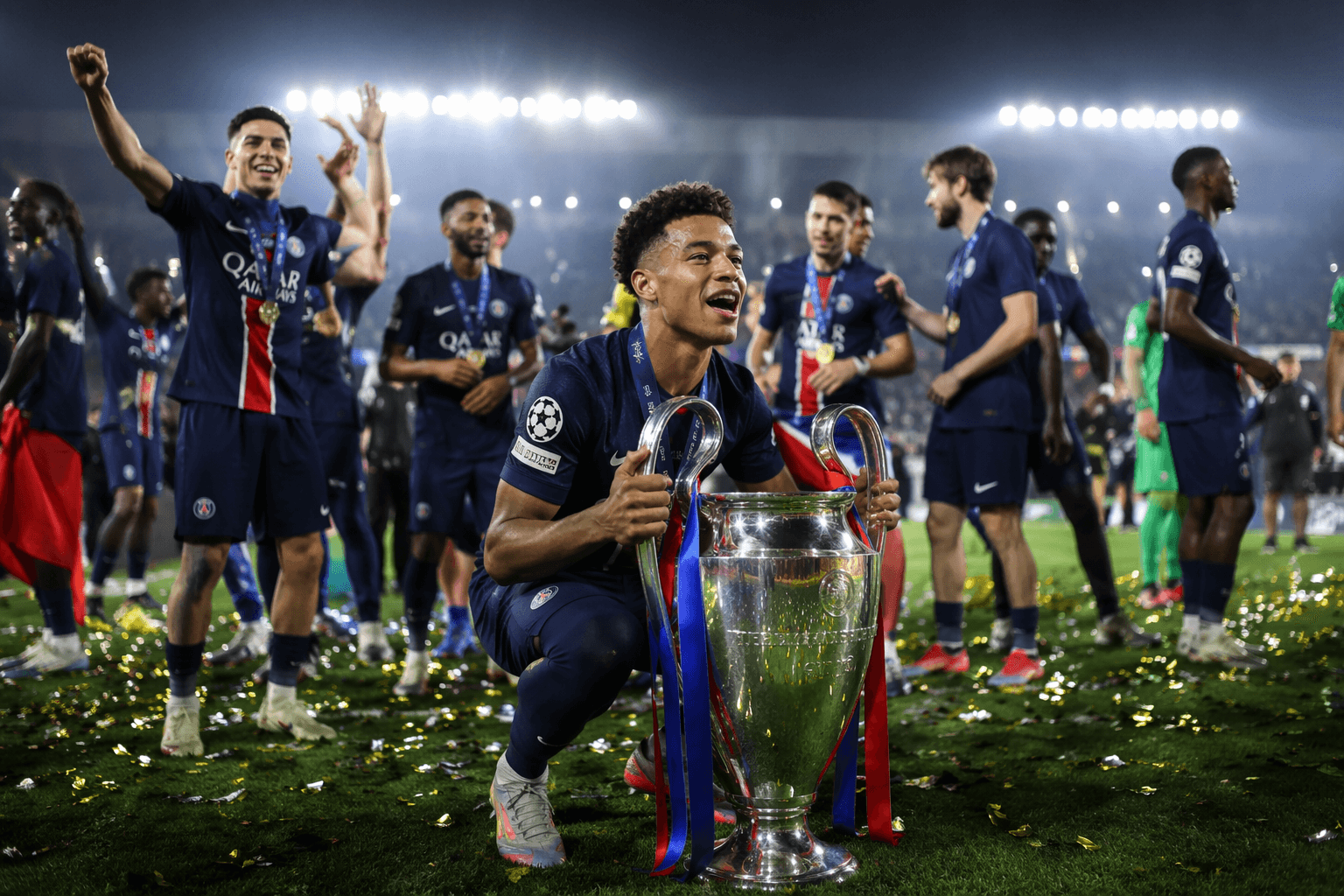
The final itself was decisive. PSG beat Inter Milan 5-0 on 31 May 2025, and the margin was the largest in Champions League final history. In Munich, PSG said 18,000 of its fans backed the team, turning the Allianz Arena into a clear demonstration of how large the club’s support base had become beyond Paris.
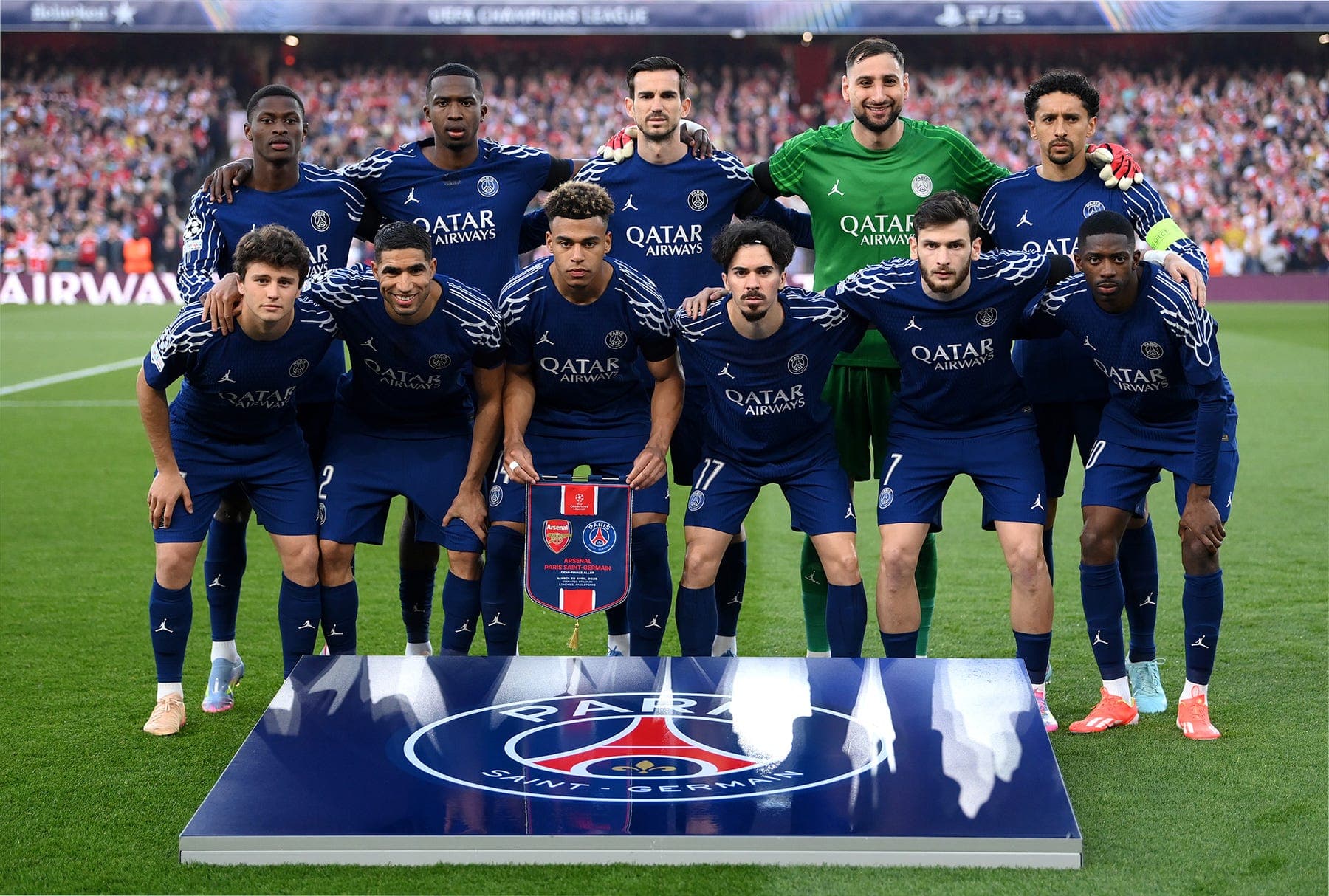
Désiré Doué, only 19 years old, embodied the new project’s reliance on youth and adaptability. He scored two goals and added an assist in the final, a performance that summed up PSG’s altered priorities more neatly than any slogan could. The team was not relying on a single established icon to carry the night; it was getting decisive production from a teenager inside a functioning collective.
PSG said the victory was its 55th trophy overall, and later described the season as the most glorious chapter in its history. The language was grand, but the underlying point was simple: the club had finally turned its long pursuit of Europe’s top prize into a result.
Rebuild, rebrand, or both?
The honest answer is that PSG’s transformation is part cultural shift, part tactical correction, and part branding exercise. The cultural change is real because the club openly rejected the old “bling-bling” identity and built around younger players and clearer roles. The tactical change is real because Enrique imposed a more coherent football structure, and the final showed a side capable of dominating a major opponent through collective force.
The financial question is more complicated. PSG did not stop being a rich, powerful club, and success at this level still depends on resources. What changed was the logic of spending, which now looks more disciplined and more tightly tied to football needs than to the prestige value of the biggest available names.
That is why the Champions League title matters beyond the silverware itself. It gives PSG’s leadership a powerful answer to years of skepticism, but it also creates a higher standard of proof. The next challenge is not whether the club can celebrate the end of the superstar era; it is whether this rebuilt version of PSG can sustain its cohesion once the pressure of defending a first European crown begins to test it all over again.
This article was produced by Prism’s automated news system from verified source data, official records, and press releases, then run through automated quality and moderation checks before publishing. The system is built and supervised by the people who set the standards it runs under. Read our full AI policy.
Did this article answer your question?