Putin Calls Russian Soldiers ‘Sacred’ in Orthodox Christmas Message
President Vladimir Putin used an Orthodox Christmas service to describe Russian troops’ role in Ukraine in explicitly religious terms, a move that tightens the Kremlin’s moral framing of the conflict and could complicate diplomatic efforts. The remarks, published in a Kremlin transcript and amplified by state media, signal a deliberate blending of faith and state that analysts say may harden public support for continued fighting and raise geopolitical risk.
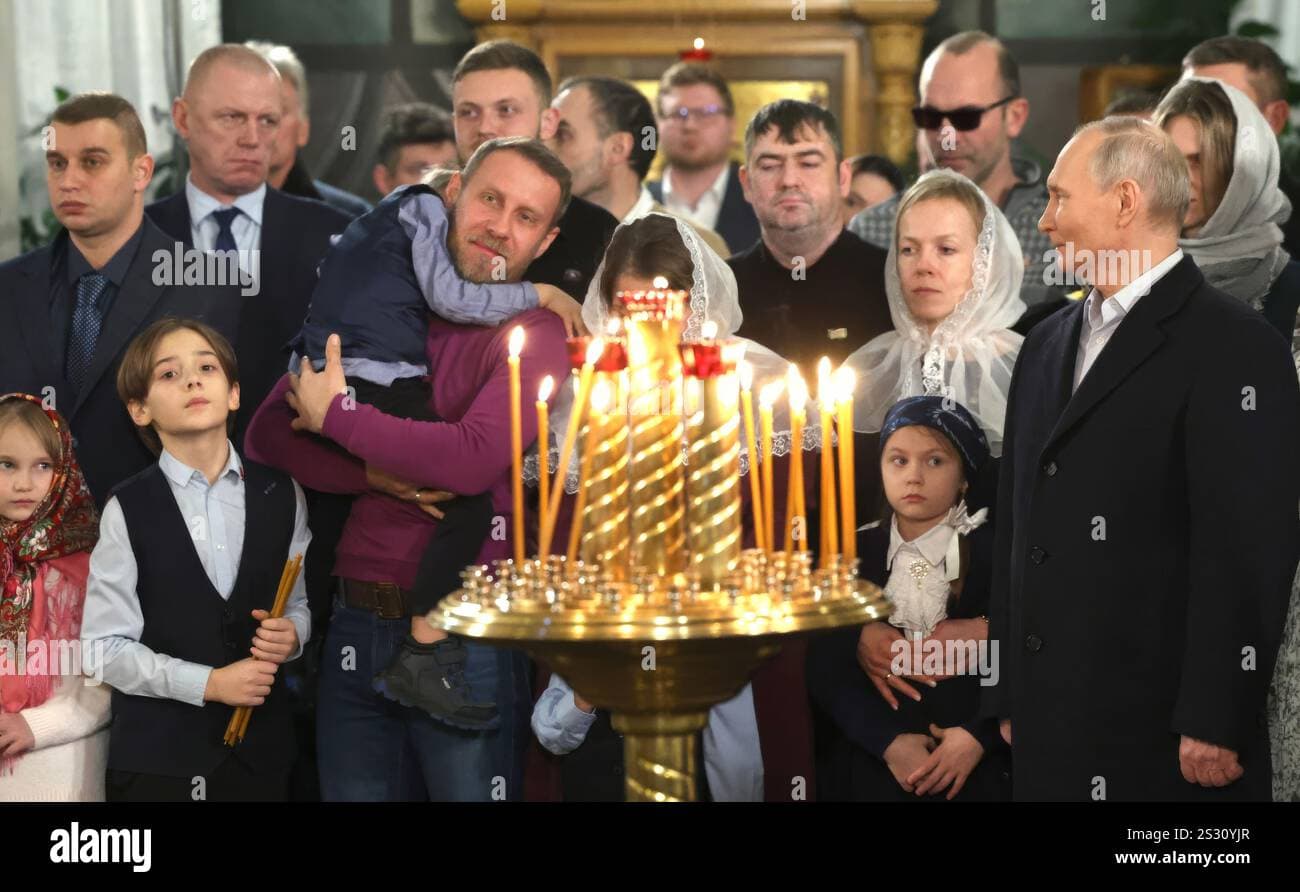
At a midnight service on Jan. 7 at the Church of St. George the Victorious in the Moscow region, President Vladimir Putin framed Russian soldiers’ actions in the Ukraine war as divinely sanctioned, according to a Kremlin transcript reproduced by state media. Addressing military families and children of service members, Putin compared the defenders of Russia to savior figures in explicitly religious language, saying, “We often call the Lord the Savior because He came to Earth to save all people. In the same way, Russia’s warriors have always carried out this mission, defending the Fatherland, saving the Motherland and its people.”
The comments, carried across state television and social platforms and reported internationally by outlets including The Moscow Times, The Independent and Orthodox Times, represent a conspicuous effort to cast the conflict not only as a geopolitical struggle but as a moral and spiritual enterprise. Coverage varied in phraseology; some reports used “holy mission” or “sacred mission,” while others emphasized the direct comparison to the biblical role of the Savior. The Kremlin transcript provides the most specific wording cited across the coverage.
Political analysts said the religious framing aims to consolidate domestic support for the Kremlin’s campaign by appealing to faith-based identities and by sacralizing military sacrifice. Presenting the conflict as a moral duty can raise the political cost of concessions and reduce public appetite for negotiated compromises, which may complicate ongoing diplomatic efforts aimed at halting the fighting.
Those diplomatic efforts include recent talks in Paris involving Ukraine, European allies and two U.S. envoys, which The Independent reported aimed to present a united front toward Moscow. The Independent also reported that the United Kingdom and France formally pledged to provide troops on the ground in Ukraine in the event of a ceasefire, a commitment the report said was supported by the United States. The Independent’s coverage further placed the war’s human cost in stark terms, citing “hundreds of thousands of deaths” and describing the conflict as a major disruption to European security since World War II.
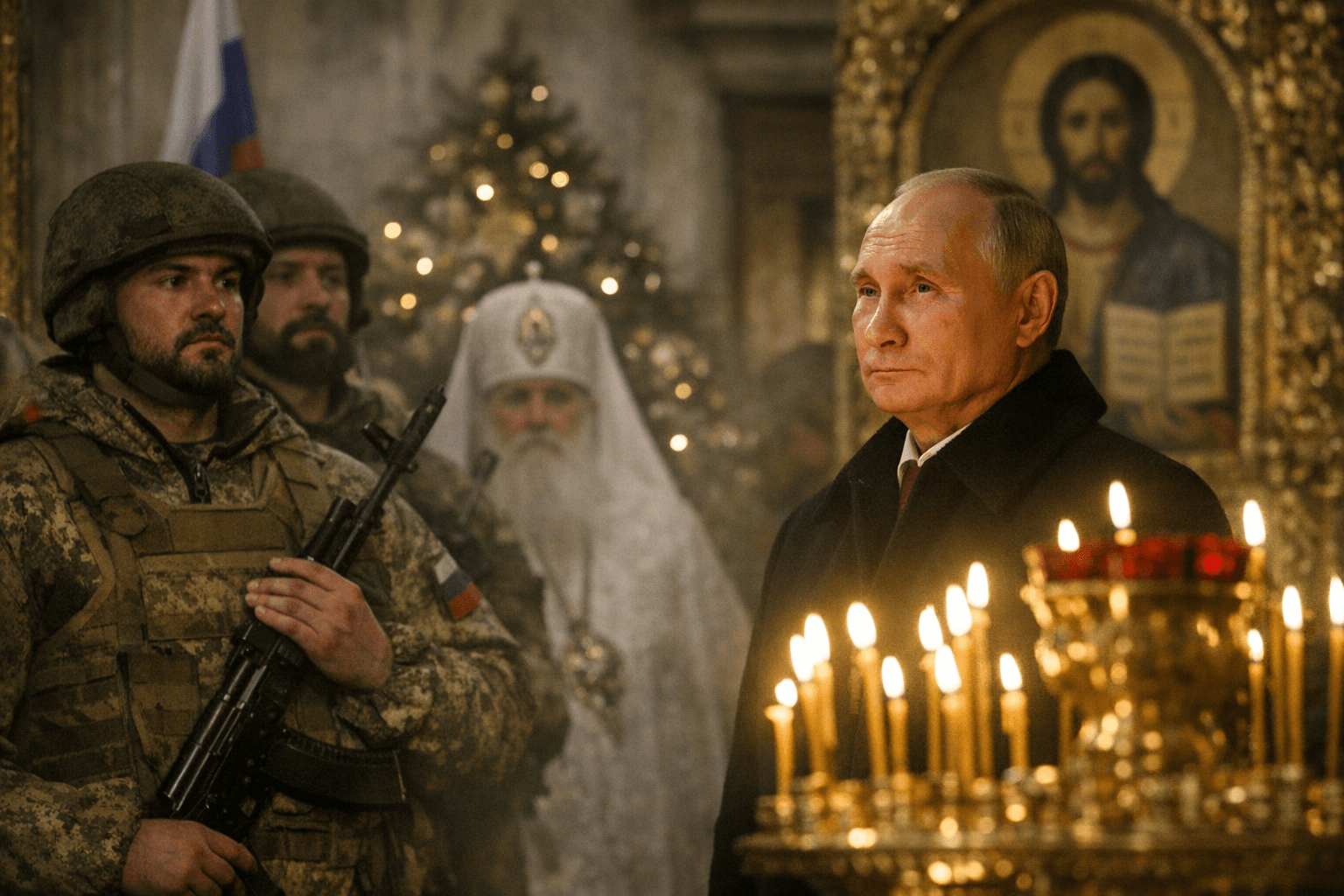
The Kremlin’s use of religious symbolism is consistent with a longer-term trend under Mr. Putin in which state institutions and the Russian Orthodox Church have grown increasingly intertwined. Analysts warned that sacralized rhetoric can strengthen mobilization efforts, justify extended deployments and complicate post-conflict governance and reconciliation by framing adversaries as not only political opponents but moral foes.
From an economic and market perspective, heightened ideological framing of the war tends to increase geopolitical risk premiums and investor uncertainty. Energy and commodity markets, which have been sensitive to Russian policy signals throughout the conflict, could react to any escalation in rhetoric that appears to rule out negotiation. Financial sanctions or military responses by external actors remain policy tools on the table, and sacralized messaging can make diplomatic pathways more fraught.
The Kremlin’s transcript and state media coverage close a loop between formal messaging and mass communications, reinforcing a unified narrative for domestic audiences while signaling to foreign capitals that the Kremlin views the conflict through a moral as well as strategic lens. The result is likely to be increased polarization at home and a tougher negotiating environment abroad.
This article was produced by Prism’s automated news system from verified source data, official records, and press releases, then run through automated quality and moderation checks before publishing. The system is built and supervised by the people who set the standards it runs under. Read our full AI policy.
Did this article answer your question?