Putin Signals Limited Territory Swaps, Insists Donbas Remains Russian
Kommersant reported that President Vladimir Putin told top Russian businessmen he might accept limited territorial swaps in any negotiated settlement over the war in Ukraine, while stressing that "Donbas is ours." The account, attributed to Kommersant Kremlin correspondent Andrei Kolesnikov and carried by international wires, raises fresh questions about the negotiating table, energy security and the economic calculus of sanctions and reconstruction.
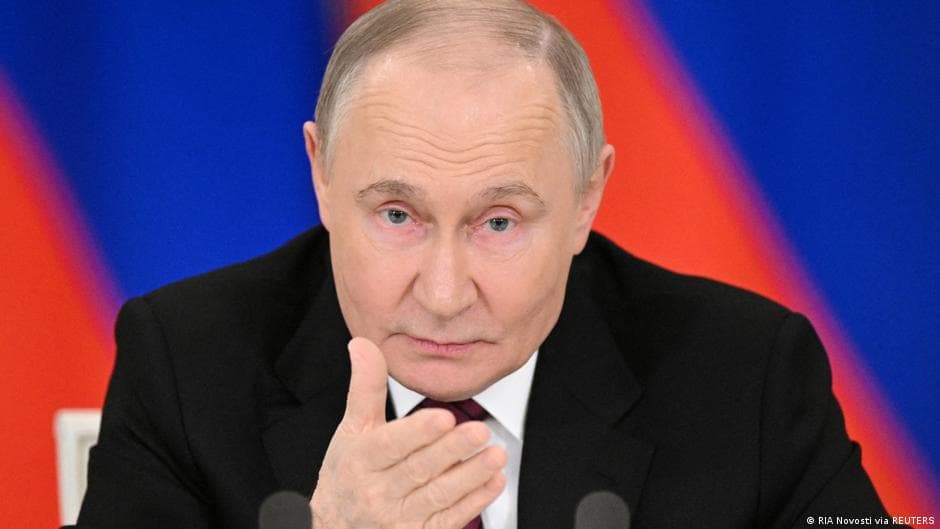
Kommersant reported that at a late night Kremlin meeting on December 24, 2025 President Vladimir Putin told prominent Russian businessmen he might be open to limited swaps of territory held by Russian forces in Ukraine, while reiterating that "Donbas is ours." The paper's Kremlin correspondent Andrei Kolesnikov conveyed the remarks in a dispatch that was carried by Reuters on December 26 and republished by multiple outlets. The wire coverage explicitly attributes the substantive claims to Kommersant and does not present independent confirmation.
According to Kommersant's account, Mr. Putin described the prospect as narrowly targeted exchanges rather than a full withdrawal, and told the businessmen that "the Russian side is still ready to make the concessions that he made in Anchorage," a formulation cited by Kommersant and republished by RTE. The meeting reportedly also included discussion of the Zaporizhzhia nuclear power plant, described in the reporting as Europe’s largest nuclear facility. Kommersant said Putin raised the idea of joint Russian United States management of the plant, and claimed the United States had expressed interest in crypto mining near the facility and that the plant should be used to partially supply Ukraine.
The Kommersant account, if accurate, would mark a tactical shift from maximalist rhetoric toward negotiating flexibility on limited geography, while maintaining firm claims over Donbas. Analysts say such a stance could be designed to preserve core political objectives at home while creating room to trade lesser holdings for diplomatic and economic benefits. The paper noted the private setting of the December 24 briefing and identified Andrei Kolesnikov as the Kremlin correspondent who reported the meeting.
Market and policy implications would be immediate and complex. Limited, verifiable moves toward a negotiated settlement could reduce geopolitical risk premia, narrow spreads on Russian sovereign and corporate debt and ease pressure on the ruble and capital flight. Conversely, any hint that Russia might seek to secure formal recognition for annexed territories in exchange for concessions could harden Western resolve on sanctions and complicate potential relief. Energy markets would watch closely. Russian hydrocarbon exports historically underpin a large share of state revenue, with energy receipts accounting for a substantial portion of federal income, so any settlement that affects export routes or legal status of infrastructure would reverberate in European energy security planning.

The Zaporizhzhia reference carries its own risks. Proposals for joint management with the United States would require sensitive technical and legal arrangements, buy in from international atomic agencies and agreement from Kyiv. The Kommersant report also cited an attribution in other outlets that Russian foreign ministry spokesperson Maria Zakharova said progress to end the war was "slow but regular," a characterization presented alongside the Kremlin meeting account.
Journalists and policymakers should treat the Kommersant account as a potentially significant but unverified source. Confirmation from an official Kremlin readout, ministry statements or corroboration from participants would be necessary to move from report to policy premise. For markets and long term planners the key takeaway is that even tentative signals about territorial trade offs reshape calculations for reconstruction, sanctions architecture and regional energy strategies, and underscore how opaque elite discussions in Moscow can transmit quickly into global economic assessments.
This article was produced by Prism’s automated news system from verified source data, official records, and press releases, then run through automated quality and moderation checks before publishing. The system is built and supervised by the people who set the standards it runs under. Read our full AI policy.
Did this article answer your question?