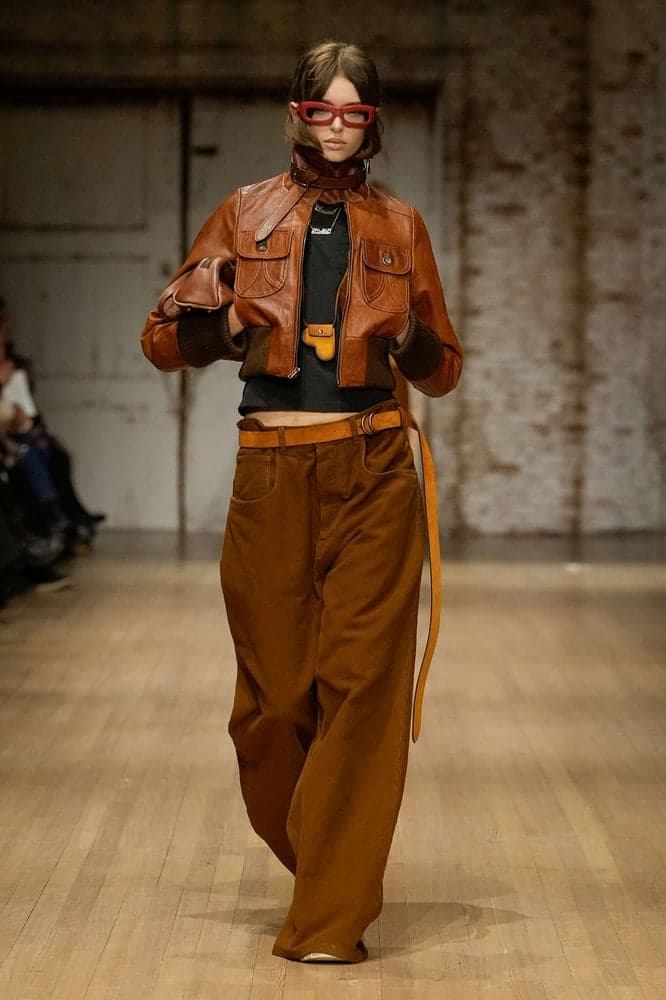
Rachel Scott Reframes Proenza Schouler with Precision and Looser Energy
Rachel Scott’s New York runway debut for Proenza Schouler balanced the house’s sharp tailoring with softer movement — think high-armhole jackets in gentler fabrics and peacock-blue silk that twirls.

At Proenza Schouler’s Fall/Winter 2026 show in New York on February 11, Rachel Scott introduced a version of the brand that keeps its surgical tailoring but invites looseness and motion. The first look — a peacock-blue maxi dress with twisted seams that “seemed to undulate around the body” — announced a softer sensibility; elsewhere skirts twirled and buttons were left partially undone, as if models had dressed in a hurry. Some will call that casualness indulgent; I call it strategic dressing for a modern, perpetually moving woman.
Scott arrived at the runway after joining Proenza last September, having staged a studio collaboration with the brand’s in-house atelier as she acclimatized to the archives and customer base. Jamaica-born and the founder of Diotima, Scott arrives with credentials including the 2024 CFDA Womenswear Designer of the Year award. The appointment also answered a business gap left when Jack McCollough and Lazaro Hernandez departed for Loewe last year; those founders remain minority shareholders while a group of private investors holds the rest. Suveyke Snyder, who helped shepherd Scott into the studio, called out the match between Scott’s craft instincts and Proenza’s material DNA: “Rachel has really tapped into that piece of our DNA and re-emerged it for today.”
Scott’s method was explicit and hands-on. She said she “tried to understand who the Proenza Schouler woman is,” speaking directly with customers, combing through archives, and revisiting the brand’s codes of “color, precision, craft, proximity to art,” and “an edge sharpened by the city.” Her intellectual references ranged from Luce Irigaray’s Speculum of the Other Woman to postcolonial Afro-Caribbean traditions, while artisan techniques from her Diotima vocabulary — notably artisanal crochet and partnerships with Jamaican makers — threaded into the collection.
The technical execution was the collection’s loudest argument. Scott “crushed, pleated, and bonded featherlight silk habotai into architectural volumes that balanced fluidity with structure,” producing garments that read both precise and lived-in. Proenza signatures were reworked: knife pleats revealed through side cutaways, grommets and half-cut fringe cascading across finale looks, and a customer-sourced high-armhole jacket rendered in softer material after a longtime client flagged the fit. Those details translated Proenza’s material innovation into pieces that work for “two 9-to-5s” — office to evening — while allowing a deliberate imperfection at the hem and cuff.
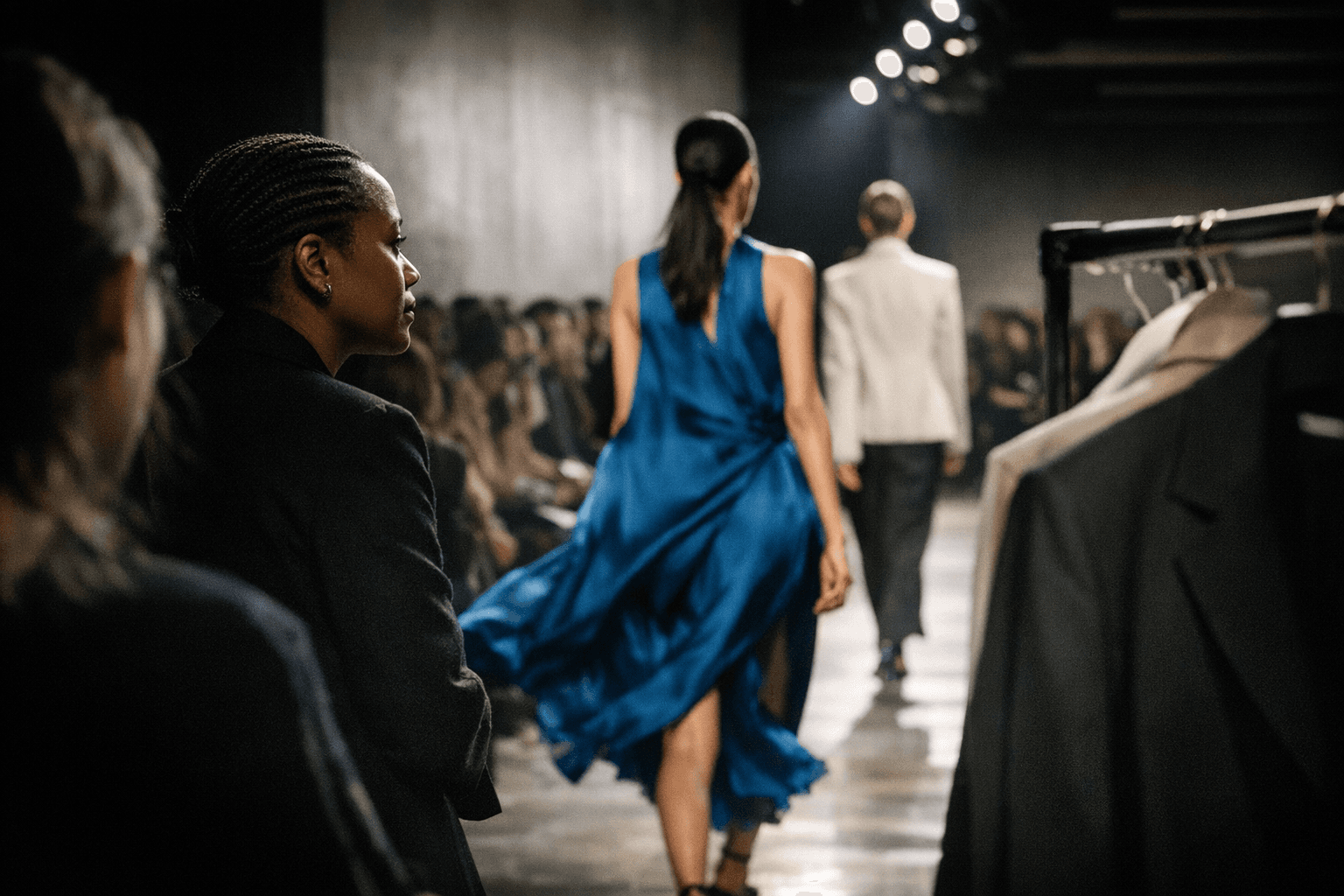
Critical response ranged from warm to cautious. W Magazine framed Scott’s debut as “destined” and praised a “proudly feminist vision” that grants a wearer authorship over how she will be seen. Vogue described Scott’s hand as “Proenza 2.0,” insisting “it’s going to be an evolution — not a revolution, an evolution.” The Cut’s Cathy Horyn acknowledged the collection’s attention to real women’s lives but argued it “could have used some novelty,” a reminder that innovation remains expected from a house with Proenza’s pedigree.
With precise tailoring intact and a looser, movement-friendly energy layered on top, Scott has signaled a soberly ambitious next chapter for Proenza Schouler. The runway on February 11, 2026 felt less like a break from the founders and more like a careful recalibration of the brand’s craft-forward DNA for a global, mobile woman.
Know something we missed? Have a correction or additional information?
Submit a Tip