Rahm Emanuel and Frank McKenzie discuss Graham's death and Iran tensions
Lindsey Graham’s death at 71 set the tone as Rahm Emanuel recalled their 2009 service fight and Frank McKenzie outlined U.S. options in the Strait of Hormuz.
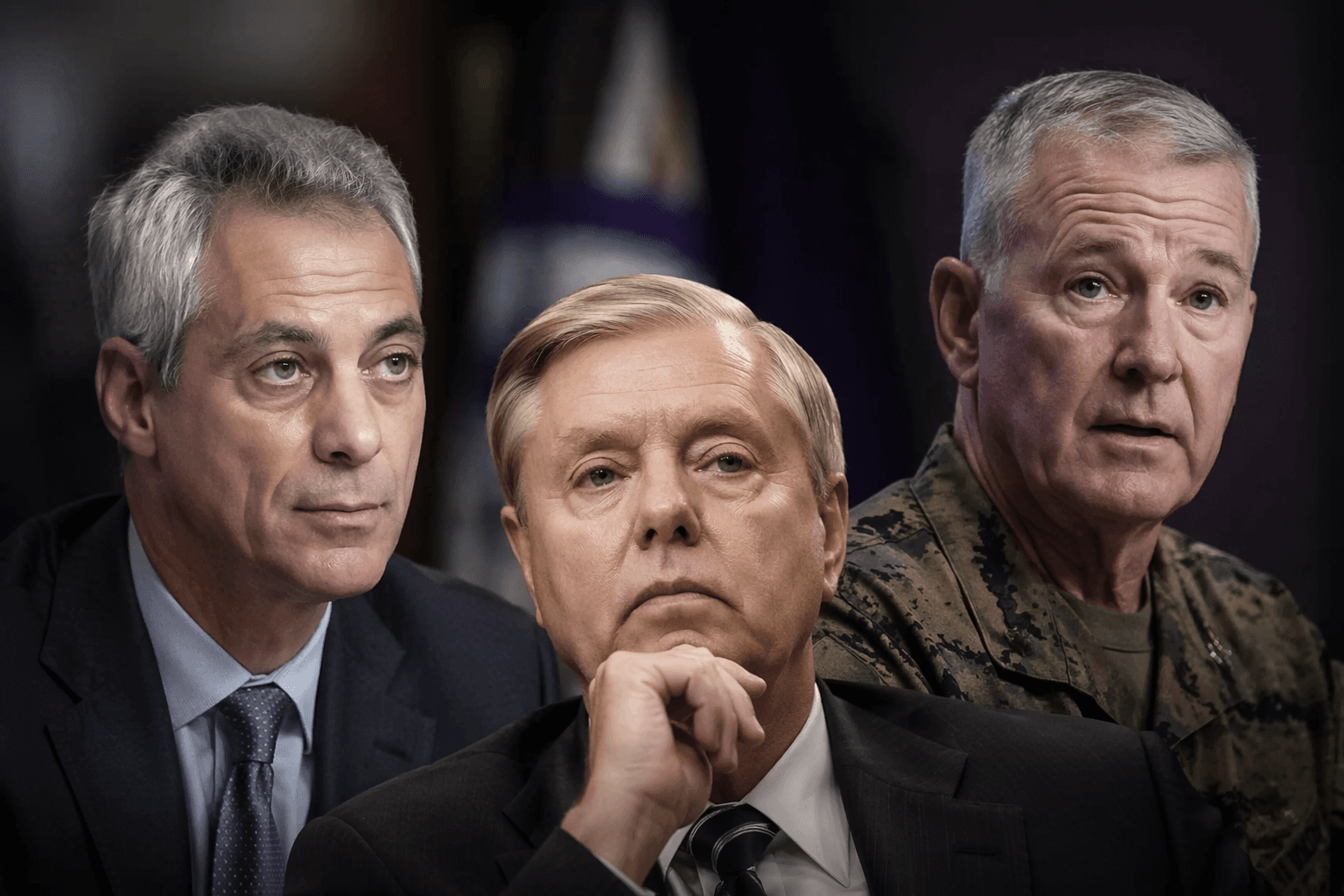
Lindsey Graham’s death at 71 gave CBS’s Sunday political hour a sharper national-security frame, with Rahm Emanuel and retired Gen. Frank McKenzie using the program to revisit the issues that had defined Graham’s foreign-policy identity. The July 12, 2026 edition of Face the Nation with Margaret Brennan aired at 10:30 a.m. ET and streamed at 12:30 p.m. ET, with Mike Turner, Michael Leiter and White House border czar Tom Homan also on the guest list.
CBS said Graham died Saturday evening, July 11, after a brief and sudden illness, and the news immediately shadowed the broadcast. Emanuel, identified by CBS as the former mayor of Chicago and former U.S. ambassador to Japan, opened by calling Graham “a patriot” and by recalling two points of shared work: a national service bill in spring 2009 that doubled AmeriCorps and the Peace Corps, and long-running negotiations over closing Guantanamo Bay. Those details put Graham in the same lane as Emanuel’s own Washington career, where domestic service politics and counterterrorism policy often crossed.
McKenzie, whom CBS identified as the former commander of U.S. Central Command and president of The Citadel, took the conversation to a more direct military edge. Brennan referenced a recent Graham warning that if a deal failed, President Trump would take the Strait of Hormuz by force. McKenzie said the United States had the capability to control the strait if the president chose that course, then laid out the tactical choices under discussion: opening and maintaining the waterway, or seizing Kharg Island as a negotiating lever.
That contrast captured the program’s broader through-line. Emanuel’s comments focused on Graham as a legislative dealmaker who worked on AmeriCorps, the Peace Corps and Guantanamo Bay, while McKenzie treated Graham’s Iran warning as an operating problem for U.S. power in the Gulf. Turner’s presence on the guest list, along with Leiter and Homan, reinforced the show’s national-security focus, but Graham’s death and the Strait of Hormuz dominated the most pointed exchanges.
For a broadcast built around establishment voices, the overlap was clear: both Emanuel and McKenzie spoke from inside the institutions Graham spent years shaping. The disagreement was narrower but more consequential, centered on how far American power should go, and how quickly, when the issue is Iran and a chokepoint like the Strait of Hormuz.
This article was produced by Prism’s automated news system from verified source data, official records, and press releases, then run through automated quality and moderation checks before publishing. The system is built and supervised by the people who set the standards it runs under. Read our full AI policy.
Did this article answer your question?