Raleigh DWI Unit Saturation Patrol Leads to More Than 150 Charges
A weekend saturation patrol by the Raleigh Police Department DWI Unit produced 157 charges along Capital Boulevard and Louisburg Road, highlighting intensified road-safety enforcement in Wake County.
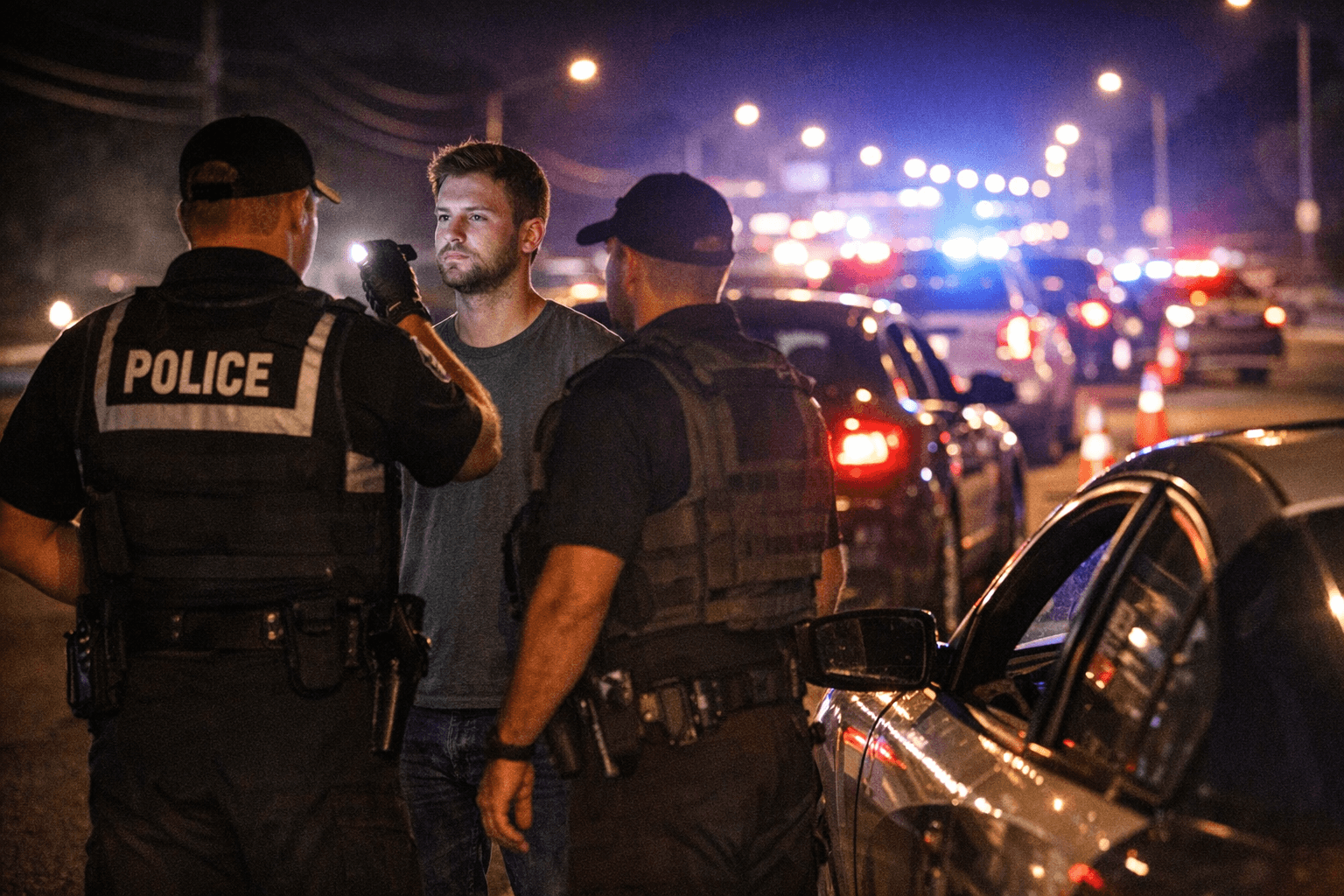
A weekend saturation patrol by the City of Raleigh Police Department’s DWI Unit produced 157 total charges and nine DWI arrests along Capital Boulevard and Louisburg Road, city officials said. The department described the operation as a collaborative effort and said it conducted the campaign during the weekend of Jan. 24–26, 2026.
The Jan. 26 news release published by the city lists the full enforcement breakdown: nine DWI arrests; 11 drug violations; two firearm seizures; two open-container violations; five careless and reckless driving violations; 15 citations for driving with a revoked license; 23 speeding violations; and more than 100 traffic stops. The release included the department’s assessment that, “High-visibility enforcement like this plays a critical role in keeping our roadways safe and holding dangerous drivers accountable.”
Raleigh Police posted a short summary of the operation to social media, stating, “Over the weekend, our DWI Unit conducted a saturation patrol along Capital Boulevard and Louisburg Road in Raleigh.” Local news aggregator Hoodline echoed the city totals and noted the department’s social post, adding that saturation patrols help deter driving offenses and characterizing the effort as reflecting “outstanding work by all agencies involved.”
The operation concentrates enforcement on two of Raleigh’s higher-traffic corridors, a tactic intended to deter impaired and dangerous driving where violations can have outsized impacts on commuters, transit riders and neighborhood streets that feed into the corridors. For residents who use Capital Boulevard or Louisburg Road daily, the patrol signals both an increased police presence and a potential uptick in stops and citations.
The city release does not provide identifying information about arrestees, exact times or locations of stops, or whether other specific agencies participated. It also does not offer a precise tally beyond “more than 100” traffic stops or details about the drug violations and firearm seizures. Those gaps leave questions about how the charges will move through the justice system and which agencies shared responsibility for enforcement.
The release includes a call to action to “Learn more about our DWI Unit,” reflecting the department’s stated interest in public engagement on traffic safety. For community members and local officials, the immediate implications are clear: intensified enforcement in key corridors and a push to reduce impaired and reckless driving. Longer term, the operation raises questions about measures of effectiveness and transparency - for example, whether similar saturation patrols reduce crashes and impaired-driving recidivism in Wake County.
Readers can expect the Raleigh Police Department to provide further details on arrests and agency involvement as cases proceed. For now, the patrol underscores how the city is prioritizing visible enforcement on major routes and signals continued attention to roadway safety in neighborhoods that intersect Capital Boulevard and Louisburg Road.
Know something we missed? Have a correction or additional information?
Submit a Tip