Realta Fusion demonstrates direct electricity conversion from fusion plasma
Realta Fusion said it lit several bulbs and drew multiple amps at about 100 volts from a fusion plasma, a proof-of-concept for direct electricity conversion.

Realta Fusion generated electricity directly from a fusion plasma in a June 19 test that lit several light bulbs and produced enough power to draw multiple amps at about 100 volts. The Madison, Wisconsin startup used its Wisconsin HTS Axisymmetric Mirror prototype, or WHAM, in a proof-of-concept demonstration, not a net-electricity result or a full-scale power plant test.
Most future fusion plants are still designed to turn fusion heat into steam and then use turbines and alternators to make electricity. Realta is pursuing a magnetic mirror approach instead, arguing that charged particles escaping the plasma can be captured and converted directly into electric current rather than lost as waste heat.
Realta is the first private or commercial fusion company to publicly demonstrate direct energy conversion on an actual fusion plasma. The company carried out the test with the University of Wisconsin-Madison, and the converter works by slowing charged particles at one end of the machine to build voltage and drive current. Chief Scientific Officer Derek Sutherland called the experiment a meaningful technical milestone, while CEO Kieran Furlong cast it as acting on a long-discussed idea rather than only talking about it.
The underlying concept is not new. Direct energy conversion was first proposed in 1974 by Richard Post of Lawrence Livermore National Laboratory, and earlier demonstrations took place in academic and national-lab settings, including the venetian blind converter in the 1970s, TMX in the 1980s and GAMMA 10 in 2008.
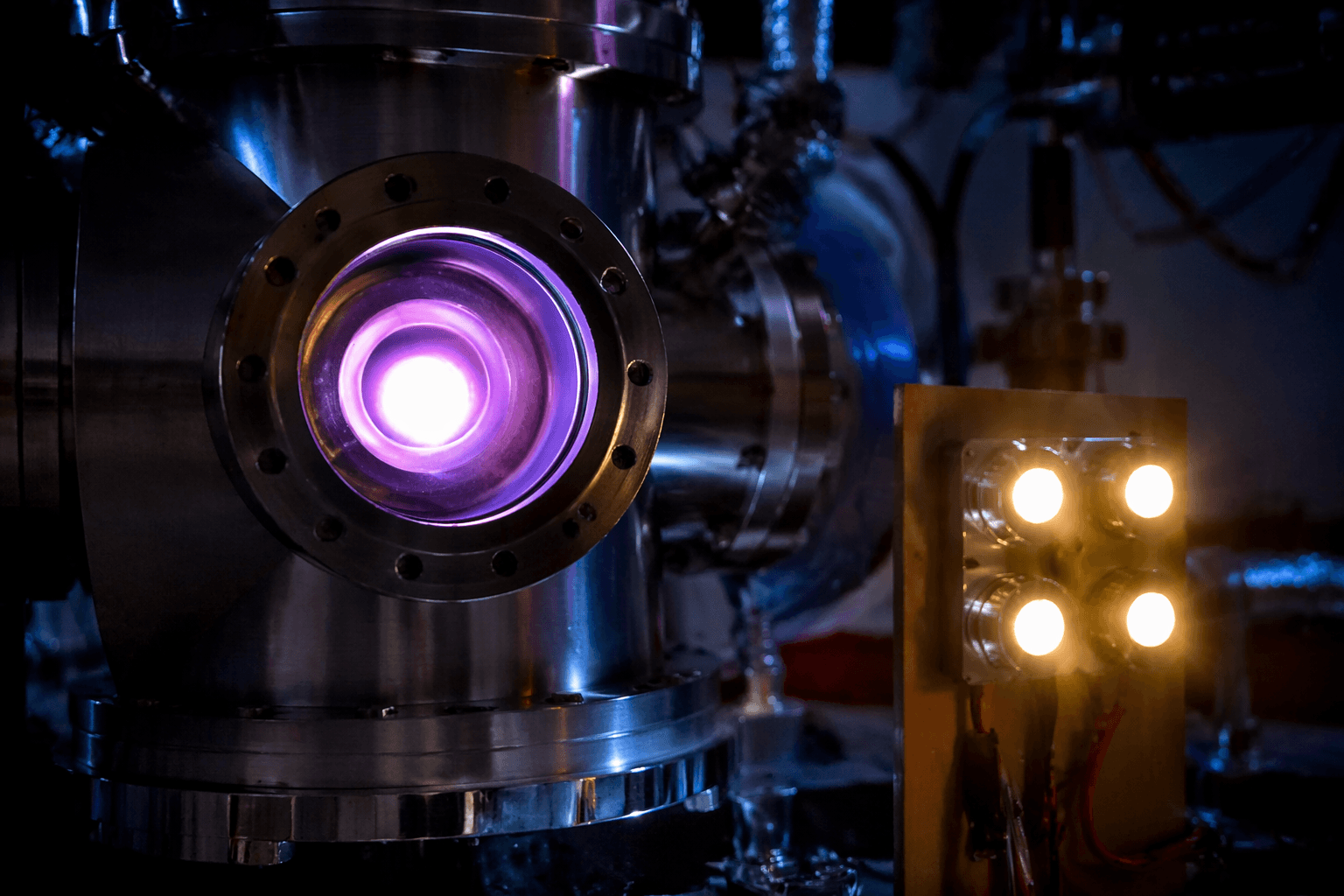
The work is tied to the physics of magnetic mirror confinement. The natural loss cone in a mirror machine can be turned from a drawback into an advantage if particles leaking from the plasma are harvested for power, and high-temperature superconducting magnets and its axisymmetric mirror geometry help shrink that loss cone and improve confinement.
Realta's first-generation plants, which it expects to begin building in the mid-2030s, would draw about 80% of their power from a thermal cycle at up to 45% efficiency and 20% from direct energy conversion at more than 90% efficiency. The company projects that mix could offset all of the energy it injects into the plasma and cut electricity costs by at least 10% to 20%.
This article was produced by Prism’s automated news system from verified source data, official records, and press releases, then run through automated quality and moderation checks before publishing. The system is built and supervised by the people who set the standards it runs under. Read our full AI policy.
Did this article answer your question?