Record heatwave grips Italy and the Balkans, wildfire risk rises
Hundreds of excess deaths shadowed the heat as 22 Italian cities went under red warnings and firefighters battled a blaze on Croatia’s Vis island.

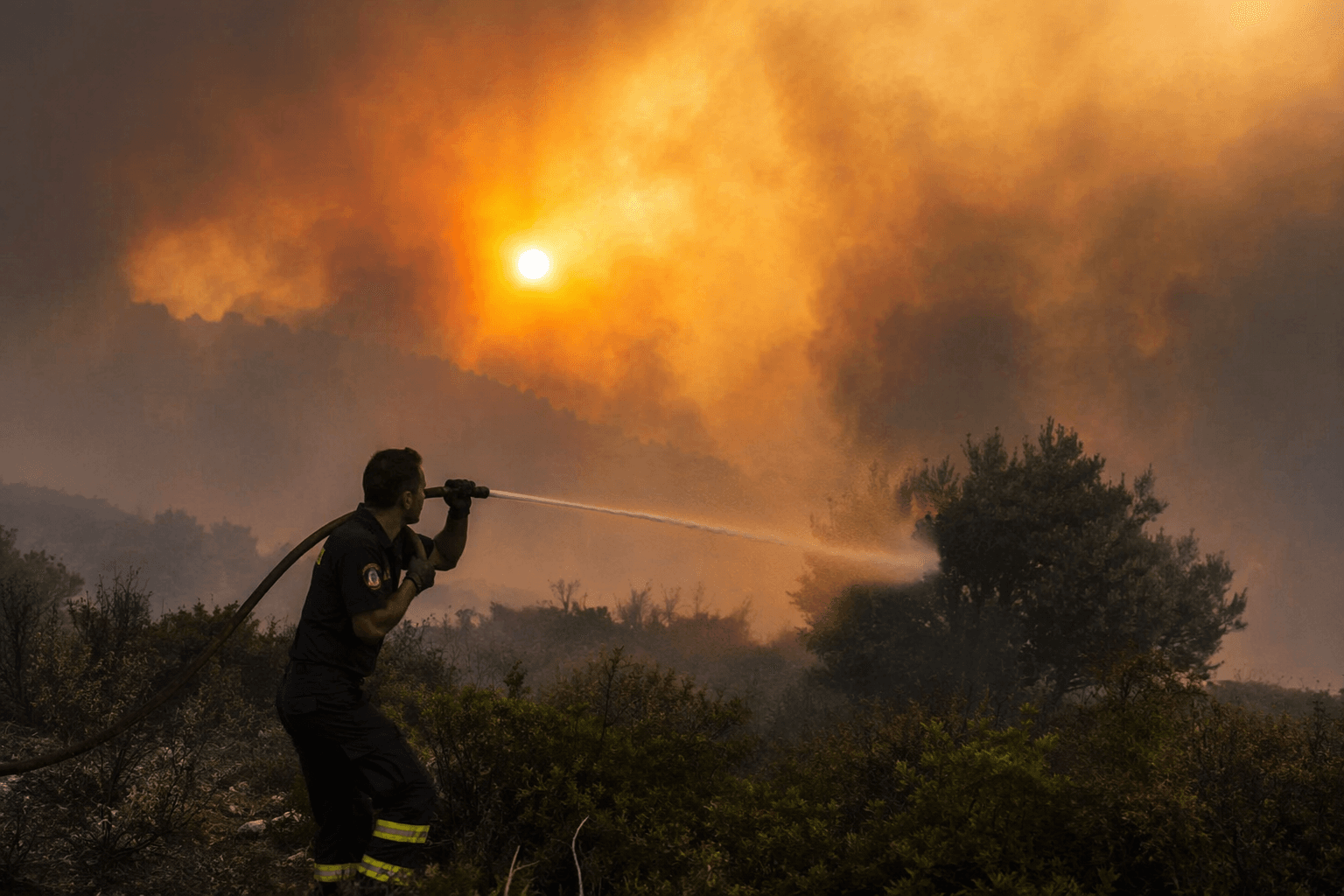
Italy and the Balkans were hit Monday by a record-breaking heatwave, while wildfire crews raced to contain blazes from the Adriatic to the eastern Mediterranean. In Italy, 22 cities from Bolzano in the north to Palermo in Sicily were under red heat warnings, and pilgrims at the Vatican fanned themselves and hid under umbrellas as Pope Leo delivered his Angelus message on the Feast of Saints Peter and Paul in Rome. In Croatia, authorities issued red alerts for Zagreb, Split and Dubrovnik, and dozens of firefighters backed by four aircraft fought a wildfire in pine forests on the island of Vis, southwest of Split. In neighbouring Serbia, temperatures were forecast to reach 39C, while Albania contained a fire that burned through bushes and olive trees near Klos.
Across the Atlantic, the National Weather Service warned of dangerous heat in much of central and eastern United States, with temperatures in the 90s and lower 100s Fahrenheit ahead of the July Fourth holiday. Prolonged daytime heating and limited nighttime relief would raise the risk of heat-related illness, especially for vulnerable populations and people without adequate cooling. Temperatures were likely to build again next week in parts of Western Europe, even after they had eased from their June peaks.

The heatwave began on June 20 and was the worst recorded in Europe, with the blistering conditions disrupting power generation, damaging infrastructure and overwhelming healthcare systems. France had already recorded 1,000 excess deaths during the episode, according to its public health agency. Most of the heat-related fatalities involved older people, and the count was likely to rise as more deaths were identified in care homes and private houses.
This article was produced by Prism’s automated news system from verified source data, official records, and press releases, then run through automated quality and moderation checks before publishing. The system is built and supervised by the people who set the standards it runs under. Read our full AI policy.
Did this article answer your question?