Remote says AI adoption helped lift revenue per employee 50%
Remote said AI pushed revenue per employee up 50% as the payroll company crossed $300 million in ARR and turned cash-flow positive.
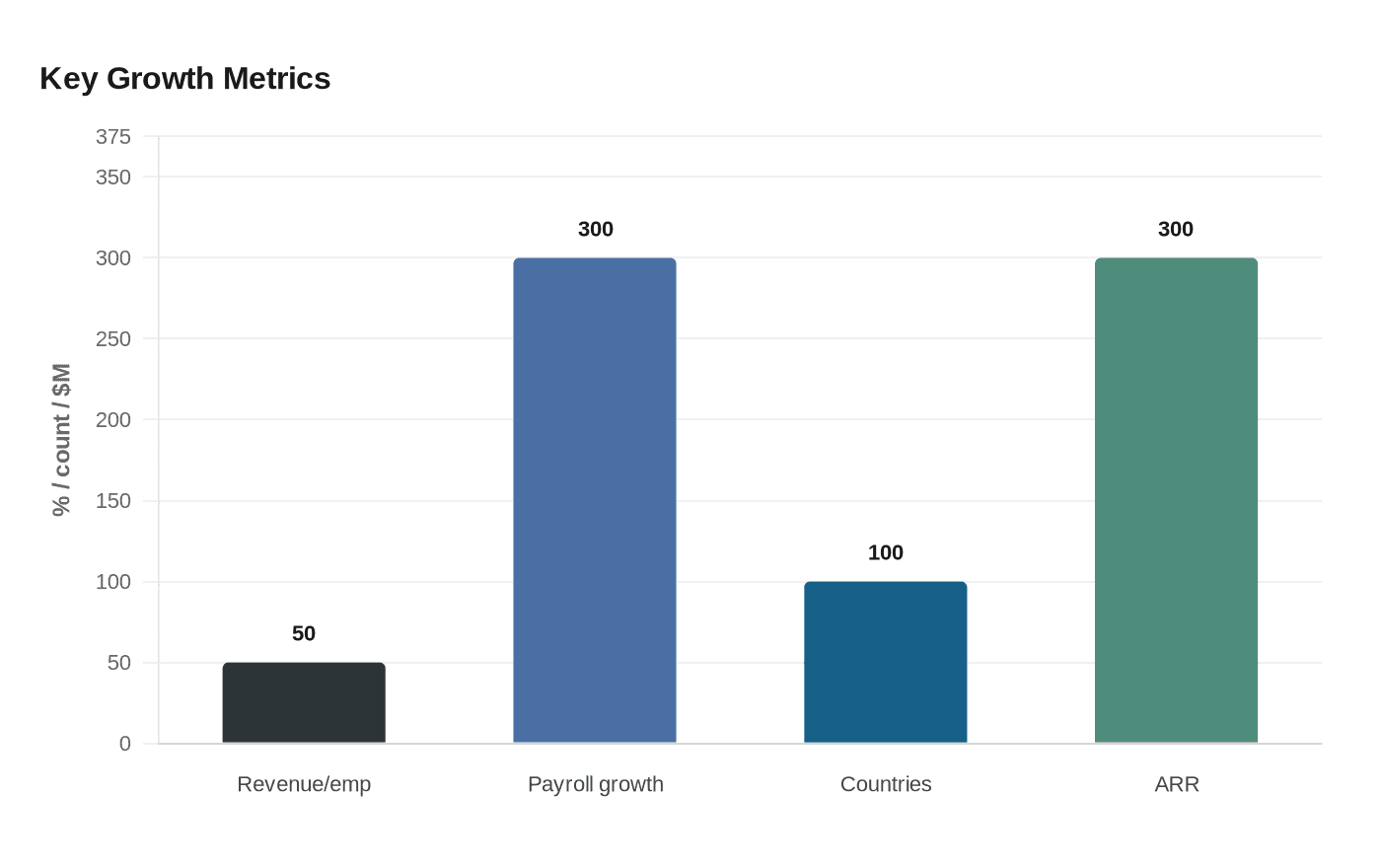
Remote is trying to turn its AI story into a balance-sheet argument. The Amsterdam-based global employment company said revenue per employee rose 50% after it spread AI across the business, even as the payroll arm crossed $300 million in annual recurring revenue and the company turned cash-flow positive.
The numbers matter because Remote is not presenting AI as a narrow engineering tool. Chief executive Job van der Voort said he sometimes works with multiple Claude instances open on a second screen, a small detail that suggests how deeply the technology has been woven into daily operations. Remote said employees across functions have been building tools through Remote Labs, an internal innovation effort, while the company has also expanded Remote Build, a customer-facing service that pairs custom workflow development with forward-deployed engineers.

The pitch is straightforward: AI is supposed to make a service business leaner, faster and more profitable without adding headcount at the old pace. Remote said its core payroll business grew more than 300% year over year, a claim that comes from the company itself. It also says the same infrastructure now supports global payroll, contractor management, compliant payments and related HR systems, with coverage in more than 100 countries after an expansion announced last year.

That positioning fits a wider shift in tech, where investors have moved from rewarding growth at any cost to rewarding operational leverage. Remote is betting that the best proof of AI adoption is not a flashy demo, but a better ratio between people, output and revenue. The company is also trying to turn that internal know-how into a product, including a Remote MCP connection for MCP-compatible AI tools and a broader Build on Remote effort aimed at letting companies and agents build on its infrastructure.
Remote’s growth story is also shaped by its earlier capital raise. The company took in $300 million in a 2022 Series C led by SoftBank Vision Fund 2 at a valuation of nearly $3 billion, bringing total funding at the time to about $495 million. Reuters reported then that GitLab, DoorDash and Paystack were among its customers, a reminder that Remote has long sold itself as infrastructure for globally distributed work.
Van der Voort’s background helps explain the company’s focus. Remote says he was previously vice president of product at GitLab and earlier worked as a neuroscientist, experience that matches a business built around remote teams, compliance and now automation. The broader question is whether Remote’s AI gains reflect durable efficiency, stronger pricing power, or a customer mix that is simply more valuable. For now, the company is presenting its own numbers as evidence that a smaller workforce can still drive much larger revenue.
This article was produced by Prism’s automated news system from verified source data, official records, and press releases, then run through automated quality and moderation checks before publishing. The system is built and supervised by the people who set the standards it runs under. Read our full AI policy.
Did this article answer your question?