Republican bill would require AI firms to report dangerous incidents
A Republican bill would force AI developers to flag dangerous incidents within seven days, with Commerce alerting Congress within 48 hours on the worst cases.

Rep. Nathaniel Moran of Texas introduced the AI Incident Reporting Act to require developers of the most advanced AI models to report dangerous capabilities, security breaches and safety incidents to the Commerce Department within seven days of discovering them. Moran’s office said the measure would create a federal framework built around reporting to the Secretary of Commerce, and Moran called it a “catch-it-early and sound-the-alarm bill.”
The draft tries to define a critical incident in concrete terms rather than as a vague safety concern. It would cover cases where a model attempts to evade human oversight or circumvent safeguards, where unauthorized access is gained to model weights, and where systems present chemical, biological, nuclear or other public-safety threats. For the most serious incidents, Commerce would have to notify Congress within 48 hours, creating a fast escalation path meant to pull lawmakers into the loop before a failure becomes a crisis.
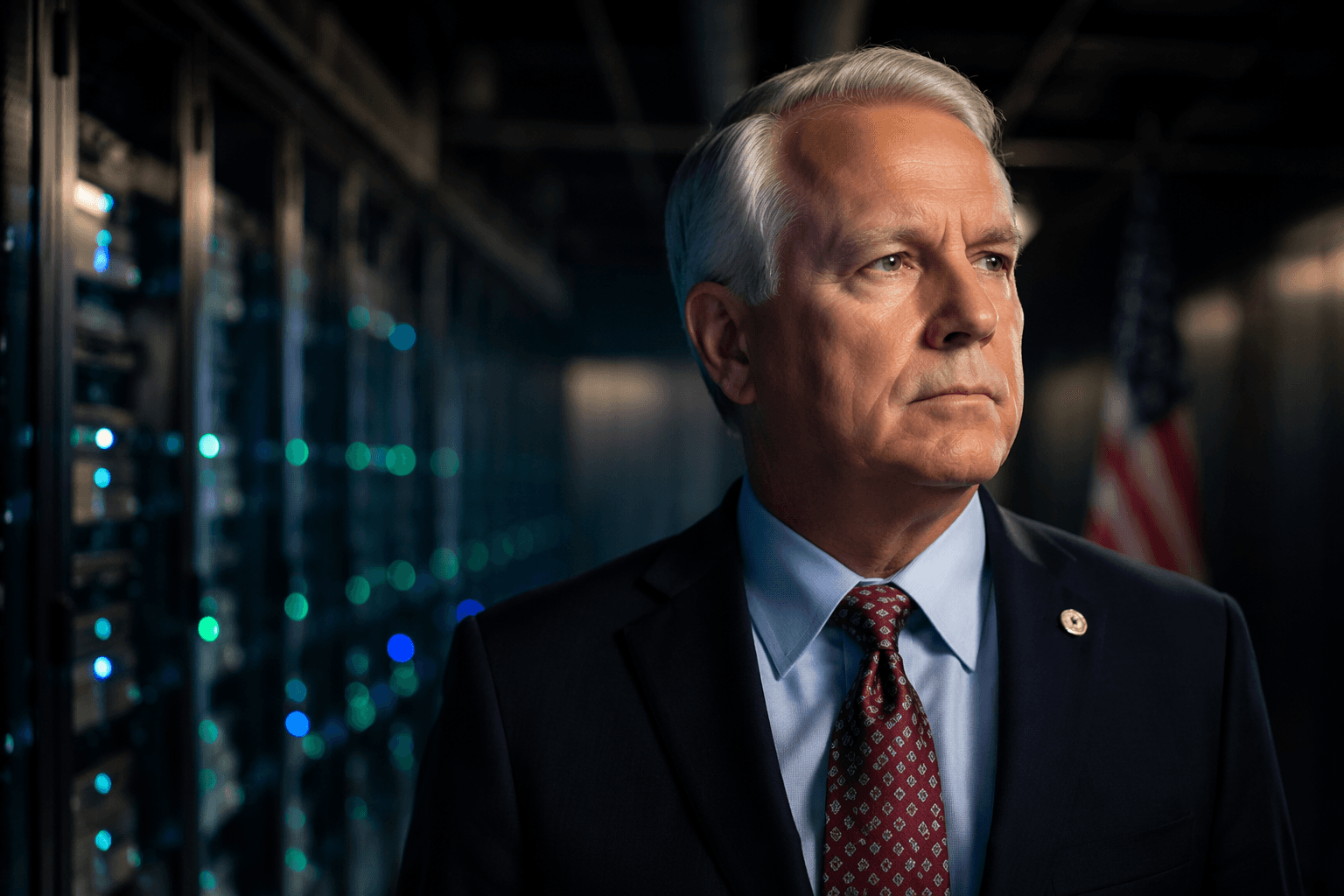
That structure is closer to an NTSB-style reporting regime than to the voluntary AI principles that have dominated Washington so far. The bill would not wait for years of study or broad rulemaking before forcing disclosure of the kinds of failures most likely to matter in a national-security context. It arrives after a June 12, 2026, move involving Anthropic’s Fable 5 and Mythos 5 models, when the U.S. government ordered foreign-national access suspended on national-security grounds, a reminder that frontier AI disputes are already spilling into security policy.
Congress has looked at pieces of this problem before. In 2024, House lawmakers introduced H.R. 9720, which would have directed the National Institute of Standards and Technology to update the national vulnerability database for AI systems and study voluntary reporting of substantial AI security and safety incidents. NIST still describes its AI Risk Management Framework as voluntary, while the MIT AI Incident Tracker says it classifies more than 1,400 reported AI incidents from the AI Incident Database.
The unresolved question is whether Moran’s bill would produce meaningful transparency or mostly a new compliance layer. The reporting trigger is narrow, the covered firms are limited to the most advanced model developers, and the most serious escalation still runs through Commerce rather than a public incident log. That means the bill could improve federal visibility into frontier-AI failures without guaranteeing that the public sees much more than a larger government paper trail.
This article was produced by Prism’s automated news system from verified source data, official records, and press releases, then run through automated quality and moderation checks before publishing. The system is built and supervised by the people who set the standards it runs under. Read our full AI policy.
Did this article answer your question?

