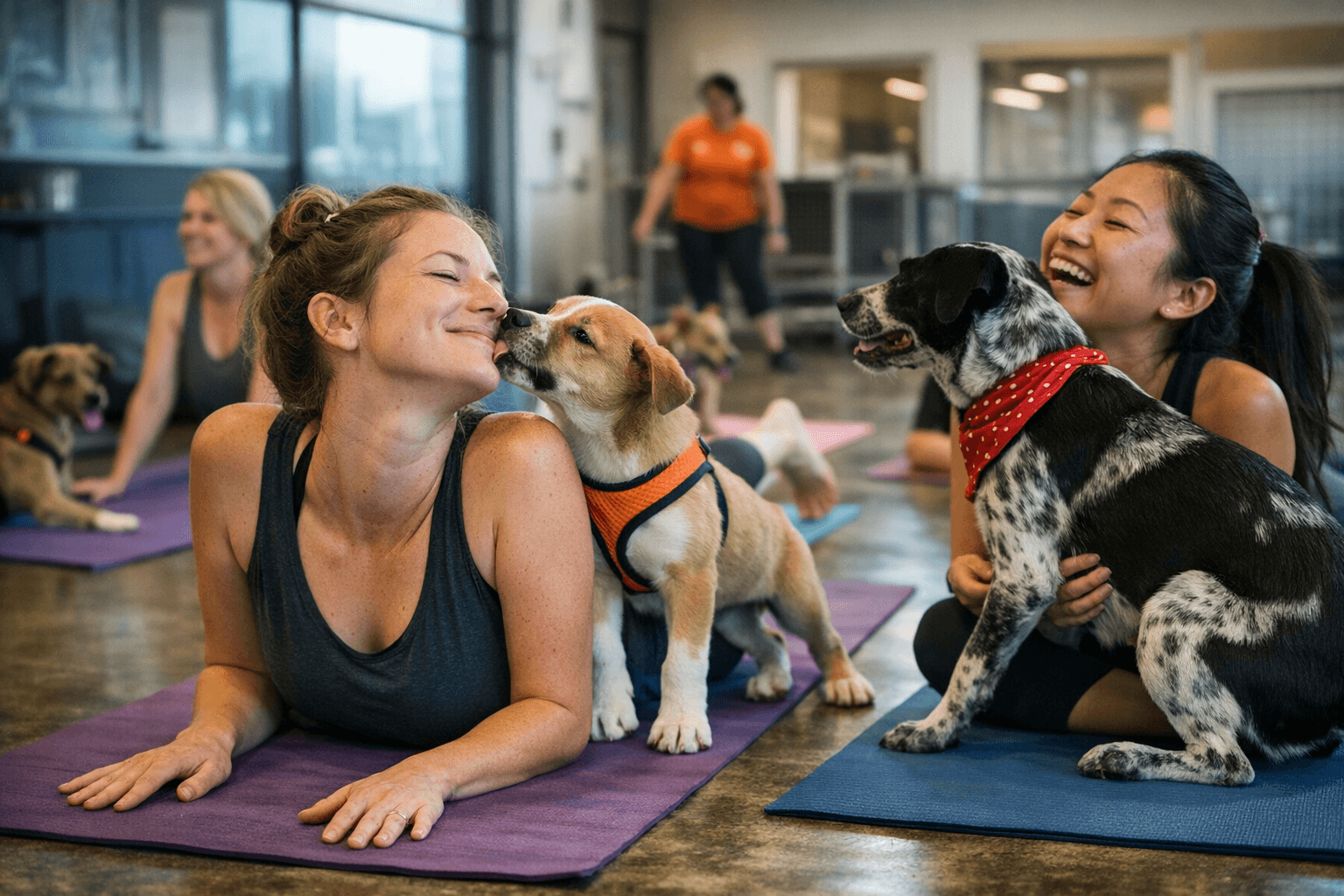
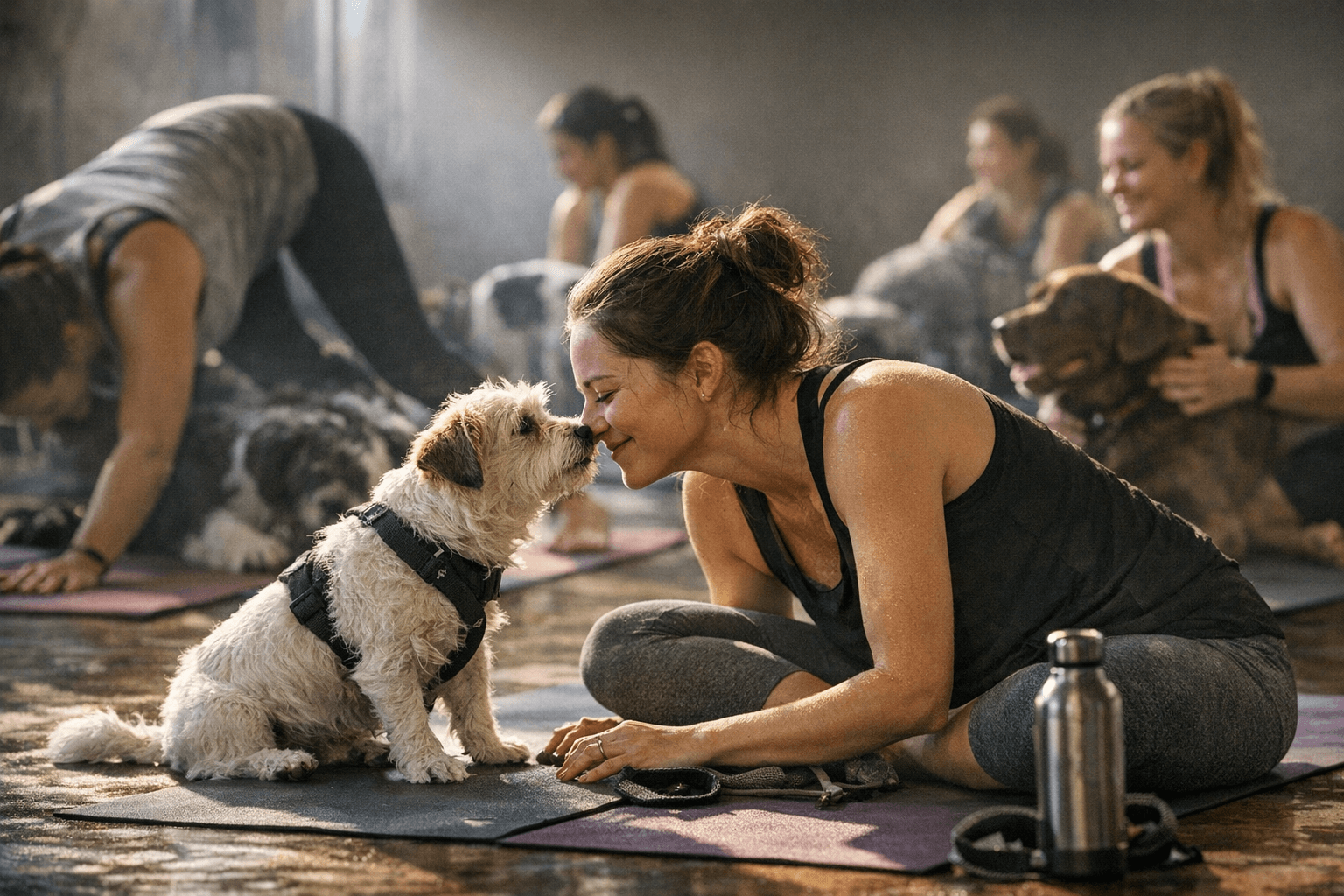
Rescue-Friendly Puppy Yoga: Essential Checklist and Best Practices for Organizers
Plan for puppies first: keep classes 45–60 minutes, limit to one session per puppy group, staff handlers, and follow this rescue-focused organizer checklist.
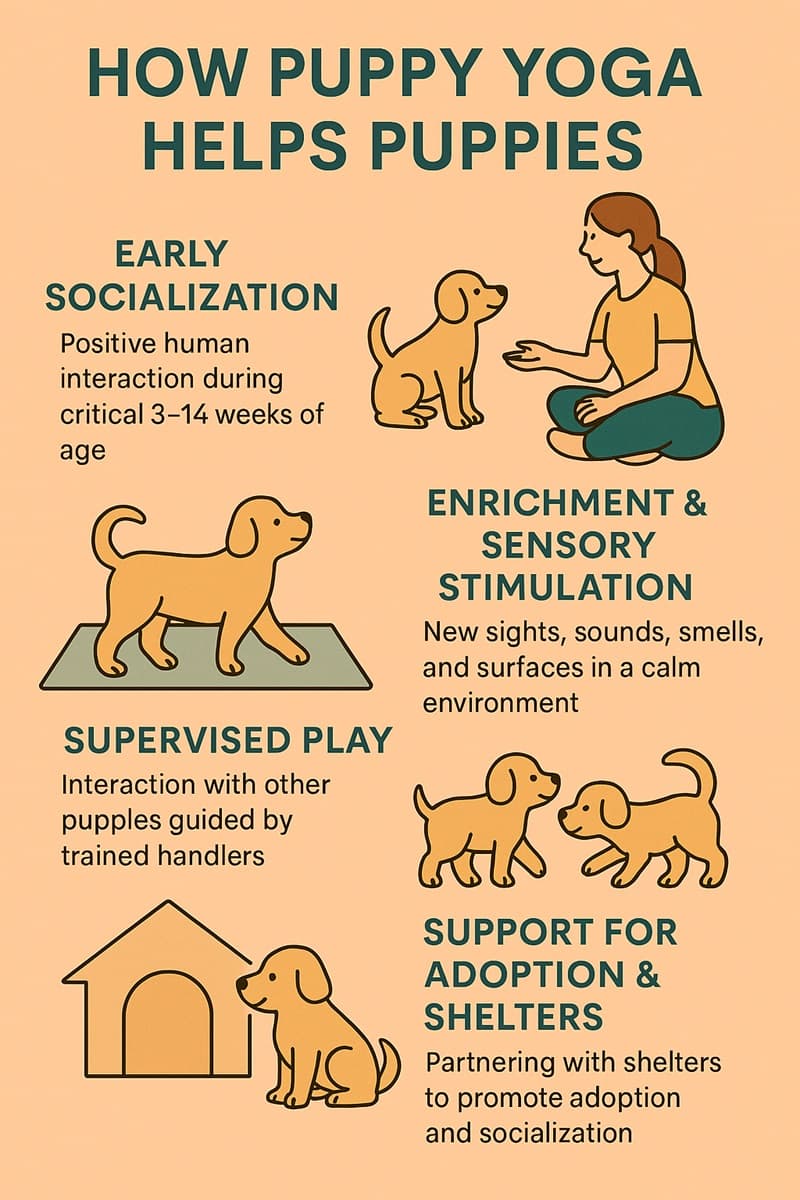
1. Arrival, check-in, participant prep
Arrive times set the tone for a calm session: advise participants to arrive about 15 minutes early so check-in, orientation, and settling can happen without rushing. "Plan to arrive 10-15 minutes early to your first yoga with puppies session. This allows time for check-in, orientation, and getting comfortable with the environment..." and Pupsandyoga adds, "Please arrive at least 15 minutes before the scheduled start time. This gives you time to check in, choose your spot, greet the puppies, and settle into a relaxed state of mind." Use that window to confirm participant waivers, review house rules, and orient newcomers to puppy behavior and the space (parking, cancellation policy, and bathroom/entry points).
2. Food, scents, and personal hygiene
Set clear pre-class hygiene rules: instruct participants to "Consume a light snack 1–2 hours before puppy yoga classes rather than a heavy meal." and to avoid eating in the yoga area. Require neutral personal-care products: "Please refrain from wearing perfumes or scented lotions during the session. Stick to neutral hygiene products that won't trigger the puppies' noses." Strong food scents and perfumes can overstimulate or irritate puppies, so enforce a no-food-in-room policy and signage at check-in to reduce distractions.
3. Attire and what to bring
Recommend washable, durable clothing and the essentials: "Choose stretchy, comfortable attire for your yoga with puppies session, but prioritize washable fabrics." Prefer darker colors and fabrics that withstand playful claws and nibbles; Puppyyogaus explicitly advises to "Skip expensive or delicate clothing items ... Puppies have small claws and teeth, so choose durable fabrics that can withstand gentle pawing and playful nibbling." Remind participants to bring a mat, water bottle, and neutral hygiene items; provide spare mats or washable covers if your studio hosts multiple back-to-back events.
4. Class structure, durations, and format
Design classes within the normal 45–60 minute range: many programs run 45–60 minutes with a common split of 30–40 minutes of gentle yoga and 10–20 minutes of structured puppy interaction. Theyogafitness recommends a straightforward format: Welcome + Rules — 5 minutes, Gentle Yoga Flow — 25–35 minutes, Puppy Playtime — 10–20 minutes, plus an optional Adoption Showcase. Use a gentle, beginner-friendly sequence: "A yoga instructor leads gentle stretches suitable for absolute beginners." Start every class by going over safety guidelines and introducing the puppies so attendees know each dog's story and expectations.
5. Where puppies come from, age, and sourcing
Only partner with reputable sources: accept puppies from officially registered shelters, licensed rescue organizations, certified foster networks, or responsible breeders. Never use underage animals — they write plainly: "A responsible class should NEVER: ✖ Use puppies under 8 weeks old" — and Theyogafitness notes puppies are often "vet-approved, socialized puppies (usually 8–12 weeks old)". Require clear records on age, vaccinations, and temperament before each event.
6. Animal welfare, monitoring, and class staffing
Staffing is non-negotiable: "A responsible class should NEVER ... operate without trained animal handlers." Assign a volunteer or staff member to each dog and train them to observe behavior, redirect overstimulation, and step in when a puppy needs rest. Puppy-yogaclub stresses that "Continuous monitoring is a key part of puppy yoga club standards. Team members observe each puppy throughout the class, paying close attention to behavior, energy levels, and signs of stress or fatigue." Provide water, a relief area, and a quiet rest space so puppies can self-regulate.
7. Limits on session frequency, class size, and stress response
Protect puppies with limits: follow shelter practice of running only one yoga session per puppy group and keeping classes small — Bloom summarizes the approach: "If a puppy falls asleep, we let them sleep," Bloom says. "No exceptions. And we only do one yoga session per group of puppies, with small class sizes, so the puppies never get overwhelmed." Watch for stress signals — trembling, hiding, whining — and remove any puppy showing them immediately for rest and quiet recovery.
8. Pre-event planning and trusted partnerships
Before you list tickets, lock partnerships with vetted organizations: Theyogafitness instructs hosts to "Partner With Trusted Organizations" such as registered shelters and licensed rescues. Draft agreements that spell out vaccination checks, transportation, handler assignments, and fee allocation (ensure any fee goes back to the shelter rather than private profit). Build your pre-event checklist around volunteer training, venue layout, cleaning supplies, and emergency contacts.

9. During-class conduct and participant guidance
Set expectation management early: tell attendees that "Your first yoga classes with puppies experience prioritizes happiness and stress relief over advanced yoga techniques." Encourage gentle interactions and following puppy cues rather than forcing contact. Remind participants that puppy yoga is different from a regular class — pauses for play and short breaks for animals are integral, and late arrivals are disruptive: a late participant can upset puppies and the flow of the session.
10. Post-class protocols and follow-up
Wrap every session with welfare and sanitation steps: Theyogafitness prescribes the post-class checklist — "After every session: Fully sanitize the room; Check puppies for fatigue; ensure hydration & rest; safely transport puppies back; Share adoption info or follow-up links; send participant photos/recaps (optional)." Record any welfare observations for the rescue partner, distribute adoption materials (digital links or printed bios), and deliver participant photos per privacy agreements. Always confirm puppies are rested and rehoused securely before volunteers leave.
11. Adoption showcases and fundraising mechanics
Make adoption optional and ethical: slot an optional Adoption Showcase after playtime where shelter staff can share histories and application procedures. Vet any ticket fee model so that "a legitimate, well-regarded organization should have guardrails... They may charge a fee that goes back into the shelter, not to make a profit." Be transparent about where funds go and how adoption inquiries are handled.
12. Red flags and organizer vetting checklist
Use an explicit “never” list when vetting partners or programs: Theyogafitness warns, "A responsible class should NEVER: ✖ Use puppies under 8 weeks old ✖ run overcrowded classes ✖ operate without trained animal handlers ✖ ignore puppy stress signs (trembling, hiding, whining) ✖ Use unclean mats or dirty spaces ✖ expose puppies to harsh lights or loud music ✖ allow long sessions without breaks." Additional red flags include lack of transparency about puppy origins, insufficient staffing, or unclear vaccination histories.
13. Sample poses and participant activity options
Include gentle, themed poses that invite puppy interaction without forcing it — Pupsandyoga highlights favorites such as "Puppy Pose (Uttana Shishosana): This pose literally shares a name with the theme. It’s a heart-opening stretch between Child’s Pose and Downward Dog." and lists "Downward Dog (Adho Mukha Svanasana): An iconic puppy yoga pose and one dog naturally perform." Use short, floor-based sequences and frequent pauses so participants can safely pet, photograph, or step back if a puppy needs space. For full step instructions, use the original pose guides from your trusted curriculum partners.
14. Legal, medical, and missing operational checks to verify
Confirm what your local rules and partners don’t spell out: the research notes highlight gaps you must close — precise vaccine schedules, full names/roles for quoted shelter contacts, and any jurisdiction-specific permits or insurance requirements. Before launch, ask partners for documented vaccination/health records, formal volunteer training outlines, and written transport/sanitation protocols.
15. Philosophy, continuous review, and final organizer checklist
Make welfare an ongoing commitment rather than a one-off checklist. As Puppy-yogaclub emphasizes, "We listen closely to our rescue partners, instructors, team members, and the wider animal welfare community. Feedback from these voices helps inform how classes are structured, how environments are prepared, and how puppies are supported throughout their participation." Commit to regular reviews, keep class sizes small, prioritize one session per puppy group, and remember Neil Azouz’s assurance: "We take pride in maintaining high standards and creating experiences that support each puppy’s wellbeing, with the hope that many will go on to find loving, permanent homes." Conclude every plan with a clear welfare-first checklist on staff radios, signage, and pre-class emails so your rescue-friendly puppy yoga stays joyful, safe, and adoption-forward.
Know something we missed? Have a correction or additional information?
Submit a Tip