Rescue teams race to free people trapped after Japan earthquake
Rescue crews pushed into a collapsed Kumamoto mall after a powerful quake trapped people inside, while power outages, rail shutdowns and tsunami warnings spread.
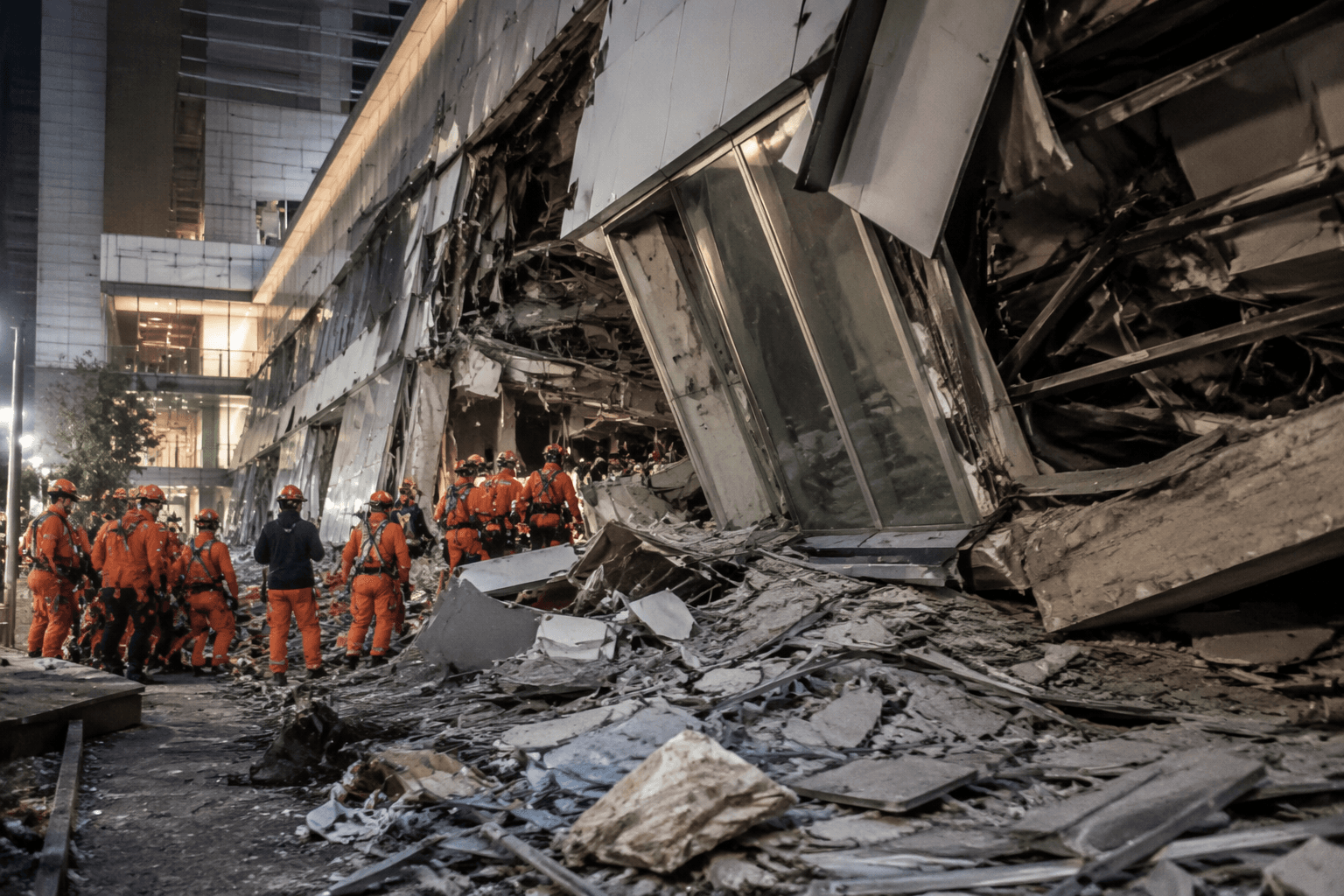
Rescue crews worked through collapsed concrete and shattered storefronts in Kumamoto prefecture after a powerful earthquake trapped people inside the Aeon Mall and other damaged buildings. The shaking hit southwestern Japan on Tuesday and was strong enough to send people fleeing into streets as emergency workers moved toward the worst-hit structures.
The Japan Meteorological Agency later put the quake at a preliminary magnitude of 7.1, while other reports described it as 6.8. The tremor reached the highest level, 7, on Japan’s Shindo seismic intensity scale. Brief tsunami warnings were issued for coastal areas near the Ariake Sea and Yatsushiro Sea before being lifted within the hour.
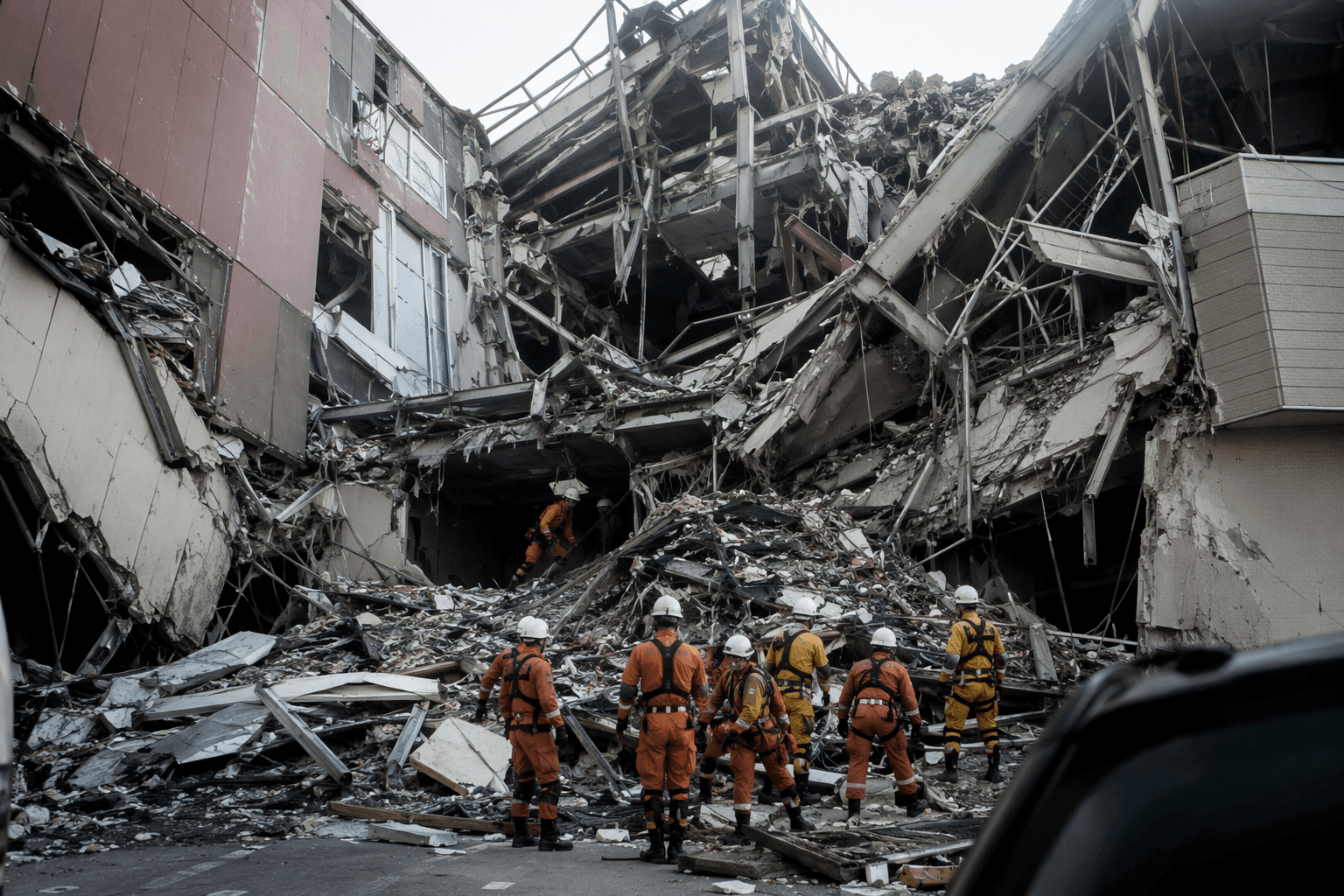
Japan’s fire service said many people were trapped inside the shopping centre, and witnesses reported that the second floor of the mall in Kumamoto collapsed. Local media also reported a possible explosion at the Aeon Mall after the quake, adding to fears that fire or gas damage could complicate the rescue effort. Across the city, buildings burned, windows shattered, parking areas filled with debris and several structures gave way under the force of the shaking.
The quake also knocked out power to thousands of homes and stopped rail services, cutting into the kind of rapid transport and communications that often support disaster response. In a country known for strict seismic standards and well-drilled emergency planning, the damage still exposed how quickly one hard-hit commercial complex can become a rescue bottleneck when floors pancake and access routes are blocked.
The earthquake was part of the 2016 Kumamoto sequence, which included a foreshock on April 14 and a larger mainshock on April 16. The U.S. Geological Survey identified the main event as a magnitude 7.0 quake about 6 kilometers east-southeast of Kumamoto, and a GEER Association report later tied the sequence to magnitudes of 6.2, 6.0 and 7.0.
As the death toll from the second quake rose from four to 19, Japanese officials said the combined toll from both strong earthquakes reached 29. The scale of the destruction in Kumamoto, from the collapsed mall to the interrupted rail lines, showed how even one of the world’s most earthquake-ready countries can be pushed into a race against time when people are trapped inside damaged buildings.
This article was produced by Prism’s automated news system from verified source data, official records, and press releases, then run through automated quality and moderation checks before publishing. The system is built and supervised by the people who set the standards it runs under. Read our full AI policy.
Did this article answer your question?