Reservoir Hill leaders file complaints over councilman’s zoning process
Two Reservoir Hill residents filed complaints alleging procedural breaches in handling Mayor Scott’s zoning bills, raising questions about public access and legal exposure.
Two community leaders from Reservoir Hill have asked state and city authorities to investigate the handling of Bill 25-0066 and related parts of Mayor Scott’s zoning package, filing formal complaints with the Maryland Attorney General’s Office and sending memoranda to Baltimore City officials. The complaints, submitted January 12, 2026, name Councilman Ryan Dorsey and accuse him of several procedural and statutory violations tied to a December 1 Land Use and Transportation Committee meeting.
The filings allege that virtual testimony was blocked at the December meeting, limiting participation for residents who rely on remote access. Complainants Carson Ward and Keondra Prier also contend that Councilman Dorsey introduced a text-amendment approach that may have circumvented required public notice and formal review processes. The memoranda request investigation by the State’s Attorney, the City Inspector General, and the Mayor’s Office of Civil Rights, and ask the Attorney General’s Office to assess potential violations of state law.
Beyond procedural objections, the complaints assert that required equity reviews were not completed and that testimony time limits were enforced unevenly, a practice critics say amounted to viewpoint discrimination. The filings note that if those procedural concerns are substantiated, Bill 25-0066 and companion measures could face legal vulnerability and administrative reversal, potentially stalling or reshaping the zoning reforms the mayor has advanced.
The Land Use and Transportation Committee has been active in recent weeks as it advances parts of the mayor’s zoning package. The complaints call for accountability measures, including censure, and signal the possible pursuit of further administrative or legal review. City Council leadership and other council members have been notified through the memos, and community members around Reservoir Hill and other neighborhoods have voiced concern about transparency and access to the legislative process.
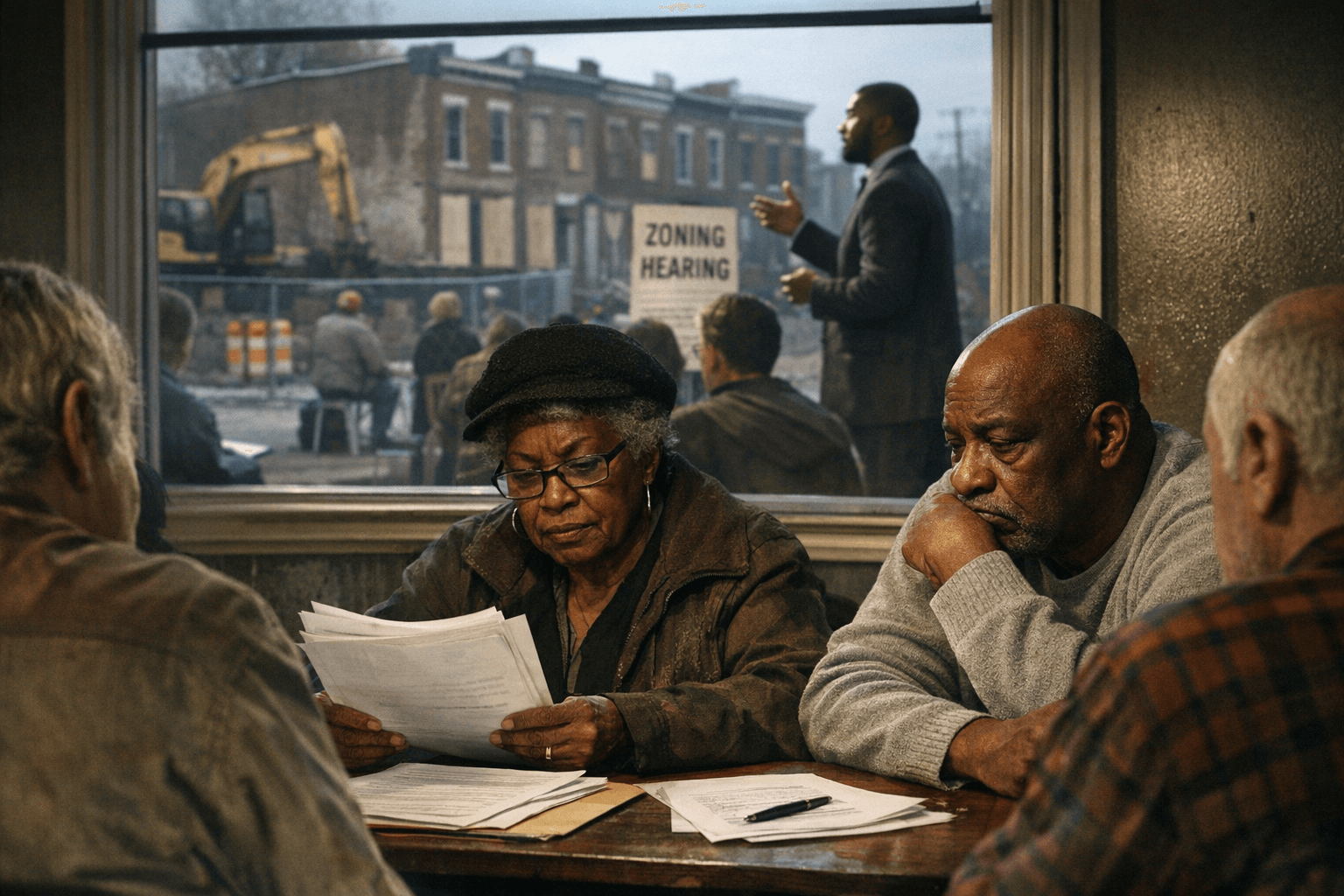
The dispute centers on two intersecting issues for Baltimore residents: how land-use decisions are made and who gets to participate. Zoning changes carry long-term consequences for housing density, development patterns, property values, and neighborhood character. Blocking virtual testimony or altering notice procedures narrows the channels through which residents, particularly those with limited ability to attend in person, can influence outcomes.
Institutionally, the complaints trigger multiple possible avenues: the Attorney General can review state-law compliance; the City Inspector General can examine internal procedural practices; the Mayor’s Office of Civil Rights can assess discrimination claims; and the State’s Attorney can evaluate potential criminal violations. Separately, the City Council itself could consider censure or procedural reforms.
The takeaway? Stay engaged. If you care about how rezoning will shape your block, follow committee schedules, demand full public notice and equitable review, and make your voice heard, whether in person or remotely. Our two cents? Procedural rules matter; when they break down, the city’s zoning outcomes can too.
Sources:
Know something we missed? Have a correction or additional information?
Submit a Tip