Responsible Workwear Brands Design Durable, Sustainable Gear for Trades and Style
Workwear now splits between true protective gear and fashion-led utility, with brands like Dovetail, Snickers, Wuxly, and BEDI leaning into repair, testing, and upcycled materials.

Workwear today splits into two clear categories: real protective gear for trades and high-risk jobs, and fashion workwear inspired by that gear. That editorial distinction, published February 23, 2026 by Amy Miles, frames a small but growing cohort of brands designing work-ready garments that are meant to last and be mended rather than trashed.
At the technical end, Snickers Workwear has formalized what durability looks like. "We set high demands on the performance of all of our clothes," the brand states, with defined requirements for a large number of physical performance parameters. Snickers says new materials and components are "thoroughly tested in the initial phase, and many are disqualified due to low-performance levels," and it organizes guidance into sections such as Design, Fibres & materials, Washing advice, Production, and Supplier Engagement. The company also sums up its approach with, "Clever inventions make better workwear" and "We strive to create the most hard-working clothing with as little environmental impact as possible."
Circularity and repair are at the center of Dovetail Workwear’s model. Dovetail calls its approach "True Sustainable Workwear Gets Repaired, Not Replaced" and notes a long partnership with Stitches, a family-run factory in Gamliell, KY that has worked with co-founder Sara DeLuca for more than 20 years. A repair pilot launched in 2024 with Stitches is now becoming a brand mainstay; Dovetail insists that durable eco-friendly workwear must be mended to extend usable life. The brand markets PFAS-free items, stating, "By choosing PFAS-free workwear, we’re protecting people and ecosystems—without compromising durability or performance," and highlights a new no-dye denim that "skips the water-guzzling dye process, so fewer chemicals and fewer gallons go down the drain." Product imagery emphasizes the practical: biologist Annie Raymond collecting samples on a beach in the navy Carver patterned shirt and Provisions Cargo Shorts, and closeups of locker loops and tags on off-white shortalls.
Small and mid-size labels are translating durability into materials choices and inclusive fit. Canadian outerwear maker Wuxly Movement combines tech-based and recycled materials and advertises sizes 2XS–3XL; its founder framed the mission as an "opportunity to innovate using more responsible materials—all while peacefully leaving animals out of the equation." Vegan boot brand Thesus offers EU sizes 36–46 and "favours transparency, responsible manufacturing practices, and lower-impact materials." Melbourne-based Sük Workwear curates ethically made pieces in AU sizes 4–30 and was judged to be doing "Good" for people and animals while still increasing lower-impact materials. BEDI, another Canadian label, builds with upcycled airline seat leather, upcycled fish nets, vegan cactus leather, and more sustainably grown cotton, and lists sizes XS–XL.
Heritage names and retailers are signaling similar priorities. Filson’s waxed canvas jackets, wool shirts, and leather bags are described as crafted to outlast decades. Kotn highlights responsibly sourced Egyptian cotton as a blend of softness and strength. Hobbs frames its Hobbs Sustain program around three pillars - supply chains and communities, environment and sustainability standards, and employee wellbeing - and says, "We've always been passionate about creating timeless designs, made to last." Ted Baker has set dated targets, including solely using organic, recycled, or Better Cotton Initiative cotton by 2024, moving to responsibly sourced materials by 2030, and shifting regenerated cellulosics toward FSC or PEFC certified forests with 50 percent produced through sustainable methods by 2025.
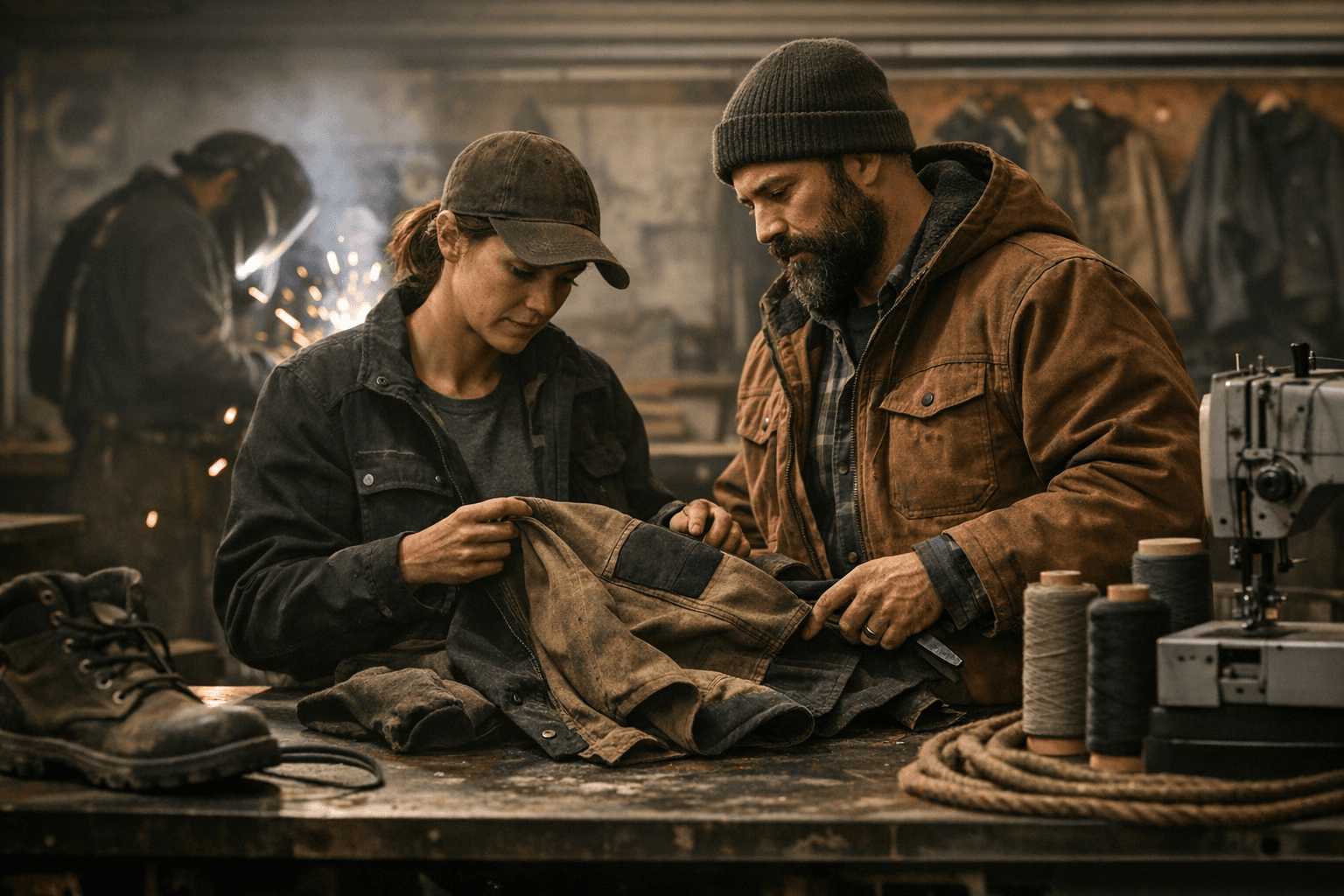
For consumers, look for concrete markers of build quality called out by Ecobearwear: reinforced seams, double stitching, metal hardware, and dense weaves; try a "tug test" on hems and buttons because "quality pieces will feel sturdy, not fragile." Combine that tactile check with brand-level signals - Snickers’ testing protocols, Dovetail’s repair program launched in 2024, BEDI’s upcycled leathers and nets - and you can separate genuine durability from fashion borrowing.
The trajectory is clear: designers from pragmatic Snickers to circular-minded Dovetail are proving that repairability, rigorous testing, and lower-impact materials can coexist with performance. Expect more brands to copy the playbook - invest in testing, publish care and repair pathways, and list inclusive sizes - because making workwear that endures is now a sustainability strategy as much as a style choice.
Know something we missed? Have a correction or additional information?
Submit a Tip

