Retired Astronaut Warns Artemis II Reentry Riskier Than Uncrewed Artemis I
Three Artemis I heat shield bolts melted through during the uncrewed test; now a new, never-flown reentry profile must protect four astronauts returning Friday.
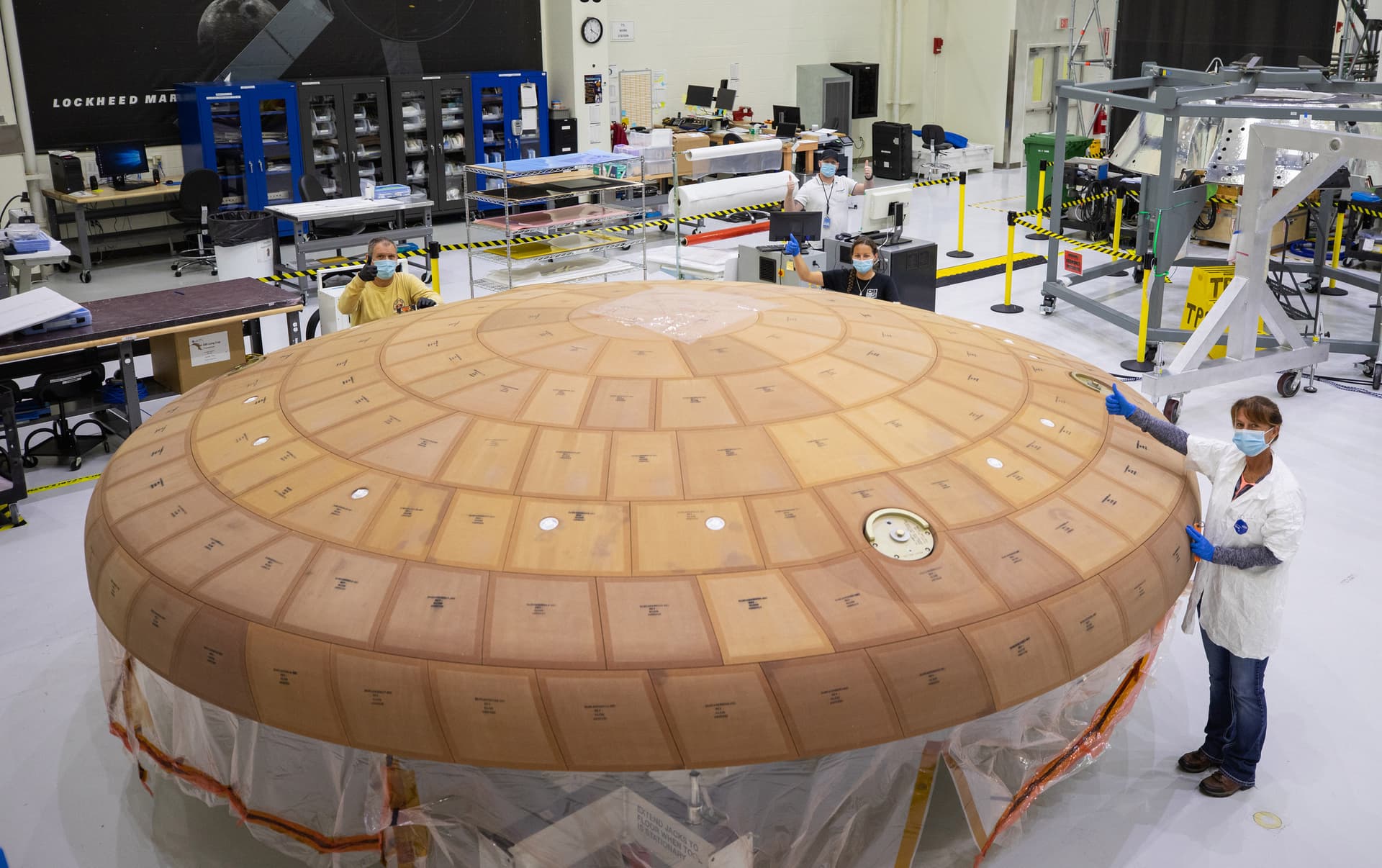
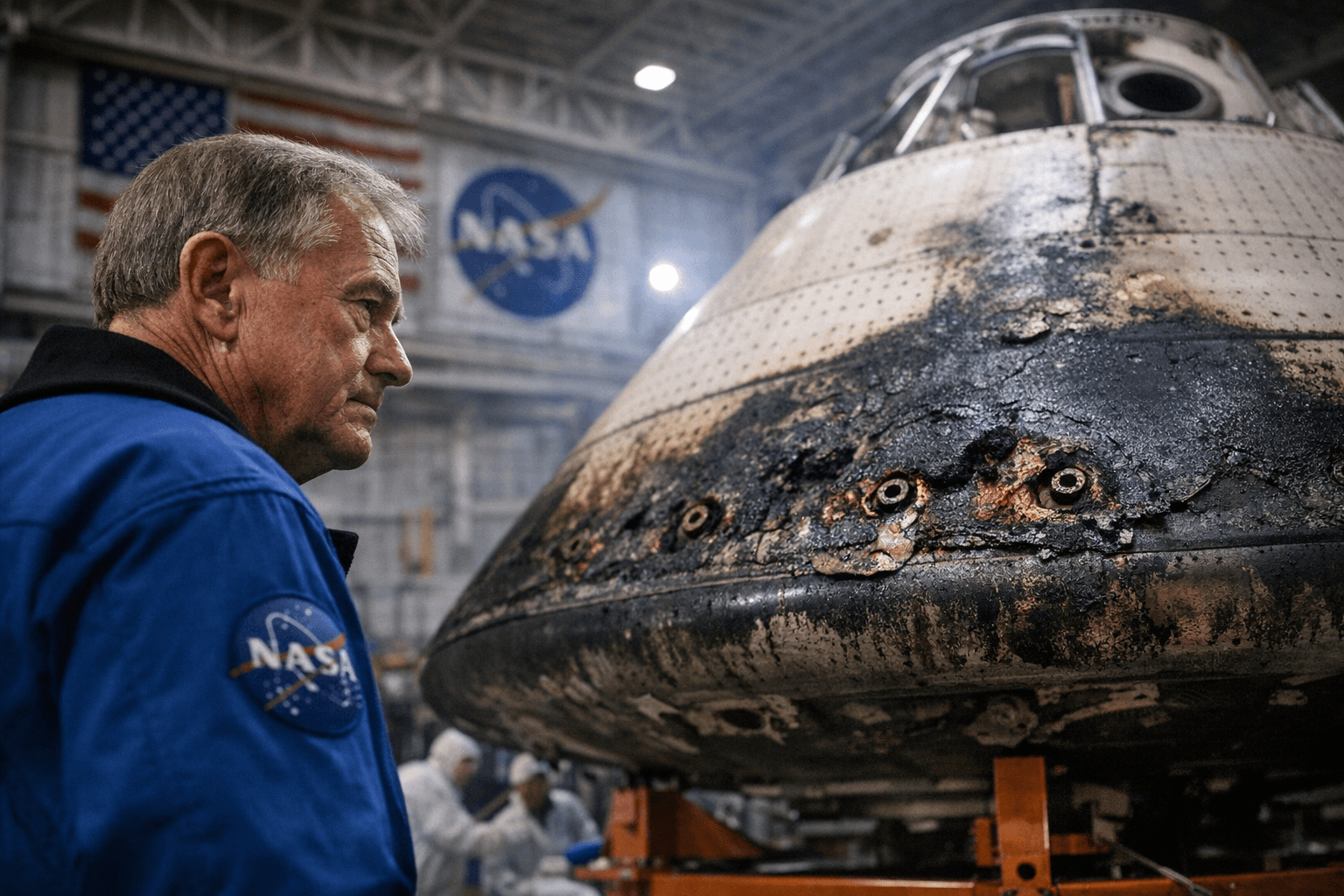
Three of four large separation bolts embedded in Orion's heat shield melted through during Artemis I. That unplanned failure, combined with widespread cracking and material loss NASA's own investigation called far beyond predictions, is precisely why retired NASA astronaut Commander Susan Kilrain is warning that Friday's reentry for the four-member Artemis II crew carries more risk than anything the spacecraft has faced before.
The Orion capsule, nicknamed "Integrity" by Commander Reid Wiseman, Pilot Victor Glover, Mission Specialist Christina Koch, and Canadian Space Agency Mission Specialist Jeremy Hansen, is scheduled to splash down Friday, April 10, at 8:07 p.m. ET in the Pacific Ocean roughly 100 miles off San Diego. To get there, it must first survive reentry at nearly 24,000 to 25,000 miles per hour, more than 32 times the speed of sound, while the heat shield endures temperatures approaching 5,000 degrees Fahrenheit.
The stakes trace back to Artemis I, the uncrewed precursor mission that splashed down off the coast of Mexico on December 11, 2022, in what was the hottest and fastest reentry the Orion capsule had ever experienced. Afterward, NASA found the ablative outer material had failed to properly vent gases produced during atmospheric entry, triggering cracking and char loss across the shield. A NASA Office of the Inspector General report released in May 2024 warned that "the unexpected behavior of the heat shield poses a significant risk to the safety of future crewed missions."
NASA scientists determined an Artemis I crew would likely have survived, but the agency revised its reentry approach before committing to carrying humans. For Artemis II, engineers designed a "skip reentry" technique in which the capsule dips in and out of Earth's atmosphere to reduce stress on the heat shield. Kilrain's concern centers on the fact that this revised flight profile has never been tested in real-world conditions with a crew aboard, making the next 24 hours the mission's most uncertain phase.
Jud Ready, a materials expert and executive director of the Space Research Institute at the Georgia Institute of Technology, expressed confidence in the engineering solution. "I am confident in the NASA approach and solution," Ready said, echoing NASA officials who maintain their models show the new profile effectively reduces risk.
The sequence Friday will unfold quickly. After a six-minute communications blackout during peak heating, drogue parachutes will deploy near 22,000 feet altitude, followed by a full set of 11 parachutes to slow the capsule's descent. Five orange airbags will inflate around the capsule's top after splashdown to flip it upright. The USS John P. Murtha, a Navy amphibious transport dock ship based in San Diego, will lead recovery operations, with elite Navy divers staged in the Pacific and helicopter teams ready to transport the crew to the waiting ship. A post-splashdown news conference is expected at NASA's Johnson Space Center at approximately 10:30 p.m. ET.
The mission itself broke records before reentry became the central question. Launched April 1, 2026, Artemis II became NASA's first crewed Moon mission since Apollo 17 in 1972. On April 6, the crew swung around the far side of the Moon and surpassed Apollo 13's all-time record for the farthest distance humans have ever traveled from Earth. Glover became the first person of color to fly on a lunar mission, Koch the first woman, and Hansen the first Canadian to travel beyond Earth orbit. During the lunar flyby, the crew named two previously unnamed craters: "Integrity," after their capsule, and "Carroll," after Commander Wiseman's late wife.
How the heat shield performs Friday will determine not just the safe return of this crew, but whether NASA has the technical foundation to press forward toward a crewed lunar landing.
This article was produced by Prism’s automated news system from verified source data, official records, and press releases, then run through automated quality and moderation checks before publishing. The system is built and supervised by the people who set the standards it runs under. Read our full AI policy.
Did this article answer your question?

